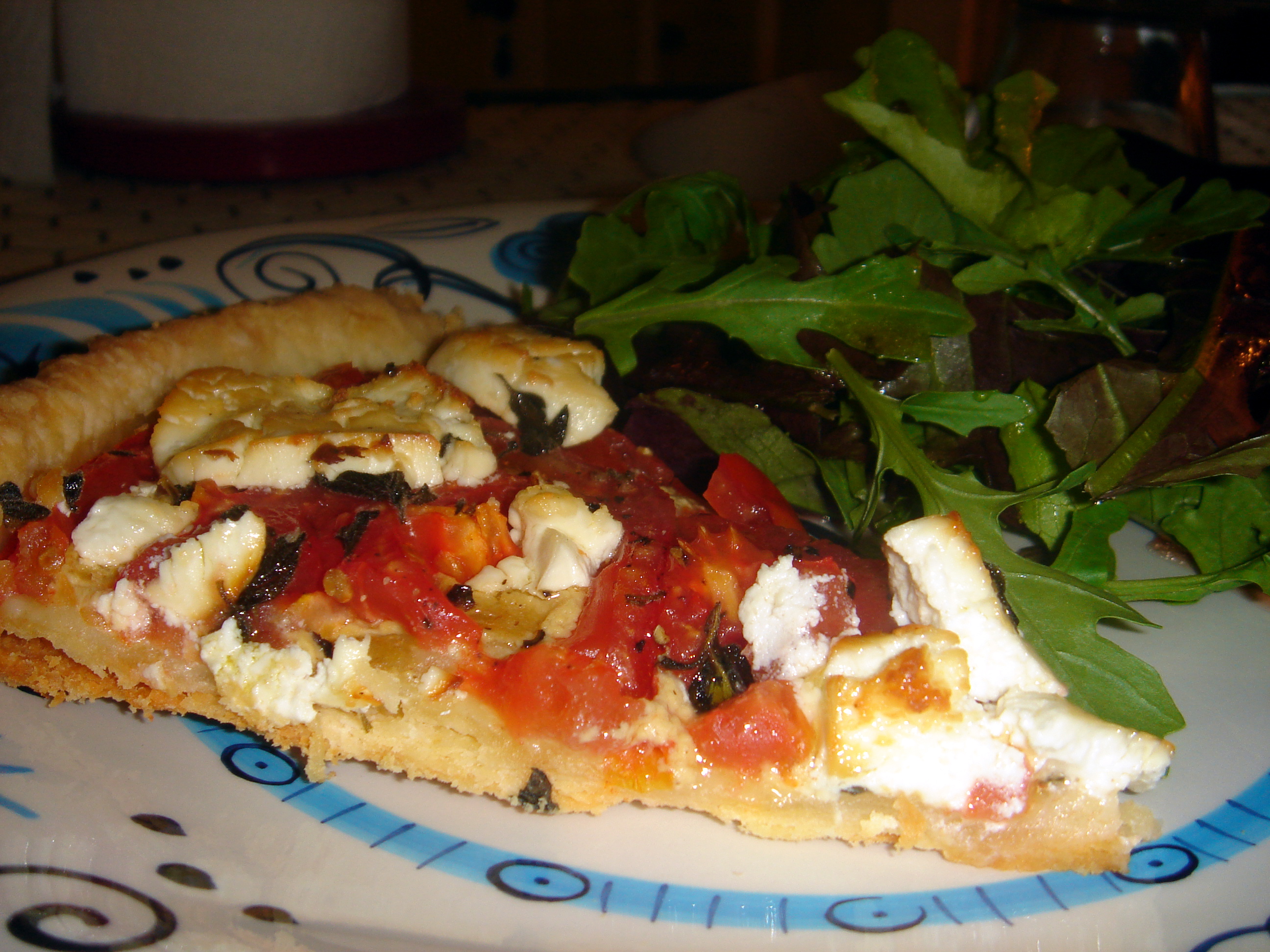
the view from my table

So, food blogging. It’s something I have definitely fallen down on, what with being busy with learning about literature and generally falling out of regular blogging in the post-a-day way I used to do. But, I’m still a total foodie, and have been meaning to get back into geeking out about food.

Add to that, I was recently chatting with a friend about our less-meatarian diet, and she was asking me questions about what our meals actually look like. It’s definitely hard, when first transitioning to a less-meat diet, to figure out what to put on a plate that isn’t a meat and two sides. Mark Bittman addresses this in his book (an AMAZING resource) How to Cook Everything Vegetarian:

Even those people who do cook at home reckon that the easiest way to anchor a meal is to throw a steak or a chicken breast on the grill or under the broiler and scatter a few nominal vegetables around it…But a vegetarian meal is more commonly a table with a few dishes on it, all of them of equal importance…The grain is not less valuable than the cooked vegetable, the salad, or the bread: they’re all there to compliment one another. Pickles you made yourself, a nice piece of cheese, or a bowl of nuts–all are valid courses in the vegetarian meal.

Now, Bittman is certainly not a vegan (note the cheese reference), and neither am I. I choose to eat much less meat than the average American for environmental, humanitarian, and health reasons. I try to follow the dictates of Michael Pollan’s famous maxim: Eat food, not too much, mostly plants. I try to eat food, by which he means whole ingredients, rather than food products or processed foods. And I try to eat more plant-based foods. But I still eat fish, eggs, and cheese, and the occasional ethically-raised meat when I can afford it.

Anyway, I figured that a weekly roundup of what we actually eat might help friends looking to transition to a less-meat diet get some ideas about what less-meat meals actually look like. These posts will be characterized by most-likely iPhone photography of our meals, which, I confess, more often than not are eaten on TV trays in our living room while we watch something from our DVR. I’ll share links to recipes when I can, or share which cookbooks the recipes came from. My two most frequently used cookbooks are both by Bittman– the aforementioned How to Cook Everything Vegetarian, and The Food Matters Cookbook.

So, what did our meals this week look like?
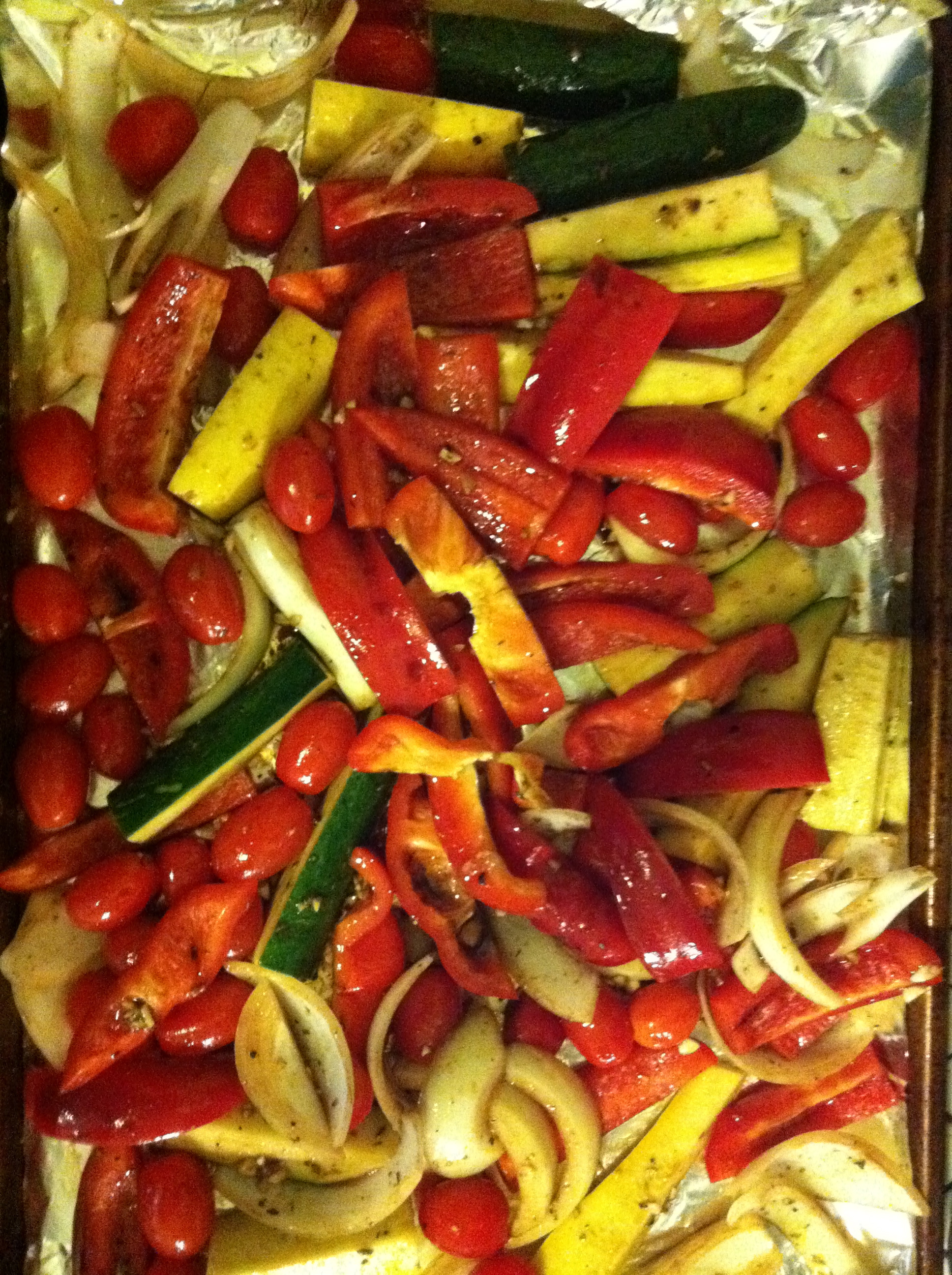
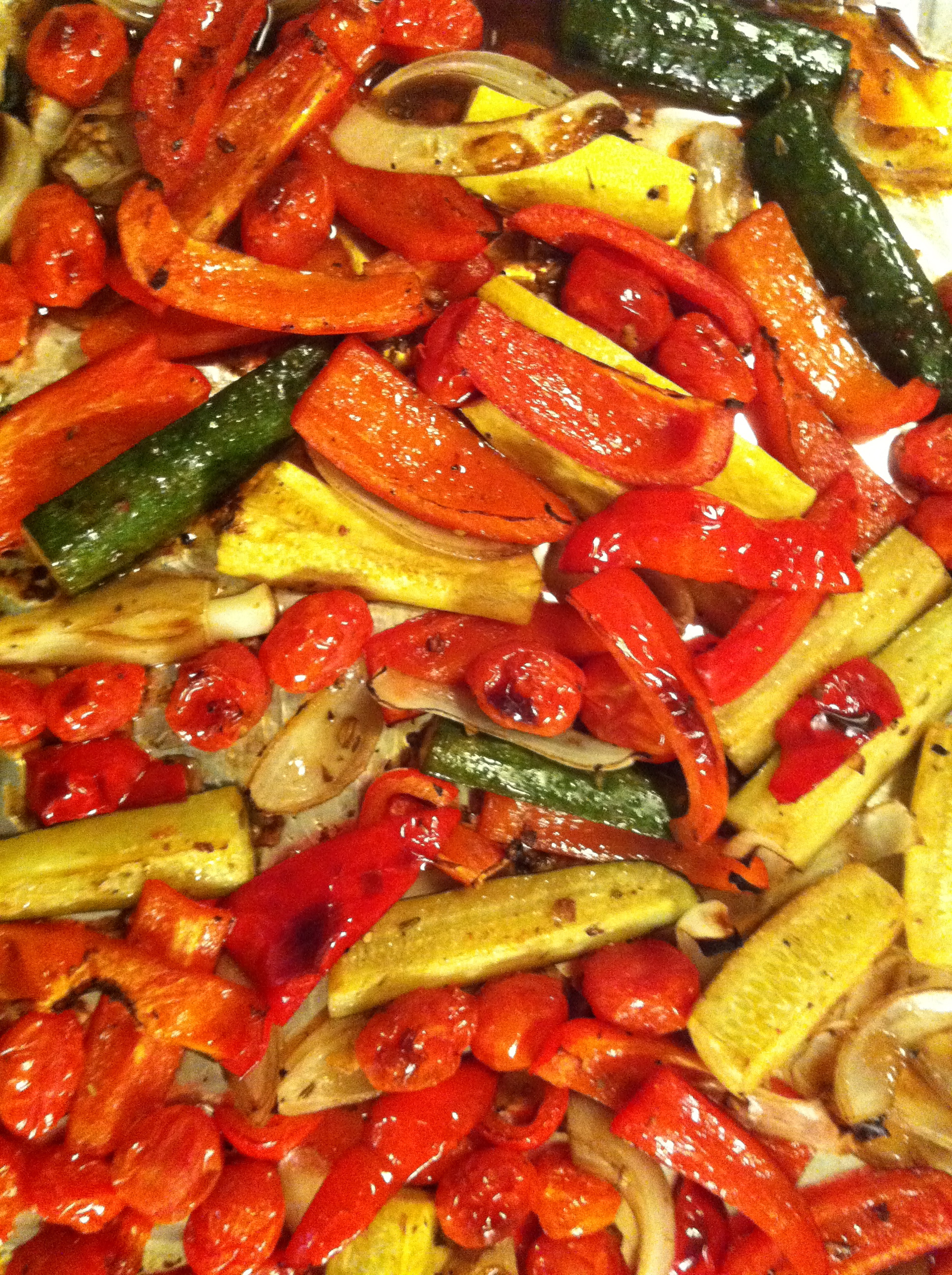
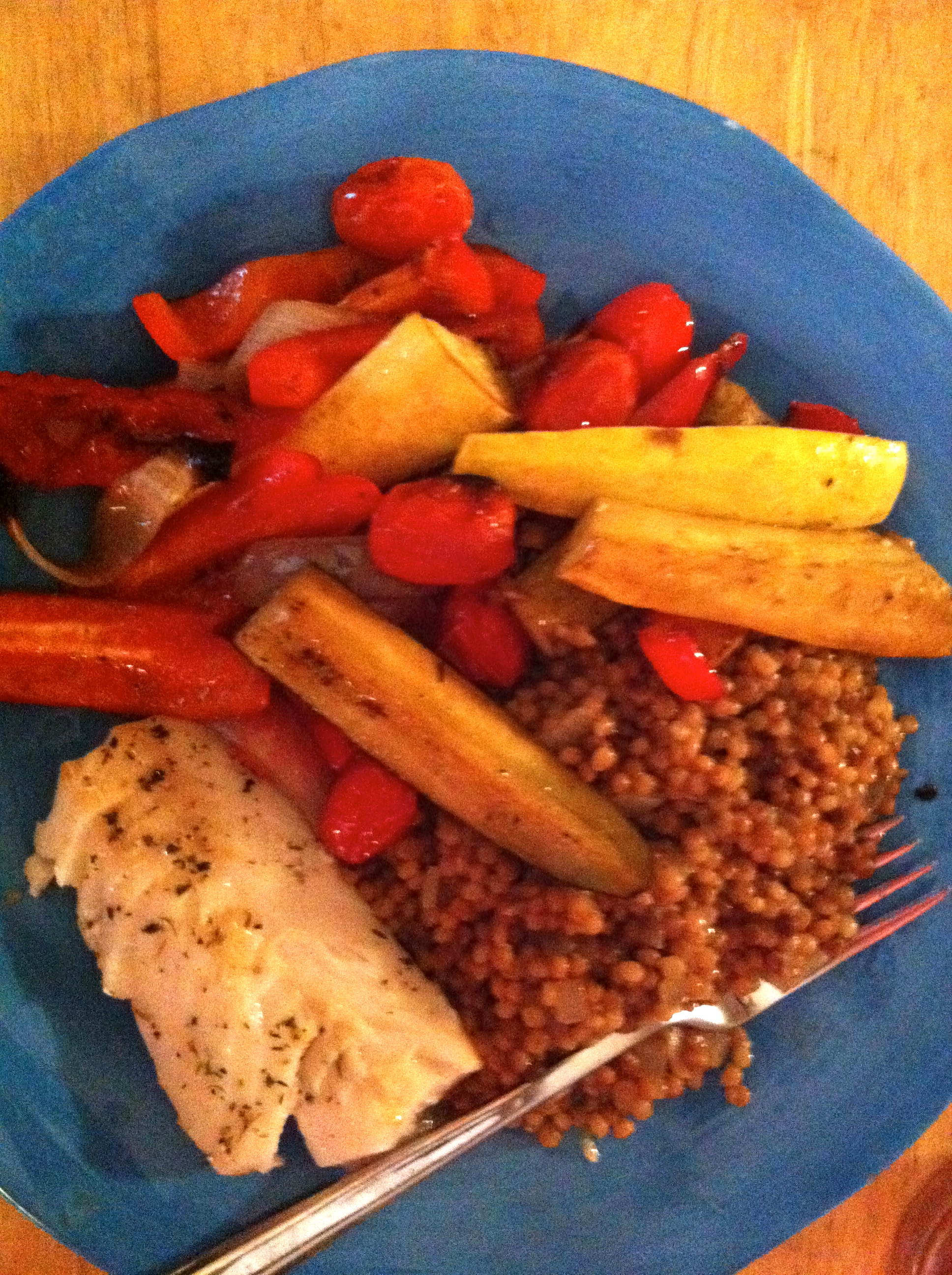
This meal was definitely the most veggie-licious of our week. I tossed a bunch of sliced veggies (red bell pepper, zucchini, squash, onion, grape tomatoes) with balsamic vinegar, olive oil, garlic, and some Herbes de Provence. I broiled them for about 15 minutes while I made some pearl couscous and cooked a couple of pieces of fish in a skillet. Such a tasty and colorful meal. The fish was really not even necessary. Might have poached an egg and served it on top or just tossed in some chickpeas for a fish-free version.
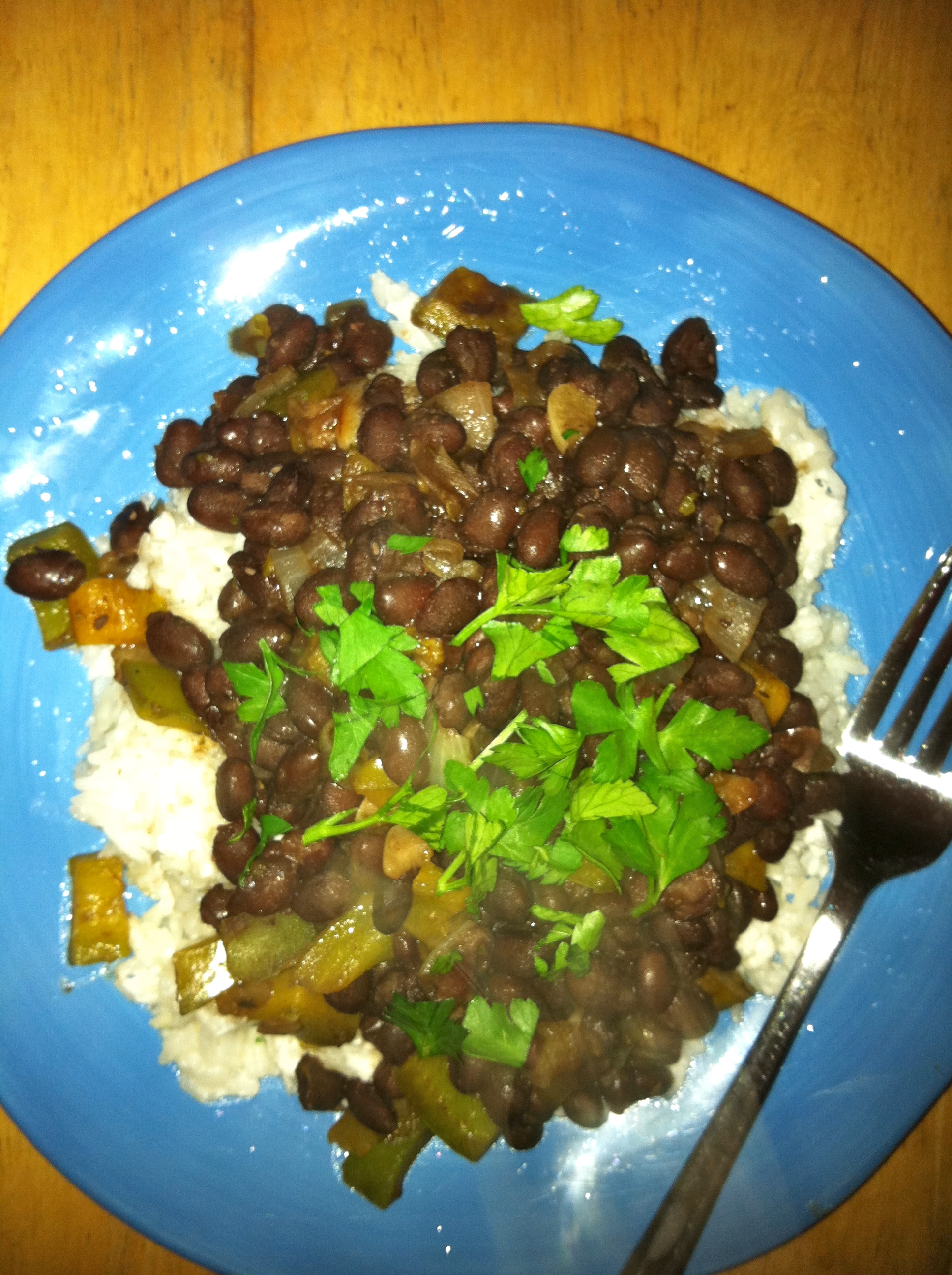
This is a common meal for us. Cuban-style black beans (I skip the radishes) over coconut rice (the idea for the rice came from this recipe). Almost always eaten with a Cuba Libre (rum and Coke with a lime).

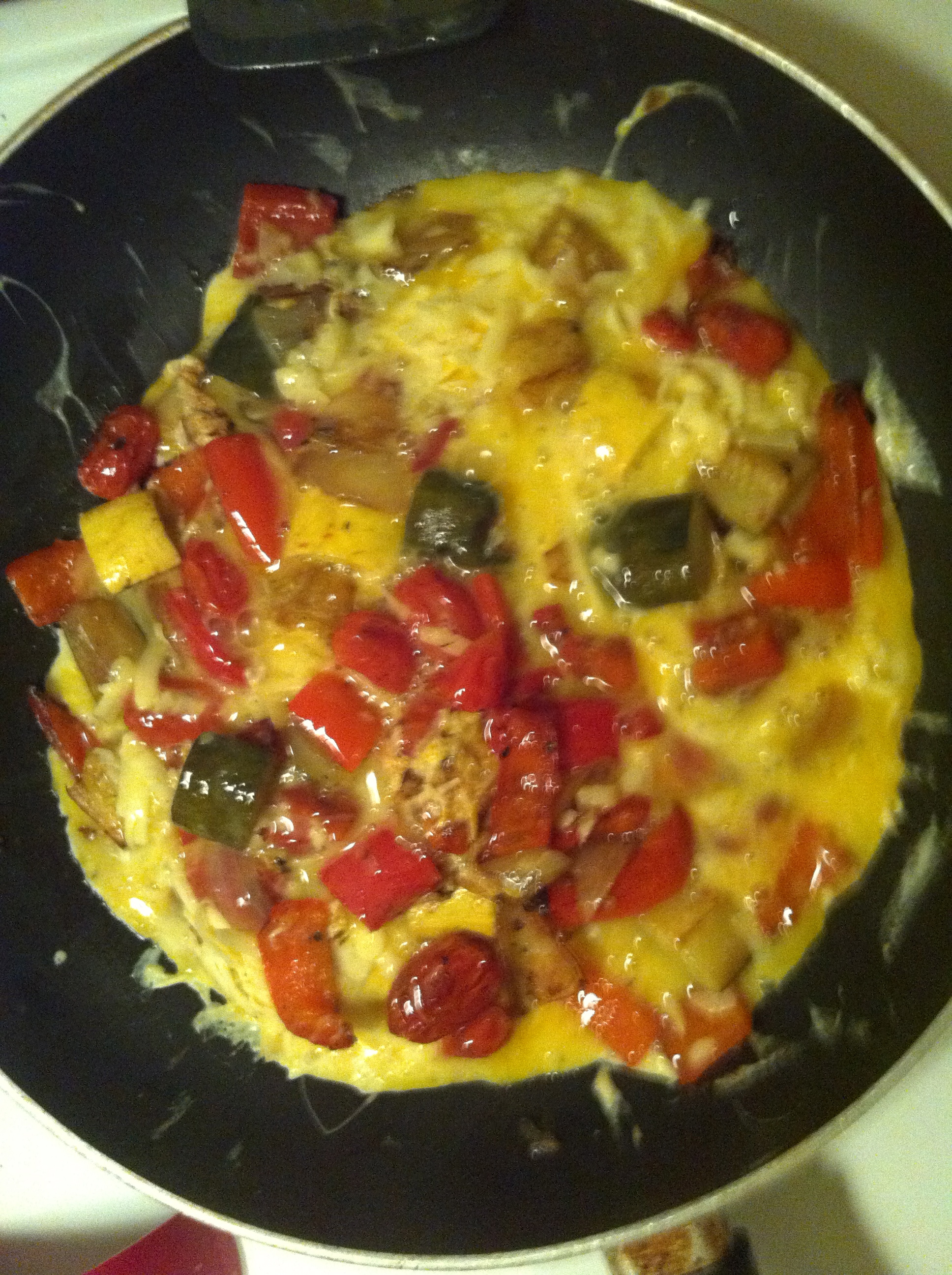
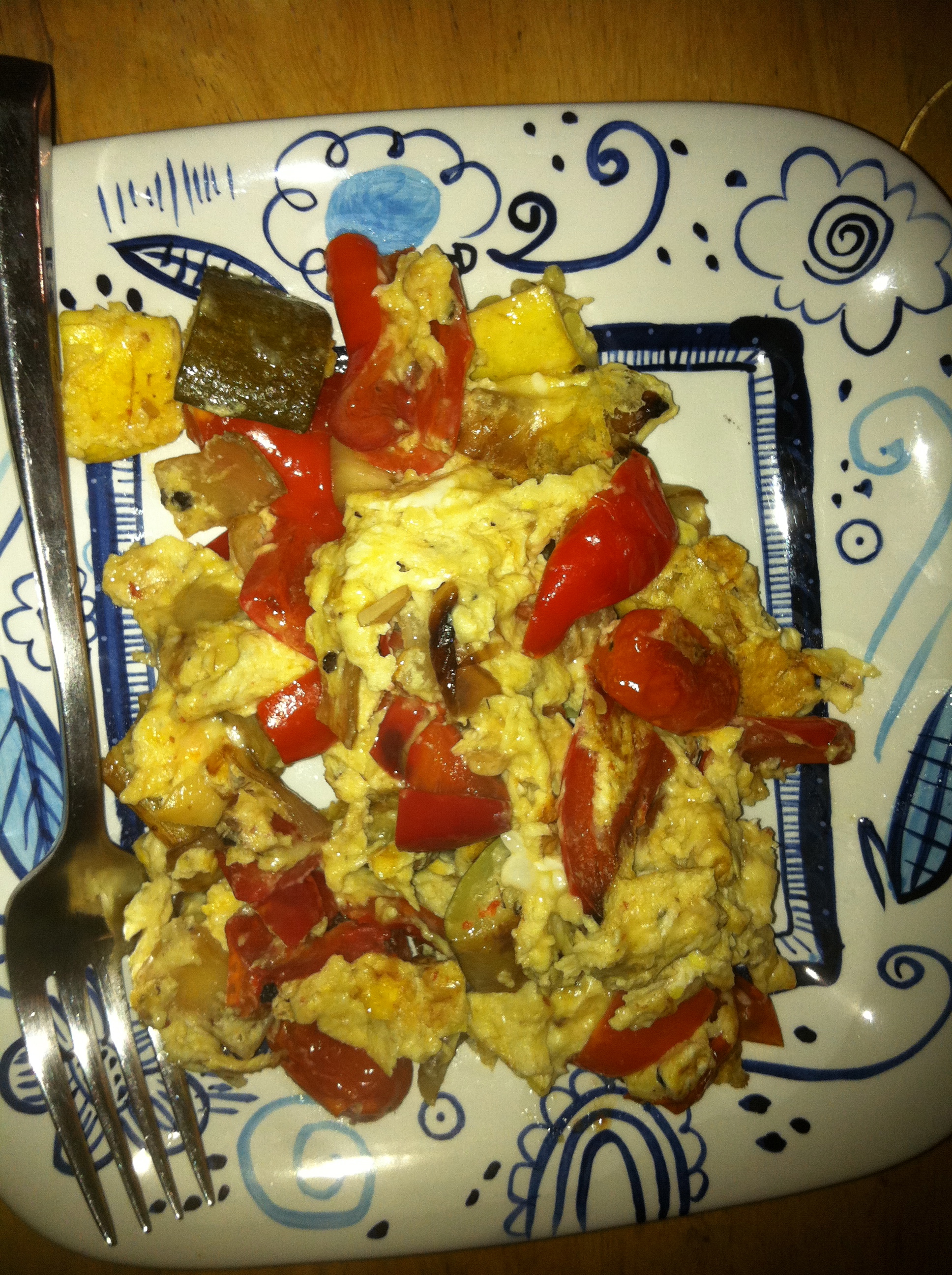
Do those veggies look familiar? They’re leftover from meal #1. I cut them into bite sized pieces, sauteed them til warm, and then added some eggs and gruyere cheese to the mix, for a sort of veggie scramble. I do some variation of this a lot when I have leftover veggies that need to be used up.

Our other meals this week: cheese dip and margaritas and guacamole at a fave Mexican restaurant. Cheese dip and salsa another night too. Chicken and veggie pizza from another fave place. And Mexican night at our church. Might be avoiding anything with a Mexican flavor for this next week!

moral foodieism

Anthony Bourdain: the face of immorality in America?

I’m a foodie. To ask B.R. Meyers of The Atlantic, this apparently makes me an immoral hedonist, whose insatiable appetite for food and pleasure and elitism will be the downfall of our civilization (seriously, he references the fall of the Roman empire and manages to blame it on food).

Meyers’ piece reads like a particularly strident sermon against what he sees as gluttony, and he lumps a wide variety of people together in order to make his case against the immorality of people who dare to enjoy their food. What do Anthony Bourdain and Michael Pollan have in common? I like both, and both think people should cook more and enjoy food more, but they have pretty different food philosophies. Bourdain probably does fall closest to Meyers’ hedonist vision of a foodie, being a big fan of pork products of all sorts, and unafraid to eat even the nastiest bits of an animal in his worldwide quest for good food on his Travel Channel show. He’s sort of like the Dr. House of food: abrasive, provocative, selfish–he’s doing it on purpose to get a rise out of people like Meyers. But as a longtime fan of Bourdain’s, I think he’s really a softie. He gets off on the kindness and similarities of people all over the world as much as he does a greasy pile of pork, and he’s so very genuinely warm with even the poorest folks who share meals with him on his travels. Sure, he’s known for his profanity-filled bestsellers about the food industry, but he’s a secret softie.

Pollan, on the other hand, comes at foodie-ism from an environmentalist point of view. His mantra, “eat food, not too much, mostly plants” is about a more sustainable way of eating, not dependent on industrial farming and emissions-causing shipping of food around the world. The “not too much” part flies directly in the face of Meyers’ anti-glutton arguments. Pollan does a lot of advocacy work for things like organic and small farms, and he’s educated a lot of people through his involvement with the movie “Food Inc.,” which personally changed my life and my relationship with food. I’d put him in a category with someone like Mark Bittman, New York Times food writer and author of some of my favorite cookbooks (the Food Matters Cookbook and How to Cook Everything Vegetarian), who advocates a “less meat-arian” diet that is better for our health and for the planet. I wouldn’t put either of them in a category with Anthony Bourdain.

Meyers also seems to think that people who really care about and enjoy their food are simply elitists pursuing physical pleasure rather than people trying to live out deeply held convictions in their daily lives. For one thing, I’m not so sure there’s anything wrong with flat out enjoying food. Being able to taste is a miracle and a gift. That we can take pleasure as we must take sustenance is a wonderful thing. Enjoying the blessings of food is a way of being thankful for it. I’m personally a “foodie” because I care deeply about my impact on the environment, the treatment of animals and workers, the way my eating affects global hunger, and the way my eating affects the health of my community’s economy and my own body. I try to eat less meat, more local organic produce, and to avoid all processed foods. And I love every bite.

Supposedly Meyers is a vegan and has a problem with meat eating in general, and that’s part of his issue with Bourdain. I can respect that. But while I may in fact be drawn toward vegetarianism myself, you aren’t going to win me, or many people, to veganism by suggesting that it’s immoral to really enjoy food. Come to our side! We don’t enjoy our food! Come not enjoy it with us! Why not illustrate that there is pleasure to be had in a deliciously prepared vegetarian dish? What would be wrong with enjoying a perfectly prepared piece of produce?

Are there foodie elitists? Sure. I’m not sure Bourdain is one of them– he’s as likely to eat at a street cart as he is at Le Bernadin. I’m not sure Pollan is either, since one of his major areas of activism is getting people access to fresh, healthy, whole food. And my food hero, Mark Bittman, points out that 90% of Americans own a car and spend an average of 30+ hours a week watching television, so acquiring healthy food and cooking it at home is actually achievable for a large chunk of us.

To me, food is sort of the opposite of elitism, because it’s about sharing. Meals bring people around a table together. They facilitate conversation and understanding and connection. People who are really excited about food want to share those experiences with others–to say “you have GOT to try this,” rather than keeping the experience locked away for only a privileged few. Real foodies have a curiosity about other food cultures, and an interest in reaching out and having new experiences, even if it’s just trying some new and weird looking vegetable that suddenly showed up in a CSA box.

Finally: who is the real elitist? Someone who cares passionately about food (much like others who care passionately about their hobbies and interests), or Meyers himself? Many times in the article, he suggests that people who care a lot about food don’t devote much time to what he believes are higher pursuits, for example:

Needless to say, no one shows much interest in literature or the arts—the real arts. When Marcel Proust’s name pops up, you know you’re just going to hear about that damned madeleine again.

I mean, the guy in the effing Atlantic quoting Roman historians and referencing Proust can hardly be calling OTHERS out on their elitism, for one thing. For another: you don’t have to choose between the stomach and the mind. Mr. Meyers: I’m a budding foodie and a home-cooking hobbyist. I’m also pursuing a graduate degree in English Literature and hope to be a professor one day. I’m just sayin’, one can love both food and the great thinkers and their great thoughts.

Ultimately, Meyers’ piece comes off as a particularly whiny rant about some people he seems to just not like. He seems particularly bothered by some of the foodies’ use of the f-word and likes to quote them using it, I guess in an attempt to point out that these hedonists use appallingly coarse language and further underline their supposed amorality. And yet, Meyers doesn’t offer an alternative. I can see how he might criticize Bourdain’s meat-fest gluttony, but I really don’t get what his issue with Pollan is. How DOES he think Americans should eat? What exactly is the problem with trying to eat in a way that corresponds to one’s values (Meyers seems to have no problem with people who keep kosher, for example) and enjoying it along the way? What’s so immoral about caring about how my chicken was raised, and how the farmer who raised it was compensated, and how the workers who slaughtered and packaged it were treated, and how much gas was used to get it to me?

scenes from the weekend

Friday I spent the entire day in the kitchen preparing food to serve to our homeless neighbors under the Broadway Bridge. While I was cooking, Jon picked up McKinley and took him to get his CDL renewed, FINALLY! Glory, hallelujah, what a hassle, but now he can finally find a job.

That night we served delicious Italian food to a robust crowd, and I also contributed cupcakes as it was our friend John’s birthday. I discovered (by way of the blogosphere), the best way ever to top a cupcake: toasted marshmallows. Way less hassle than frosting. Just pop a marshmallow on top of each of your baked cupcakes and put them back in the 350 degree oven for about 5 minutes. Then pull them out and gently smoosh each marshmallow down over the cupcakes. If you really want the toasty marshmallow flavor, broil them, but keep an eye out not to burn them.

Saturday was GLORIOUS. We went for a little bike ride around the neighborhood to enjoy the cloudless, 70 degree day. It was my first ride with the new panniers I got for my birthday.  I call them my “bike trunk.”

Continue reading “scenes from the weekend”

vegan pumpkin muffins

I’m not a vegan, but I’m very interested in eating less meat and animal products, for ethical, environmental, and humanitarian reasons. As I strive to eat more and more meat free meals each week, I’ve been perusing vegan cooking blogs and have been inspired to try my hand at vegan baking. I’ll probably never end up a vegan, but I can see myself going mostly vegetarian– I’ll never give up eggs or dairy completely, though. (Seriously, there is almost nothing in life that isn’t improved by cheese.)

This weekend, I decided to give the whole vegan baking thing a go, and I started with pumpkin muffins. True fact: there are a few things I hoard like the apocalypse is coming. It’s not anything practical, like toilet paper or something– no, I hoard butter, which I buy every time I go to the store, and canned pumpkin. You may remember a few years ago when there was a canned pumpkin shortage? Anyway, at that time, I wanted to make something pumpkin-y, but there was no pumpkin to be had. When I finally got my hands on a can of pumpkin, I held it to the sky like Scarlett O’Hara with her turnip and swore that as God is my witness, I’d never go without pumpkin again. Look in my pantry and you’ll find probably six cans of the stuff. I like pumpkin, and, though many think of it as just an October/November treat, I enjoy it as long as the weather is cold.

I looked at a few different pumpkin muffin recipes, and this is what I cobbled together.

Vegan Pumpkin Muffins

(This recipe was supposed to make 24 muffins. Mine made more like 28. Magic!)

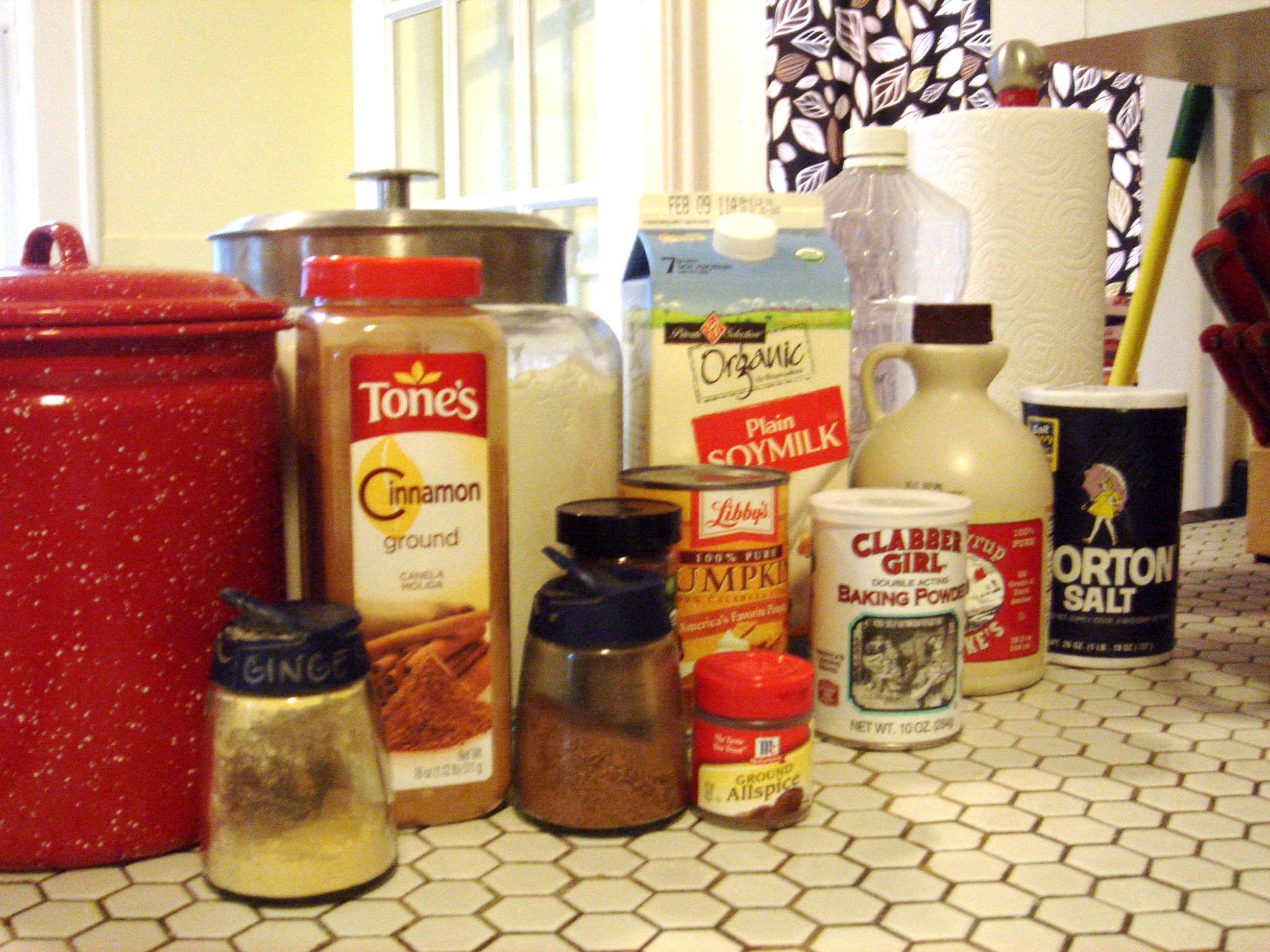
3 1/2 cups all-purpose flour
2 1/2cups sugar
2 tablespoons baking powder
1/2 teaspoon salt
2 teaspoons ground cinnamon
1 teaspoon ground or freshly grated nutmeg
1 teaspoon ground ginger
1/2 teaspoon ground allspice
1/2 teaspoon ground cloves
1 15 oz. can pureed pumpkin (Make sure it’s not pumpkin pie mix)
1 cup soy milk (almond milk would work too)
1 cup vegetable oil
3 tablespoons maple syrup

+ a few tablespoons sugar and a bit of cinnamon (I used 3 T sugar and 1 tsp cinnamon) for sprinkling on top of the muffins

Feel free to fold 2 cups of chopped nuts into the finished batter if you’d like.

Preheat the oven to 400. Lightly spray muffin tins with cooking spray. Mix the dry ingredients together in a large bowl. Whisk the pumpkin, soy milk, oil, and maple syrup together in a smaller bowl. Mix the wet ingredients into the dry ingredients. Fill the muffin cups 3/4 of the way full with the batter, then sprinkle each with the cinnamon/sugar mixture. Bake at 400 for 18-20 minutes, until a toothpick inserted into the center of a muffin comes out clean.

Verdict: These muffins have great flavor, and I’d totally make them again.  I took them to church on Sunday, and everyone loved them. They were a particular hit with the kids, even my friends’ kids who are extremely picky.  My only complaint is that they’re a little denser than non-vegan muffins. If I decide to fiddle around with the recipe some more, I might add a little baking soda to see if I can get more fluffiness.

best thing since sliced bread*

Image via the Google LIFE image archive.

This morning I woke up and did something I never thought I’d do: I baked a loaf of sandwich bread.

Sure, sure, I’ve written extensively about my love of No-Knead Bread, but this just might be a step too far.

See, when I was in school, I had a crazy person for a mom. She made me re-use the same brown paper bag to carry my lunch every day for a week, because it would be wasteful for me to throw a bag away every single day, when they could be re-used. She probably would have made me carry a lunchbox, but I threw a wailing hissyfit about how UNCOOL lunchboxes were and BUT ALL THE COOL KIDS CARRY THEIR LUNCHES IN BROWN PAPER BAAAAGGGGGGSSSSSS. As if the cool kids gave two shits about what my lunch was carried in, but these things strangely matter in high school. So, I carried my lunch in brown paper bags, which I carefully folded and tucked into my pocket to take home and use again the next day. Because clearly, my mom wanted me to be unpopular.

Beyond the bags, there was what I carried in them. Always, always a turkey sandwich with ranch dressing. But the bread, well… it wasn’t NORMAL. It didn’t come in a nice little sleeve all sliced up from the store. Nope. It was the uncoolest bread ever. It was made by my mom in her breadmaker, and the last slice was always wonky because it had a hole in it from the machine’s little kneading paddle. The slices were always slightly uneven and often too thick, and I was, for some bizarre reason, convinced the other kids would think I was like, poor or something because I didn’t have normal store-bought bread. Yep. I looked gift bread in the mouth and basically acted like a brat over BREAD. What can I say? I went to a “rich kid” high school where even bread and lunchbags could be status symbols.

Fast forward to today and my high school self is rolling her eyes at me as I proof dough and shape loaves. It’s possible that in the new locavore, DIY, Etsy world we live in, homemade bread is now actually more of a status symbol than I thought store-bought bread was in high school. But it’s also possible that homemade bread just tastes better, especially warm from the oven and slathered in butter. I love the way my house smells all yeasty and delicious. I love the satisfaction of making something with my own hands. I love knowing exactly what is in my food. And I love my mom for lovingly baking bread and packing lunches and taking such good care of me, even when I was such an ungrateful brat. I’ll have to bake her a loaf sometime…

*the title of this post comes from what Jon always says about my homemade bread: “It’s the best thing since sliced bread!”

the happiest kroger on earth

Full disclosure: I was recently contacted by a PR person from the Kroger company, who had found my blog and wondered if I might like to join some other Little Rock bloggers in a tour of their new Kroger Marketplace store which opens tonight in West Little Rock. Since many of my local bloggy friends were going, I said sure! So, today, I went on a guided tour of the nicest, newest grocery store I’ve ever seen, and I ate free samples of delicious food, and I had a fabulous time.  Honestly, it’s not hard to have a fabulous time when surrounded by ladies who will giggle with you over the pussy willows in the floral department and laugh at your quips about dog popsicles being FOR dogs, not MADE FROM dogs and make jokes about how a bunch of bloggers around a sushi sample tray is a lot like Shark Week.  And I admit, I’m just plain interested in grocery stores, so I thought I’d share what I learned (I was not required to write about this event).

You see, though I’m a super proponent of local, sustainable food (see my “we might starve without a CSA” post for proof, or check out this post for a rundown of my “food rules”), most of my food still comes from my local grocery store.  In Charleston, I was rather spoiled in my last year there, because a brand-spankin’ new Harris Teeter opened up less than a mile from my house and an awesome Earth Fare natural supermarket was located just down a greenway from us.  I could bike to both.  And y’all, the Teet, as I liked to call it, was FAN-CY.  It had the largest produce section I’d ever seen, and, upon first visit, I noticed the fanciest thing of all– like a Methodist, I felt “strangely warmed” in the frozen foods section.  I looked up to see that they were piping in hot air to cut down on the chills when the freezer doors were opened! It’s not very eco-friendly, I’ll admit, but it sure is fancy!  We got most of our produce from our CSA, most of our other groceries from the Teet, and I hit up the Earth Fare once in a while to shop the bulk bins.

No grocery store I’ve visited in Little Rock has come close to being as nice as the Teet. Until today.

Have you ever seen a grocery store produce section with every veggie in a perfect little pile, not disheveled by a hundred shoppers’ grubby little hands?  It’s glorious.  The WLR Kroger Marketplace has the largest produce selection I’ve ever seen, and they said they make an effort to acquire local (within 400 miles) produce as much as possible.  Anything you see labeled local is within 400 miles of the store.  Sure, it’s not hydroponically grown in your neighbor’s back yard, but I will applaud any step in the right direction– when a company like Kroger, the largest grocery store chain in the world, tries to cut down on the amount of petroleum used in the shipping of our food, it makes a difference.

nice selection of organic produce.
perfect piles of produce.

In addition to an awesome produce department, this Kroger had BULK BINS. I could have hugged them.  I’m a big bread baker, and a big baker in general, and having a place to buy organic flour and raw sugar in bulk? Well, it makes my little heart happy.  There was also a large selection of natural/organic products, and even a large selection of gluten-free products.  Right now I have to make separate trips to a Kroger store for my groceries and a Whole Foods for the bulk bins.  After this store opens, I’ll just be hauling my little hiney out to Chenal and hitting up the fancy Kroger Marketplace. (Though my usual grocery store, the Kroger in Hillcrest, will be reopening after renovations this October, and I’ll still shop there for most of my day-to-day food.)

Bulk Bins!

I was also very happy to hear from the guys in charge of the meat and seafood departments.  Kroger apparently is very big on voluntarily labeling country of origin and wild-caught/farmed on its seafood, which is really helpful for me as I try to eat sustainably when I consume seafood (for a consumer’s guide to sustainable seafood, check this site out).  We also learned that Kroger goes above and beyond national standards and employs its own inspectors to make sure its seafood and meat is of the freshest quality.  And when it comes to meat, I was happy to see that they had a number of all natural, hormone/antibiotic/nitrite free, vegetarian-fed, sustainably raised meat to choose from, including pork products.  I have cut down a lot on my meat production in order to afford to eat natural/sustainable/ethical meat when I do consume meat.  Beyond the products that made me happy because they fit into my food values, I have to say that the folks working the meat and seafood area obviously take a lot of pride in what they do and have a passion for their jobs.  That’s fun to see!

The seafood selection, which will be labeled as to country of origin and wild caught vs. farmed, which will make choosing sustainable seafood easier.
So happy to be able to get natural, more ethical meat in a major grocery chain.
Linda from the bakery had a theatrical flair and a love for her job.

Overall, yes, this is a conventional grocery store and it’s still full of rows of foods I wish didn’t exist– heavily processed, full of corn syrup, empty calories in boxes and bags. BUT, this store is also making it easier for people to get fresh, more local produce and fresh, more sustainable meat and seafood, and that’s a step in the right direction that I totally applaud.  The store also has a commitment to helping shoppers create more meals at home by demonstrating cooking techniques, suggesting pairings, giving samples, and having well-trained employees who can answer shoppers’ questions.  All of that on top of bulk bins? Well, my only complaint is that it’s way too far away from my house for me to shop there on a regular basis.  Now to begin the countdown until my neighborhood Kroger reopens!

If you’d like to see more photos from the store, you can check out a slideshow on my Flickr.

kitchen catch-all

My Kitchen Catch-all posts are a roundup of what I cooked, where I ate, what I’m thinking of cooking, and what’s got my brain cooking each week.  Let me know what you think, and tell me what you’ve been cooking lately!

eating in

This isn’t everything I cooked this week, but more of a highlight reel.

  • The best dinner I made all week was this French Tomato and Goat Cheese Tart. (At the time of writing, this link was giving me “database errors” but I swear it’s where I got the recipe.)
  • The same night we ate the tomato tart, I also made us a fancy dessert: Honey Lemon Pots de Creme.  Usually, you see chocolate pots de creme, and though I love them, they’re not very summery.  This recipe makes a VERY lemony, tart, creamy dessert. Jon wasn’t crazy about them, but I was a fan. Be sure to grate the lemon zest very fine or it will make for a strange texture.
  • Berries in Meringue bowls with Orange-Scented Chocolate and Vanilla Cream: Because the pots de creme used a bunch of egg yolks, I had a bunch of whites left over.  I had seen an episode of Jamie Oliver this week where he made a big meringue with pears and chocolate and cream and decided to try something similar.  My vision was to have little bowls made of meringue, filled with summery berries and drizzled with orange-scented chocolate and sweet vanilla cream.  To make the meringue, I whipped my six egg whites until they formed firm peaks, then added about a cup and a half of sugar and a pinch of salt and whipped on high for about 8 minutes.  I formed the meringue into 6 little bowl shapes on cookie sheets lined with parchment paper and baked for about an hour at 300.  I filled each bowl with blackberries, and drizzled them with chocolate (the chocolate was bittersweet chocolate, melted with the zest of 1 orange and thinned out with a little cream) and topped them with a vanilla cream (1.5 cups heavy cream whipped with 1/4 cup powdered sugar and a dash of vanilla). SO YUMMY.

    Ok, so, you can't see the berries, the cream would look better if it had been piped on, and the chocolate wasn't thin enough for pretty drizzling. STILL. This was amazing.

eating out

Much like I did for Charleston restaurants, I plan to make a running list of places I’ve tried in Little Rock.

  • Wednesday night I joined some girlfriends from church for a girls’ night at Salut Bistro on University.  The restaurant is a little hard to find, as it’s in the first floor of what seems to be a tall office building, and the entrance isn’t clearly marked.  I had a yummy $6 glass of Kung Fu Girl riesling from Washington and enjoyed a beef brisket sandwich with a side of fries.  The sandwich was tasty, and the fries were well seasoned.  The menu was a bit scattered, but the food was good, and I think everyone I was with enjoyed their meals.  They also have a late-night menu that looked pretty good– might have to go back and see what that’s like sometime.

food for thought

  • I’ve been meaning to try my hand at making my own pitas for a while. Now I’ve got my eye on making some tzaziki sauce to go with them (Serious Eats).
  • My favorite restaurant in Charleston was the Glass Onion.  Located just around the corner from our house, the GO was a regular haunt for us. I liked things there that I wouldn’t eat anywhere else, including biscuits and gravy and meatloaf. Their delicious Southern food is also deeply local, and they served as the pickup point for our CSA. All this to say, they have a blog, and word is they’re going to be putting out a cookbook.  I was happy to see they shared their Country Captain recipe and plan to make it soon. It’s a Southern curry dish– yes, there is such a thing!
  • I’ve also been dreaming of replacing my non-stick KitchenAid cookware for a stainless steel set. Serious Eats says the Tramontina sets sold at WalMart are basically as good as 5 x’s pricier AllClad sets.
  • First cupcakes, then macarons, then whoopie pies. Apparently the next big dessert trend, according to The Kitchn, is Moon Pies.
  • From The Atlantic, a theory about why we love food TV so much.

a winner of a chicken dinner

We’re eating a lot less meat these days, but when I saw organic free-range chicken on sale at Kroger, I knew I had to grab it.  After that, I had to decide what I wanted to do with it.  Very quickly, I remembered Jamie Oliver’s Chicken in Milk recipe which I had seen hyped on Apartment Therapy’s The Kitchn more than once.  They even called it “the best chicken I’ve ever had.” So of course I had to try it!

Overall, the recipe is a very easy one.  Aside from browning the chicken in butter in a skillet (which I think you could totally skip if you’re not planning to eat the skin), the recipe is pretty hands-off.  You just put all the ingredients in a dutch oven and let the chicken braise in the delicious flavors of lemon, herbs, garlic, and, strangely, milk.  Many Apartment Therapy commenters seemed confused that you’d mix milk and citrus and were concerned about curdling. They were right to be concerned, as I often mix lemon juice with milk to make buttermilk in a pinch.  In this recipe, it’s just lemon zest, not juice, in with the milk, so it doesn’t really curdle and separate so much as melt into the chicken, tenderizing it with the lactic acid and keeping it nice and moist during cooking. This is NOT a dried-out chicken recipe.  I’m pretty sure if you just served this up to someone, they’d have no idea milk was an ingredient.

When perusing recipes online, always read the comments– you’ll probably pick up some interesting tips that may make for a better dining experience.  Reading the entire Apartment Therapy post and comments rather than just Jamie’s recipe let me know that I should probably cook this with the lid on for the first hour and off for the last 30 minutes.  I also got the idea to stuff the cavity of the chicken with the zested lemons and a little thyme (the herb I had on hand, though the original recipe calls for sage).

OK, so it's not magazine gorgeous and I should have tucked the wings back instead of letting them flop all over. I PROMISE it's one of the tastiest, easiest "roasted" chicken recipes you'll find.

Here’s the recipe, modified to my liking.

Chicken in Milk, a la Jamie Oliver

Ingredients:

  • 1 3.5 lb. organic chicken
  • 1 pint milk
  • 2 lemons, zested, and lemons halved (If you can, zest the lemon with a coarser grater or use a vegetable peeler for larger strips)
  • 1 cinnamon stick
  • 1 handful of sage leaves or whatever herb you have on hand. Rosemary or thyme works too.
  • 10 (or more) cloves garlic, skin left on
  • salt
  • pepper

How to:

  1. Preheat oven to 375°F
  2. OPTIONAL, only do this if you like to eat crispy chicken skin or want it to look pretty and brown, otherwise, it’s just an unnecessary step: Season chicken all over with salt and pepper and heat a few tablespoons of butter or olive oil in your dutch oven. Sear the chicken to golden brown on all sides. Remove the chicken and discard the oil/butter. Otherwise, just season chicken all over and move along.
  3. Stuff cavity of chicken with the halved zested lemon and some of your herbs.
  4. Place chicken and all other ingredients back into the dutch oven, sprinkling with salt and pepper to taste. Cook for 1.5 hours, lid on for the first hour, lid off for the last 30 minutes. Baste if you want, but I totally didn’t, and it worked out fine.
  5. Let chicken rest for at least 10 minutes before cutting and serving. While it rests, fish out the garlic, because it’s SO YUMMY smeared on crusty bread.
  6. Reserve the sauce. Pour it over the chicken, dip your bread in it, pour it over the chicken and serve over rice, make mashed potatoes with it… DO SOMETHING WITH IT, as it’s so delicious.

I served my Chicken in Milk with homemade beer bread smeared with the garlic and sauteed squash and zucchini.

Save your chicken carcass and giblets to make chicken stock.  It’s SO NOT HARD, and so much more flavorful and less sodium-filled than canned/cartoned stock.  My method is to put the carcass and giblets with a halved onion in my crock pot and cover with water. Then I cook it on low for at least 12 hours. Fish out the big stuff, strain the rest, the freeze in Ziploc bags in 1 or 2 cup increments for future use.

It may be cloudier than store-bought stock, but it's much more flavorful and has way less sodium.
I freeze my stock flat in Ziplock bags in 2 cup increments. Makes for fast defrosting in a sink of warm water when I'm ready to cook. Usually it's thawed by the time I'm done chopping other ingredients.

Let me know if you try this recipe!

we might starve without a CSA

Image: Clagett Farm CSA Week 9, a Creative Commons Attribution (2.0) image from galant's photostream

We’ve been in Little Rock and without our beloved CSA for three weeks now, and I’ve realized that after a year as a CSA member, I completely forgot how to feed us in a conventional way.

You see, I became so used to receiving a giant box of veggies each week and planning my meals accordingly, that I actually forgot how to plan a week’s worth of meals and shop for us without it.  This became apparent today when we realized we were both starving and had nothing in the house for lunch.  Before, back in our CSA days, when our fridge was always overflowing with veggies, every meal I cooked involved enough leftovers for at least two lunches.  On top of that, just to use up all the veggies before they went bad, I was always making and freezing ratatouilles, soups, and pasta sauces that could be pulled out and defrosted to make a last-minute meal.

Today, stomach growling, I peeked in the fridge and realized that while I had ingredients to make two more dinners (I shop the Farmer’s Market on Saturdays and fill in with the grocery store on Sundays), the only other things I had to eat were bacon, eggs, tortillas, cheese, pita chips, and hummus.  I had completely forgotten to plan for lunch, because I got so used to having leftovers or something from the freezer!  “What are we going to EAT?” I wailed to Jon, flopping down on the guest bed near where he was using his computer.  (I tend to get swoony and dramatic when hungry.)  “We could get some lunchmeat and sandwich stuff,” he suggested.  “But that’s against the rules!”

What are the rules? Well, after seeing “Food, Inc.” we agreed upon the following:

  • We only eat meat that is sustainably and ethically raised.  This basically means “pastured” meat, or meat that comes from an animal raised in a pasture (more than “free-range”, which is basically meaningless) where it can stretch its legs, graze on grass, and, in the case of chickens, munch on bugs and worms.  This meat would preferably be local, but does not have to be.
  • In order to afford that meat, we eat vegetarian (or nearly vegetarian) for much of the week.
  • What veggies we do consume are to be local (when possible), first and foremost, and preferably organic.
  • All of our dairy is to be organic.  Eggs are to be from pastured nesting hens.
  • We avoid corn syrup, processed foods, and excessive packaging.
  • Our coffee is to be fair trade and shade grown.
  • Most of these rules go out the window outside our home.

After some discussion, we decided that 1) we might have to relax our rules while we figure out a food routine here in our new city, and 2) it was time to get ourselves to Sam’s Club.  In Charleston, we were members of Costco, but it’s basically the same thing as Sam’s.  The #1 major reason to be a member is to get big frozen bags of seafood.  Currently, we don’t have rules about seafood, though we are moving in that direction as we learn more about the environmental impact of commercial fishing and fish farming operations.  I have a general idea that wild-caught salmon is “better” than farmed salmon, but I couldn’t tell you why.  Still, fish is a staple in our diet, because it’s easier to get than pastured meat most of the time, and because I’m still not a good enough vegetarian cook not to base most of my meals around a protein source.  Other things we commonly buy at Sam’s/Costco: canned tomatoes, chicken stock, chocolate chips, pasta, pita chips, Zyrtec, Prilosec, Lactaid, parmesan cheese, feta cheese, and dog food.

So, now we’re members of Sam’s (which, I have to say, membership for a year was $40 and they gave us a $20 gift card, so, with the savings on what we bought today alone, our membership is more than paid for), and our pantry is nicely stocked.  I’m realizing I need to buy more than I think I need at the farmer’s market on Saturdays so I can make a few extra dishes and freeze them to have in a pinch later.  We’re still figuring out how to eat our values in a new city, and I’m sure we have a ways to go.  I’m also trying to figure out how the food aspect of this blog will look without the weekly rhythm of our CSA boxes, though I know I want to keep sharing stories and recipes of our adventures in more ethical eating.  If you have suggestions, let me know! Here’s hoping we won’t starve because I don’t know how to eat like a regular person anymore.

I’m picking on picky eaters

We all know picky eaters.  Carrie Bradshaw famously claimed to be allergic to parsley so as not to wind up with any on her plate at restaurants.  Sally Albright of “When Harry Met Sally” had the most anal way of ordering apple pie imaginable:

Sally Albright: But I’d like the pie heated and I don’t want the ice cream on top, I want it on the side, and I’d like strawberry instead of vanilla if you have it, if not then no ice cream just whipped cream but only if it’s real; if it’s out of the can then nothing.
Waitress: Not even the pie?
Sally Albright: No, I want the pie, but then not heated.

When I read this paragraph at the opening of a Wall Street Journal piece about picky eaters, I immediately thought of a friend, an adult professional friend, with the palate of a four year old, subsisting on grilled cheese, chicken tenders, hot dogs, plain turkey sandwiches on white bread, and mac & cheese:

This is what Heather Hill eats: French fries, pasta with butter or marinara sauce, vegetarian pizza, cooked broccoli, corn on the cob and cakes and cookies without nuts.

And what she doesn’t eat? Pretty much anything else.

Ms. Hill is what you might call a picky eater. But she isn’t a child. She’s a 39-year-old mother of three who runs her own business in Raleigh, N.C. She says she is unable to eat other foods.

Unable? Is she allergic?

The piece seems to suggest that extreme pickiness that persists into adulthood may soon join anorexia and bulimia as an eating disorder. To my non-doctor mind, they have many similarities. I even have a theory that adults who are picky eaters, like my friend, have, at root, a control issue– they see food as a socially acceptable area in which to exert exacting control of a sort they are unwilling or unable to exert in other areas of their lives.  I also have other theories that they’re simply unwilling or too inhibited to experience true pleasure, but, like I said, I’m no medical or mental-health professional.

The thing is, I used to be a picky eater.  Hoo boy, I could gag on a green bean in a performance worthy of an Oscar.  I refused to eat bell peppers, because I thought they tasted like Windex.  I cried if faced with hominy.  I hated honey.  I hated asparagus and artichokes.  I could sniff out a mushroom a mile away in order to avoid it.  I despised poppy seeds.  I wouldn’t touch spinach or any other greens.  My husband, when he was still my boyfriend, used to keep a running Word document of all the things I didn’t like, marvelling in particular of my preference to only eat blueberries in pancakes, never muffins.

You could say I took after my Uncle Jimmy.  My Memaw loves to make broccoli-cheese rice casserole.  My entire family calls it “Goop,” even Memaw.  Why? Because, as a child, my Uncle Jimmy would always proclaim, “I’m not eating any of that goop!” about the casserole.  And then one day, left alone in a room with a dish full of Goop, he ate the whole thing.  Turns out, without pressure to like it and a desire to refuse, just to be a punk kid, it turns out he liked it after all.

As I’ve grown older, I’ve found that repeated attempts to try things I thought I hated eventually led to me liking them.  Bell peppers, it turns out, can be delicious.  I even eat them raw!  Green beans are one of my favorite veggies.  I love honey!  Wilted spinach with garlic is one of my favorite foods.  Blueberries, while still my least favorite of all berries, have become acceptable in cakes and muffins, though I’m still working on liking them in their more overwhelming form in cobblers and pies.  I will no longer avoid mushrooms if they’re part of an ensemble of other ingredients, though you’d not catch me ordering portobella fajitas just yet.  And I’ve been known to make a mean poppy seed lemon cake.

What changed? To some degree, it was learning to cook and discovering ways to prepare things in ways I could enjoy them.  Being a member of a CSA, in particular, challenged me to find at least one way I’ll eat any number of veggies, forcing me to find ways to make turnips, mustard greens, and rutabagas, among others, tolerable.  In addition, I just decided to be more adventurous, to see if I couldn’t embrace the adventure of trying new things and seeing if they were, in fact, pleasurable.  I stopped being so uptight and rigid about my food rules and found out most of them were stupid.

Having been a picky eater who’s now seen the light, I have little tolerance for truly picky adults.  While everyone will always have a few foods they just can’t groove on, people who have fewer foods they will eat than those they won’t will always drive me nuts.  My husband hates corned beef and he hates olives.  I still haven’t learned to like the taste of beer or avocado, though I keep trying, and I’ve got some progress to make yet on blueberries and mushrooms.  But I’m determined to keep trying things I think I don’t like, because I never know when I’ll be surprised.  The world is too full of deliciousness to spend my life hemming myself in with silly rules.

As for the extremely picky folks in the Wall Street Journal piece: in a way I pity them, because they’re really missing out.  And I hope they never come over to my house for dinner.