It’s just not working for us right now. I’m trying to study for my master’s comprehensive exam which takes place April 1&2, Jon is working like crazy this month (don’t even get me started on how much I hate the ER shift from 3-midnight that means he misses bedtime), and we just don’t have the time or energy or head space to think and plan as much about food as this whole project requires. We were both tired of feeling hungry all the time. I just want a damn grilled cheese sandwich.
I really considered hanging on, solely for the sake of the blog. It appears my readers like vegan food posts. I like happy readers. But I’ve already “cheated” on this thing a few times (currently eating red beans and rice with andouille sausage as I type), and I just have to come clean that it just isn’t happening anymore.
I don’t have any big spiritual insights about failing my Lenten devotion. I have some clarity now that being a vegan is harder than I thought it was, and that it’s most definitely not for me. I shall return to my usual “less meatarian” (per Mark Bittman) diet of largely lacto/ovo vegetarian eating with supplements of sustainably raised meats. I guess I am just really grateful for the bounty available to me, and the fact that the only deprivation I know is the kind I choose (and then fail to keep choosing).
One of my favorite Bible verses is from the Psalms: “Taste and see that the Lord is good.” It seems petty, maybe, and possibly anti-Christian, but I think food is a great way to experience the goodness of God. Despite a sort of anti-fleshly strain in our faith, one that preaches denial of the body and being above bodily things, we are enfleshed, and we worship a God who became flesh. A God who, in Jesus, seemed to really love eating good food with people. One of the first things he really wanted after he rose from the dead? BREAKFAST. Sure, he chose fish where I might choose a runny-yolked egg, but I think in Jesus we see that while denial is good for a time, there’s nothing inherently sinful about enjoying good meals, good wine, and good company.
I also still believe that what we choose to eat is a spiritual issue, an opportunity to demonstrate our care (or in Christian lingo, stewardship) for our bodies, our neighbors, the poor, and the planet. And I will probably always be wrestling with how my diet reflects my values. But, for now, I won’t be doing it as a vegan. I need to focus on studying and taking care of my family in a way that I was not able to on this diet.
I know I said in my last post on Vegan for Lent that I was having issues with breakfast. Until this weekend, when I somehow concocted the BEST BREAKFAST EVER. Yes: a breakfast worthy of all caps. I didn’t even wish it had a runny yolked egg on top, which means you *know* it’s good.
It started, like some of my best dishes, with trying to make something with the weird odds and ends we had left a week after my last grocery trip. In this case, I had 4 small potatoes starting to go soft, and thus an amazing breakfast was born:
Makes 3-4 servings
Ingredients:
4 palm-sized potatoes
1 onion, halved, one half quartered and sliced thinly, the other half diced
1 jalapeno, diced
1 can pinto beans
3 cloves garlic, minced (we reallllly like garlic, so if you don’t, maybe start with one clove and see what you think)
Cumin
Paprika
Chipotle chile powder
Creole seasoning (even I admit this is weird, so skip it if you want)
Oregano
Red wine vinegar
Salt
Pepper
Oil of your choosing (I used vegetable oil for the hash browns and coconut oil for the beans)
Salsa
Corn tortillas
The thing about a no-recipe recipe is that I sort of threw this together while feeding breakfast to my babies. When cooking on my own, I rarely measure things. I just pour spices out into my palm or sprinkle them over a dish and go with what feels good. So, if you need exact spice measurements, this recipe may not be for you, but I say go with your gut and taste along the way.
I shredded the potatoes using a food processor, then pressed them in a fine mesh strainer to dry them out a bit. Meanwhile I heated up enough vegetable oil to cover the bottom of my skillet. I added the shredded potatoes, jalapenos, and sliced onion once the oil was hot. Then I seasoned with salt, pepper, and yes, Creole seasoning. I don’t know what I was thinking, but I saw the shaker sitting there and went for it. It tasted delicious. Fry the potatoes, stirring occasionally, until to your desired crispyness. I totally believe that frozen hash browns would work here, but I needed to use the potatoes.
In another skillet, I melted a couple tablespoons of coconut oil, because I like the subtle coconut flavor with the beans. Then I added the diced onion and garlic and sauteed til softened. Then I added cumin, paprika, and some chipotle chile powder to the mix, stirring for about a minute. Then I drained the can of pintos and added them to the skillet with the garlic and onions. Then I remembered a favorite rice and beans recipe and added some oregano and a few dashes of red wine vinegar, along with salt and pepper. Cook until the hash browns are done.
Layer the beans over the hash browns, pour some salsa over the top (we used a roasted garlic and cilantro salsa), and serve with a couple of corn tortillas on the side.
Variations: I’m sure any kind of beans would work here, except maybe garbanzos. And yes, it would be excellent with a fried egg or some pepperjack cheese or a dollop of sour cream on top, but it’s perfectly tasty by its own vegan self.
This week in my lenten discipline has taught me something about my psychology: I don’t like being told what to do. The minute there is a rule about something, all I want is to break that rule. I may go weeks without eating meat naturally, but the minute I make a rule that I have to be vegan, all I want are runny yolked eggs, things covered in cheese, and bacon cheeseburgers. I may have taken advantage of Sunday to have both a cheeseburger and cheesy pizza. I could spiritualize this into a nice post about how sinful I am, or something, but the reality is, from the very beginning, people don’t like being told not to eat (of the fruit of that tree, or of the fruit of Five Guys). I may be a bad Christian, but it seems to just be the way people are, and I’m people too. I can’t imagine God not knowing that we’d be this way from the start. I don’t think there’s anything inherently wrong with cheese, really, but doing without it has definitely required me to think harder than I would otherwise think about my food.
Breakfasts are especially difficult. I tend toward the hypoglycemic in the mornings and have always preferred protein to carbs or fruit to start my day. Before, my go-to was homemade Egg McMuffins, or a cheese stick. Rarely I’ll have a KIND nut and grain bar. Now, I find myself having an extra cup of coffee to tide me over, because I don’t want to eat cereal or oatmeal or fruit. So, easy vegan breakfast solutions that are not cereal with almond milk would be appreciated.
Another thing I’ve noticed with being a vegan is: I get bored with the leftovers really fast. Even if a meal was really great the first time, I don’t really want to eat it again very often. This has led to some weird ass dinners when I am avoiding leftovers. The other night I seriously ate a baked potato with green goddess salad dressing on it because I couldn’t face any of the zillions of tupperwears in my fridge. Usually, I’ll put a poached egg on leftovers, or turn them into a frittata, to shake it up a bit, but I can’t do that with this diet.
This week I tried to use some of the online recipes I’d collected on my Pinterest board so you guys can try them too. Here’s what we ate in the last week (it’s so few meals because they always seem to make a ton of leftovers, and because I was home alone for several days, so I did less cooking):
This gumbo was really tasty served over brown rice, and the friends we had over for dinner who aren’t vegan seemed to think so too! The key, to me, to make up for the lack of sausage is the addition of some liquid smoke seasoning.
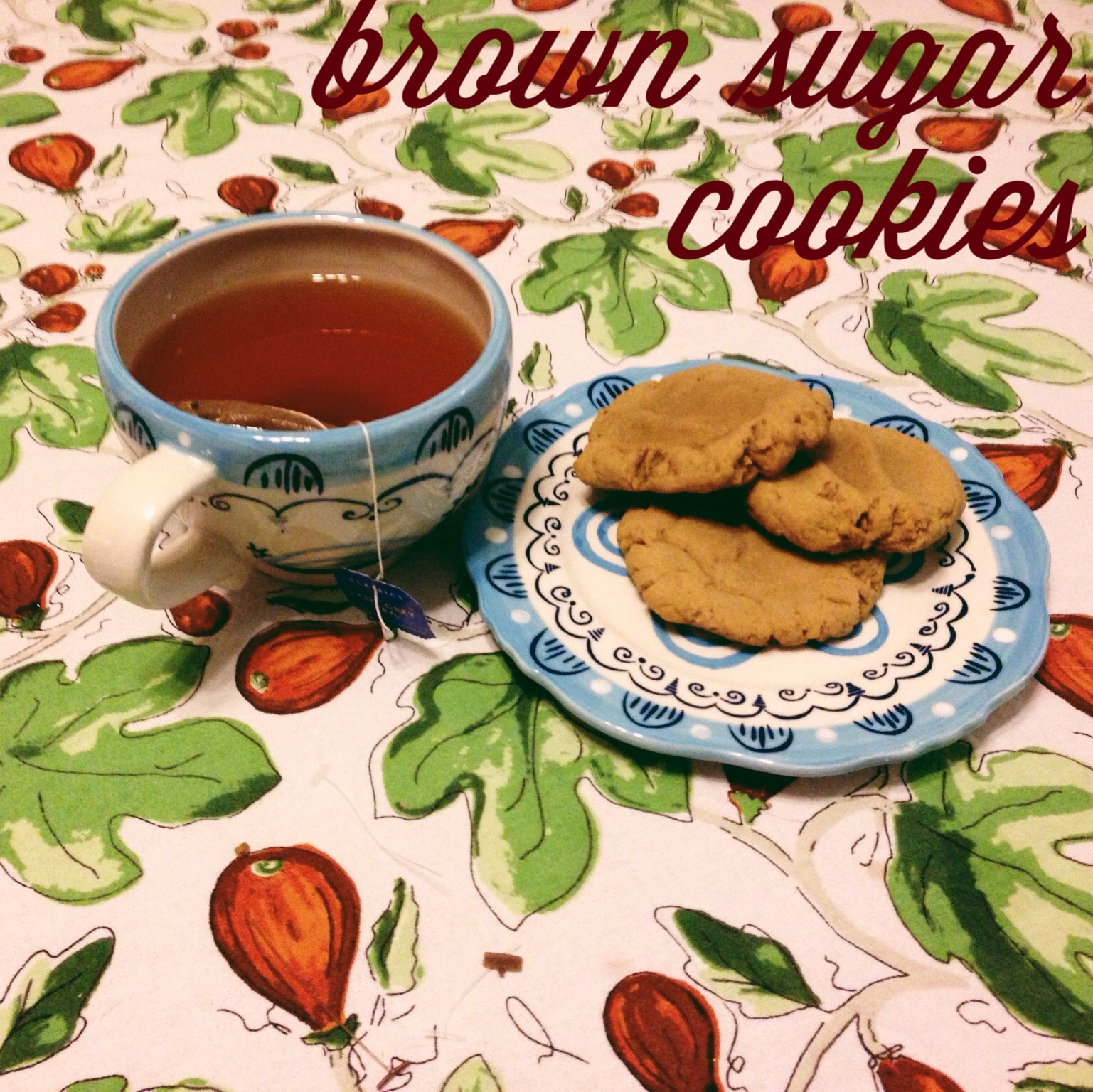
These cookies use coconut oil instead of butter, and I veganized them by using applesauce and a little baking powder and soda to replace the egg. The texture was slightly different than the average cookie, but they were decidedly cookie-like and very tasty. They basically taste like a slightly coconutty sugar cookie.
I wanted to try a cheese substitute, just for the experience, so I largely gave this casserole a try just to use the Daiya cheese. While I couldn’t get the cheese to melt like it claims it will, I found it to have a good flavor, and will buy their products after Lent is over for my lactose-intolerant husband. The casserole itself was a little dry, so I added salsa to my plate. If I made it in the future, I might just pour some enchilada sauce in with the veggie mix to make it saucier.
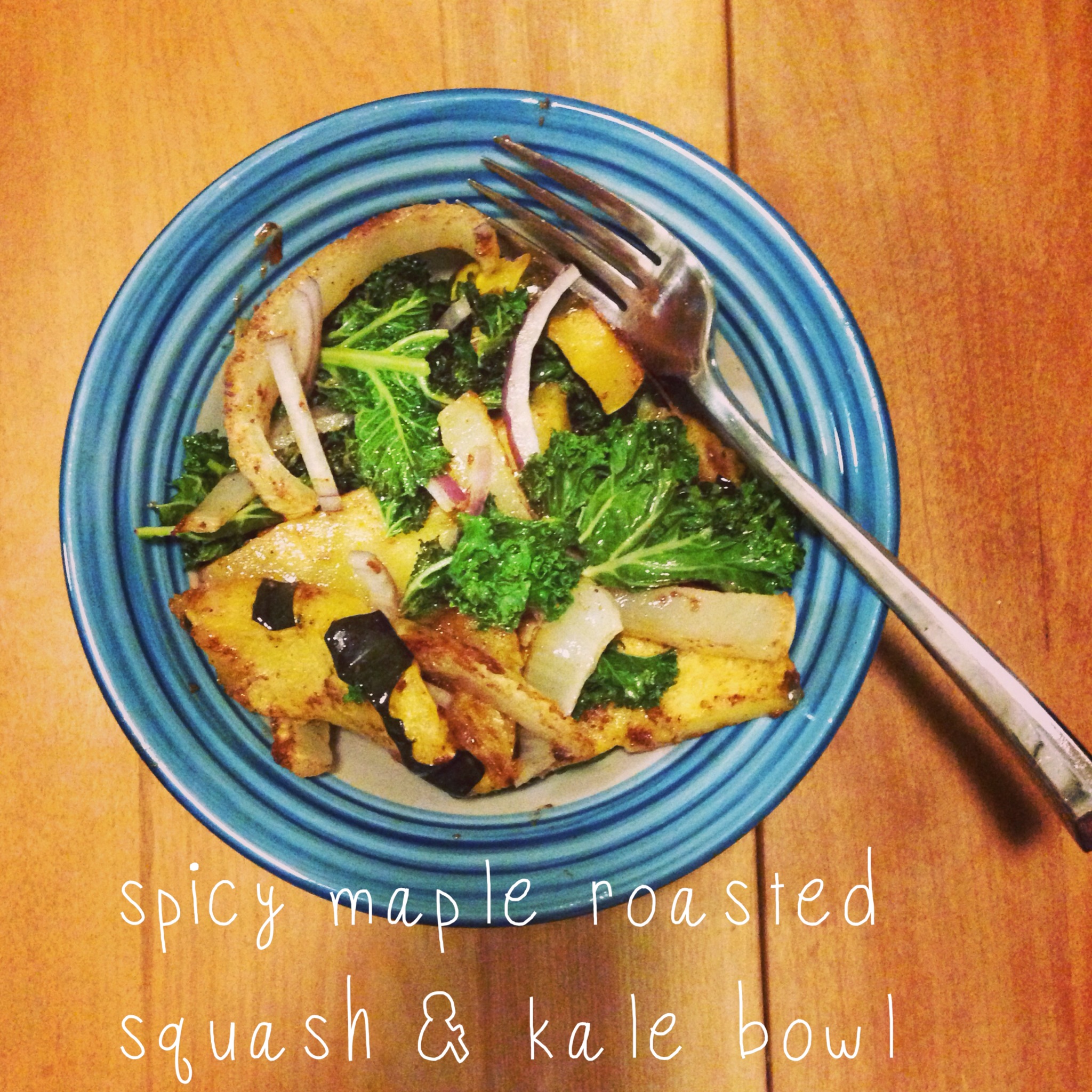
This squash and kale bowl had a great flavor but wasn’t quite filling enough to be a whole meal. I might add bulgur or quinoa to make it more filling next time.
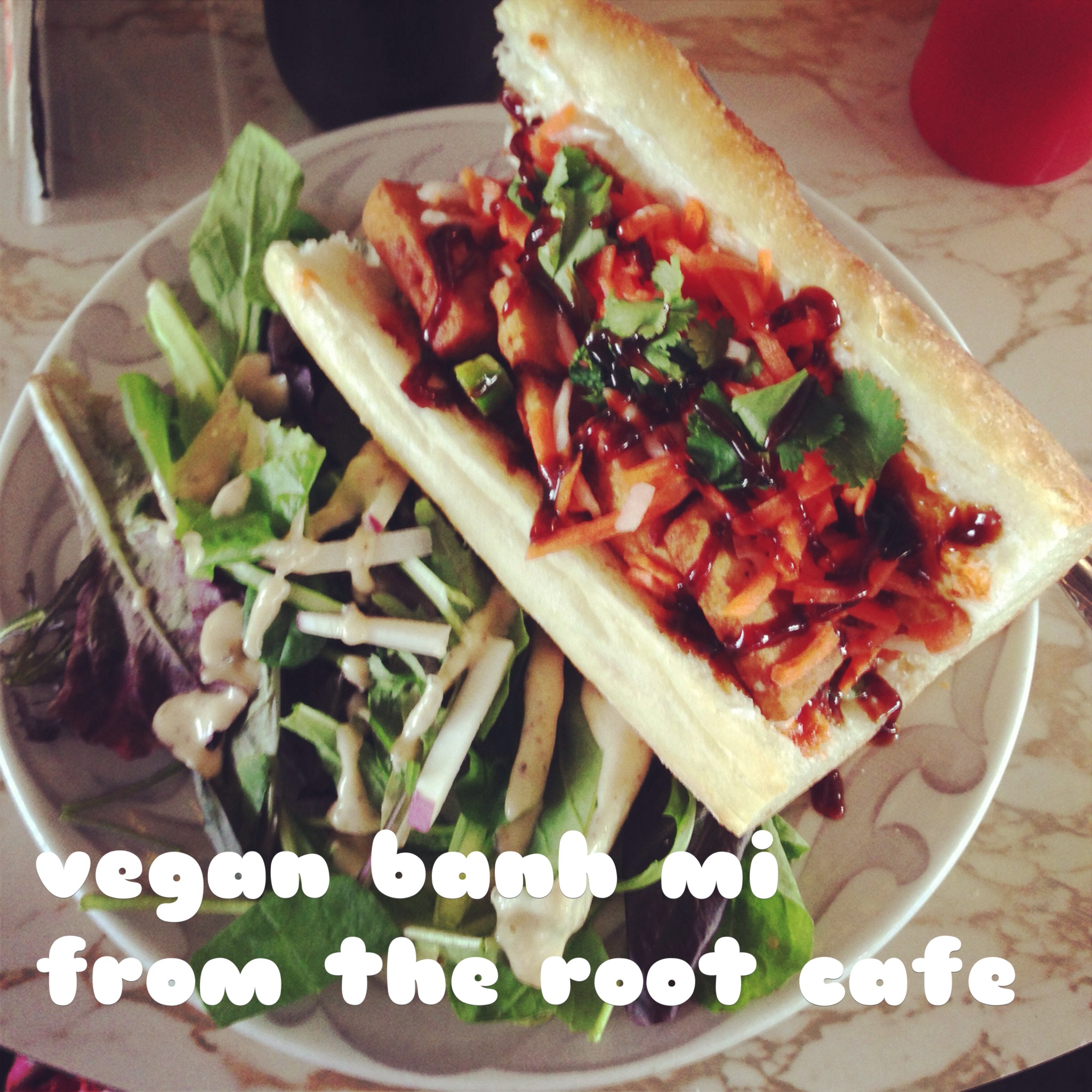
OK, so I didn’t really cook this tofu banh mi. Consider this a plug for The Root Cafe here in Little Rock. All of their food is local and delicious. It was great to know there was a place I could go and have something yummy for a lunch out with a friend.
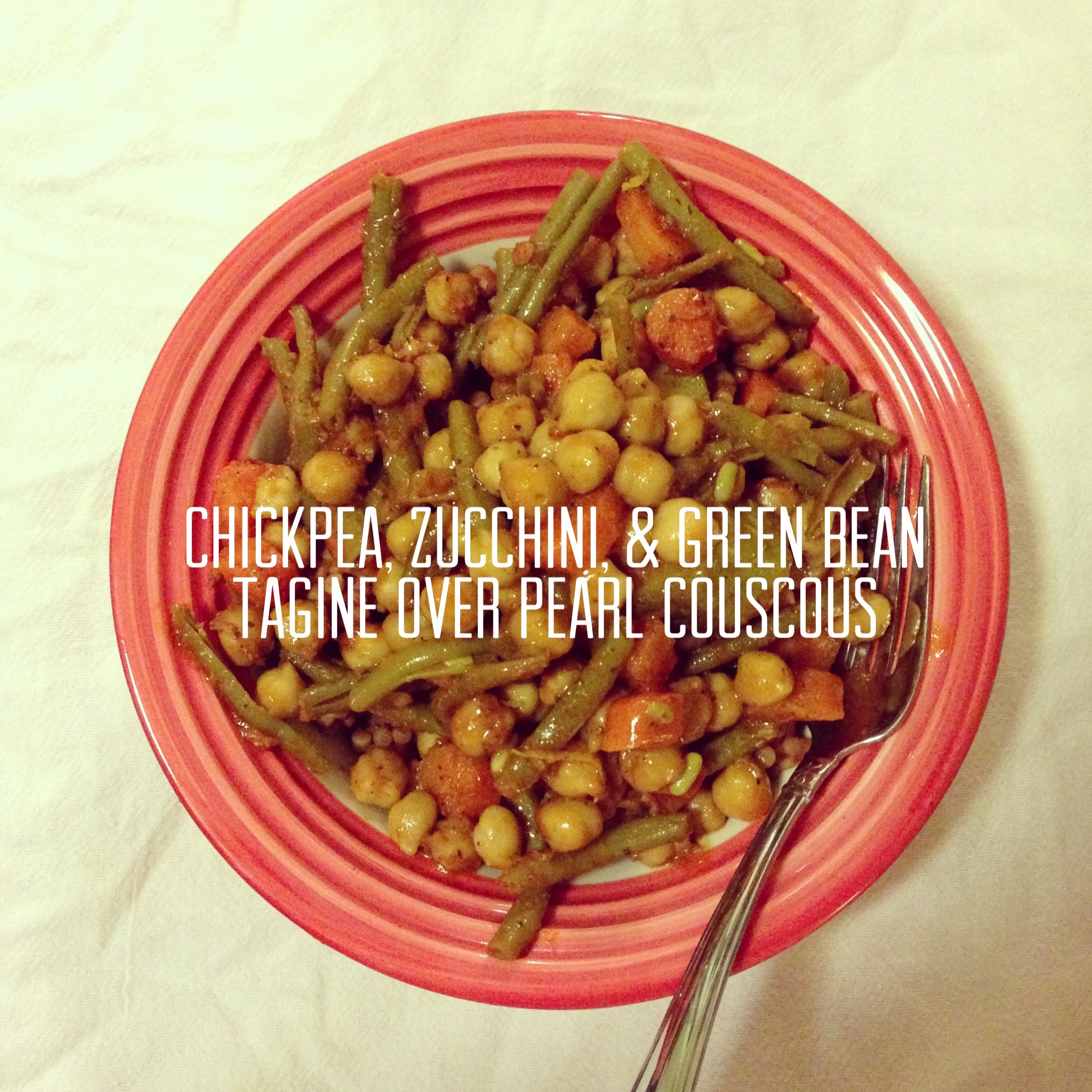
This tagine was a dish I had made and liked even before my Vegan Lent, so I knew we’d like it this time around. I was short on zucchini, so I subbed in some frozen green beans, and they worked beautifully. I also didn’t have preserved lemons, so I used lemon infused olive oil, lemon zest, and some extra lemon juice.
We are now one week into Vegan Lent, and I have to say, I’m enjoying it. Is one supposed to enjoy a Lenten fast?
So far, it hasn’t been a profoundly spiritual event, but my husband and I have both felt like this is another step in a journey we have been on for a while, a journey that has been very much spiritually motivated.
I haven’t felt majorly deprived, but I have missed little things, like cheese on a pasta dish, or butter on bread. Honestly, when we were already not eating much meat and my husband is lactose intolerant, this is probably how we should be eating in general, anyway. I will miss occasionally having fish or eggs as part of a main dish, though.
A friend commented on my initial post that Vegan Lent might end up “sticking” long after Lent ends. I think we might end up mostly vegetarian with eggs and fish thrown back into the mix, plus butter and cheese for me. One problem for me is, I don’t eat fake food, and this makes me uncomfortable with butter and egg substitutes, though I must say, Earth Balance buttery spread is not bad. I want to be able to bake cookies and breads and stuff with all real ingredients. I refuse, on principle, to eat things like “Chick’n,” though tofu and seitan that aren’t trying to pretend to be something they’re not are fine by me.
Also, we have agreed not to go fully veg at this time because we don’t want to make going to dinner at friends’ a giant hassle for them, and we want to be able to enjoy cultural food and hospitality when we travel.
Still, I think this experience is helping us see the rich variety in vegan eating, and I feel healthier. I think, from a week in, that it will certainly affect how we eat going forward.
Here’s what we’ve eaten so far:
This Lemony Cauliflower Pasta was a recipe from my Fresh Green Table cookbook, slightly modified because I couldn’t find broccolini and also because the original recipe called for butter. It was super tasty, and I didn’t miss the cheese I usually sprinkle all over my pasta at all, I think because the flavorful (homemade) breadcrumbs served that purpose well. Etta also loved this dish, so hey, baby win!
Both the noodle kugel and lentil salad recipes are from Veganomicon. The lentil salad is excellent, but I’m something of a lentil fan. The kugel uses tofu as another baked pasta recipe might use ricotta cheese. It was quite tasty hot, but reheated, it seems to be lacking something. If I made it again, I might try to spice it up a bit somehow.
This salad is excellent, and another Veganomicon recipe. I still don’t love mushrooms, though, so I might leave them out next time. I make my hummus using this recipe from Girls Gone Child, with the addition of a can of artichoke hearts to the whole equation. It makes for extra creamy, slightly artichokey hummus. I love it.
This meal was largely a chance for me to attempt to make crispy tofu a la this method from Herbivoracious. The tofu turned out OK, but the meal honestly would have been fine without it– it just didn’t add much to the dish. Otherwise, I used a pre-sliced bag of fresh veggies and winged it.
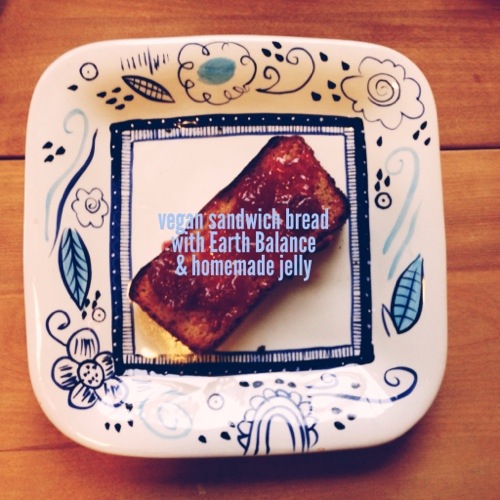
I attempted to make vegan sandwich bread. It had good flavor and texture, but was a little flat. Part of the problem is that my metal loaf pan is just too wide. The loaf I made in my narrower glass pan turned out a little taller.
It’s hard to believe the Bufflo Gals have gone from this:
To this:
And as they’ve grown, things have changed with the way we feed them around here. Some things have worked great, others haven’t worked out.
I really wanted to make my own baby food.
And then I met my babies. One wants nothing to do with being spoon fed (as I mentioned in an earlier post) and the other vomits the minute she tastes my homemade food. Not just spits it out. Vomits.
At first, I was sort of offended by this. I thought I had a picky baby, since she would happily gobble down jars of purees both veggie and fruit, and then immediately gag and choke on my homemade stuff that, to my eye, seemed exactly the same as the stuff in a jar. In fact, I remained irritated and offended by this for a few months.
And then I finally googled “spina bifida texture issues” and learned that this is common to many babies with spina bifida, and often requires occupational therapy to fix. And then I felt like a jerk.
We’re looking into our OT and PT options and will be getting a referral soon, but in the meantime, I have accepted that homemade baby food is just not our thing. I can make a few very thin varieties that she will eat (like tomato carrot!), but, since straining every puree through a fine mesh strainer is a huge hassle, I will just be buying jarred purees for Claire. There’s a huge variety of organic Earth’s Best foods available, so that’s mostly what we’re going with. I even got over my aversion to pureed meat, because if she’s gonna be on these things for longer than average, I want to let her have some proteins, and the only other option is lentil dinner.
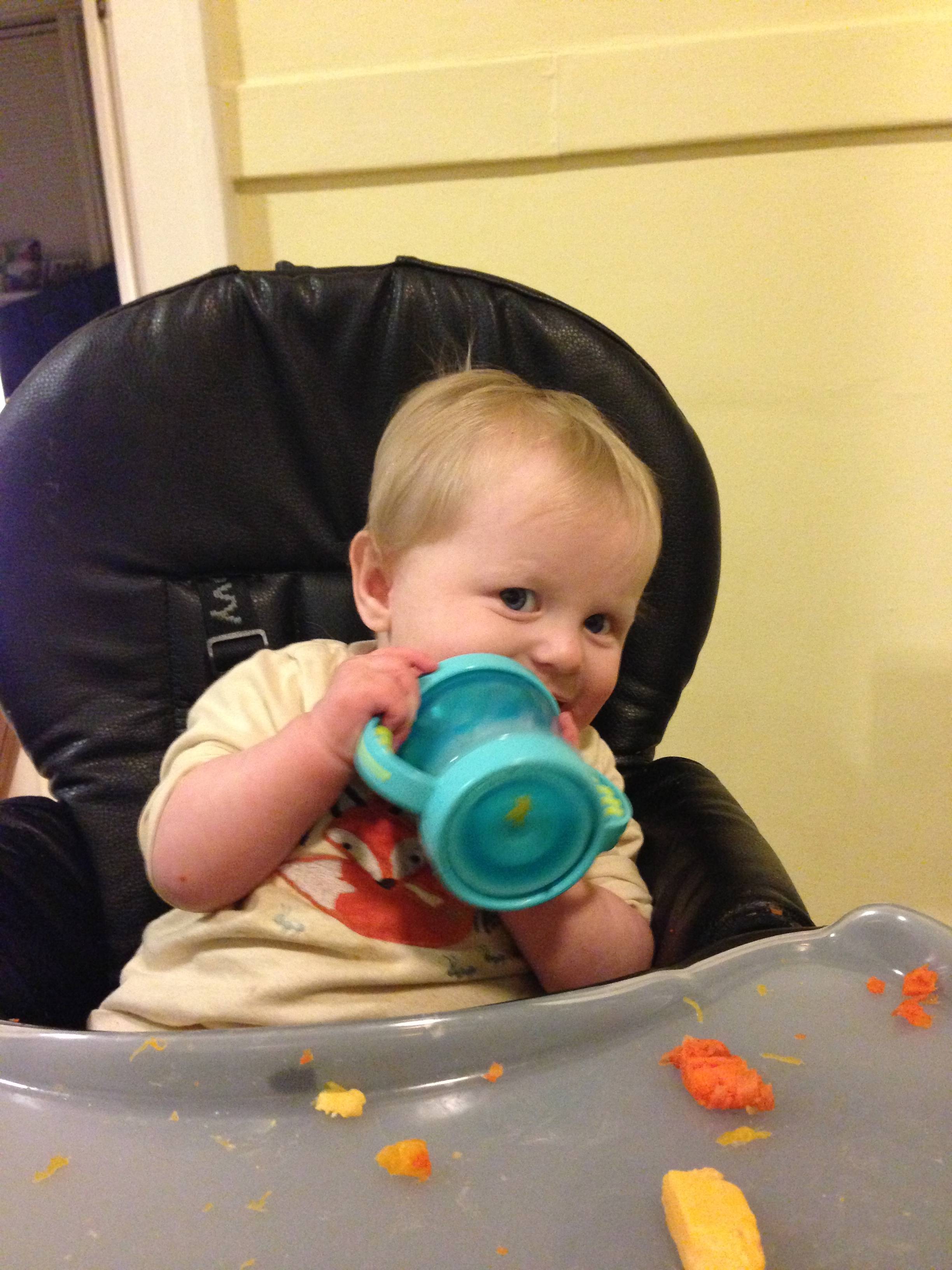
Meanwhile, Etta is doing a sort of half-assed version of Baby Led Weaning. I haven’t read the books, but I’ve read about it on the internet, and, like most of the rest of my parenting, am sort of doing what feels right. She gets soft chunks of things cut into pieces she can hold in her fist. Sweet potato, pasta, carrot, watermelon, cantaloupe, cheese, and toast are all favorites. It’s going pretty well.
Etta loves eggs. Or did. Until she had an allergic reaction this morning. No more eggs for a while.
Next step: transitioning from formula to milk in about a month, and also trying to transition from bottles to sippy cups. Anyone have tips on that? Both of my girls still have issues with fast-flow nipples, and they nearly drown in sippy cups.
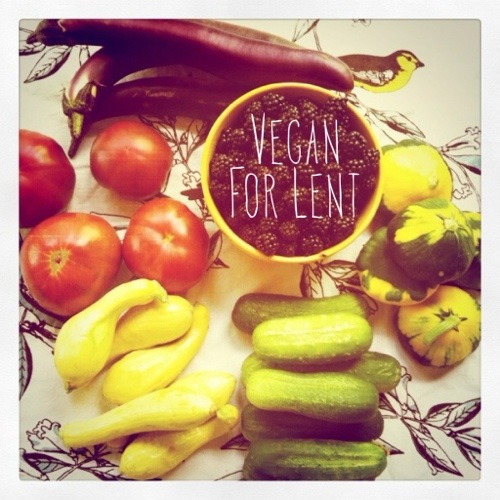
Last Saturday I actually made it to the Farmer’s Market. This was my haul:
Don’t you love how I subconsciously arranged everything in ROYGBIV order? I swear it wasn’t intentional.
I figured it might be fun to turn my Farmer’s Market trips into posts about how we eat for a week on our delicious local produce.
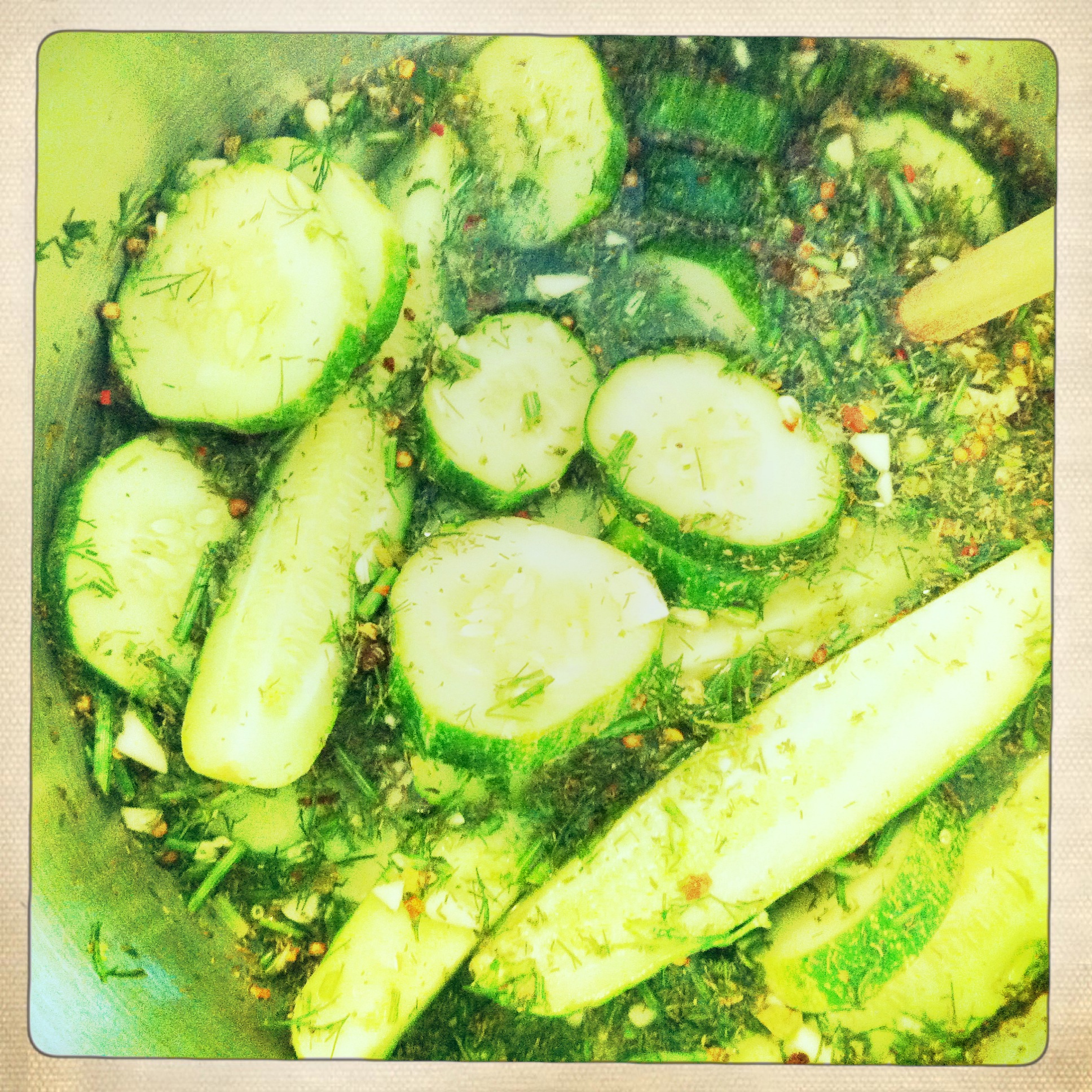
The cukes and the yellow squash immediately became pickles, the squash joining some zucchinis we had grown to become summer squash bread and butter pickles (seriously, such a good recipe, though I skip the whole ice bath part and they still turn out just dandy), and the cukes becoming my absolute favorite, I swear they’re as good as Claussen’s, dill refrigerator pickles.
pickles in progress
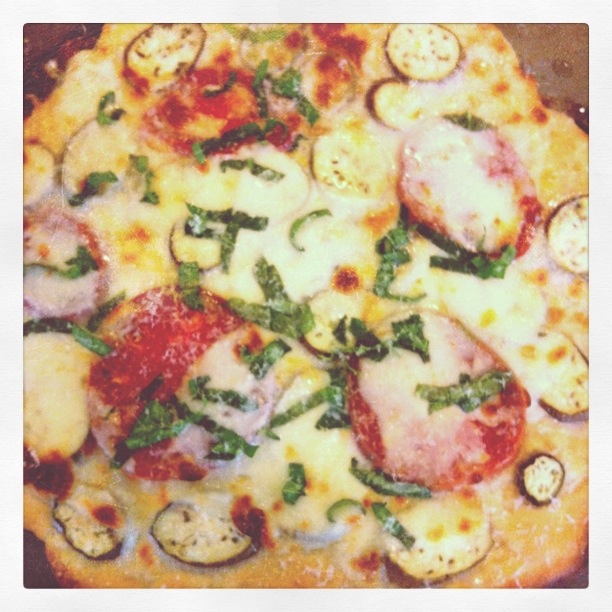
The gorgeous heirloom tomatoes and the Japanese eggplant joined some mozzarella and some home-grown basil to become a delicious margherita pizza.
Look at that tomato flesh. So red, it's almost black.
The pattypan squash was sauteed in olive oil with home-grown herbs and served alongside a red lentil salad with heirloom tomatoes, and some tilapia.
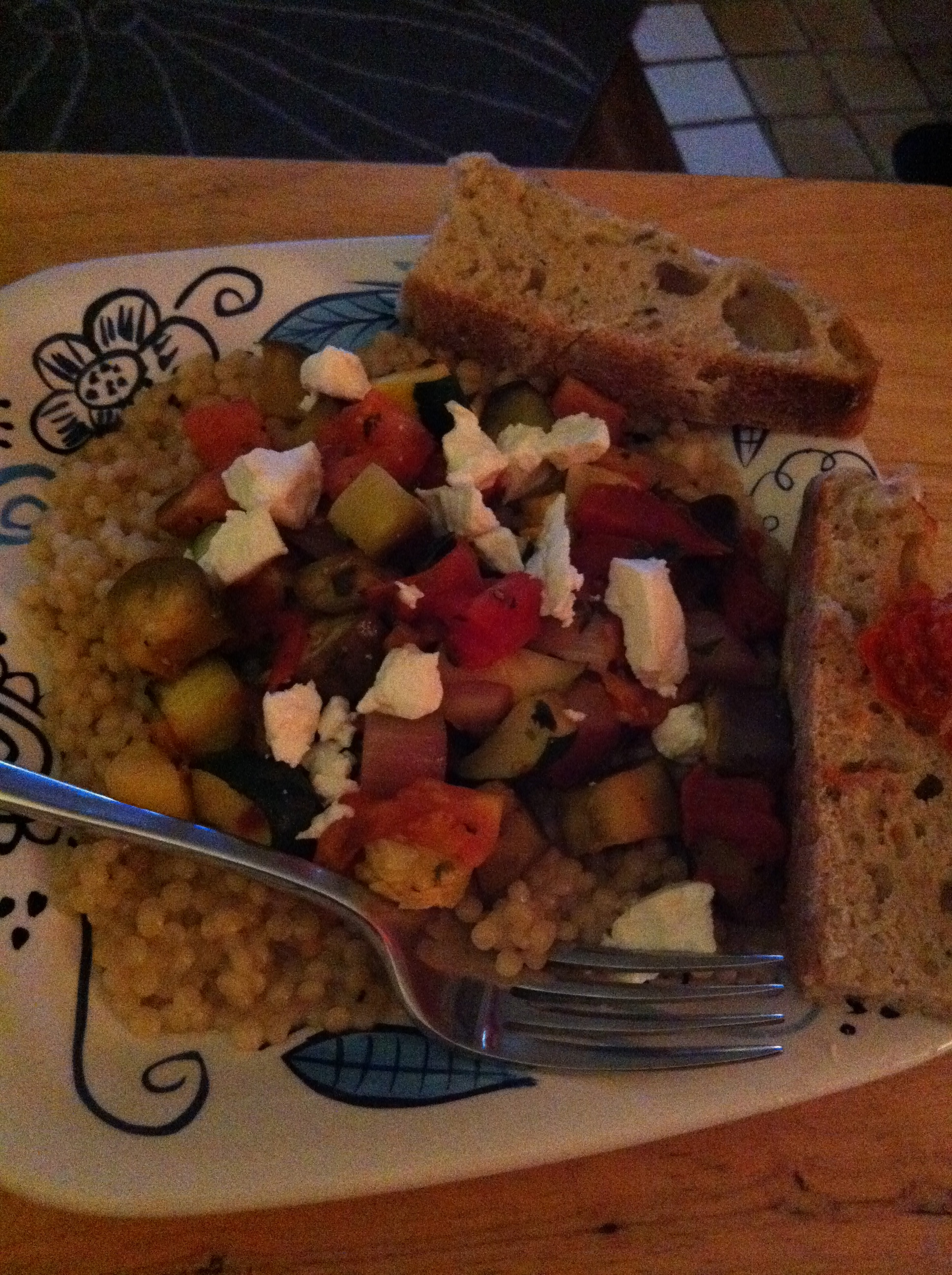
And the remainder of the squash, eggplant, and tomato were turned into a sort of ratatouille which we ate with goat cheese over pearl couscous:
This was eaten alongside some tomato and onion focaccia I made using some tomatoes we grew in our community garden:
Truly the most beautiful bread I have ever baked, and also one of the tastiest.
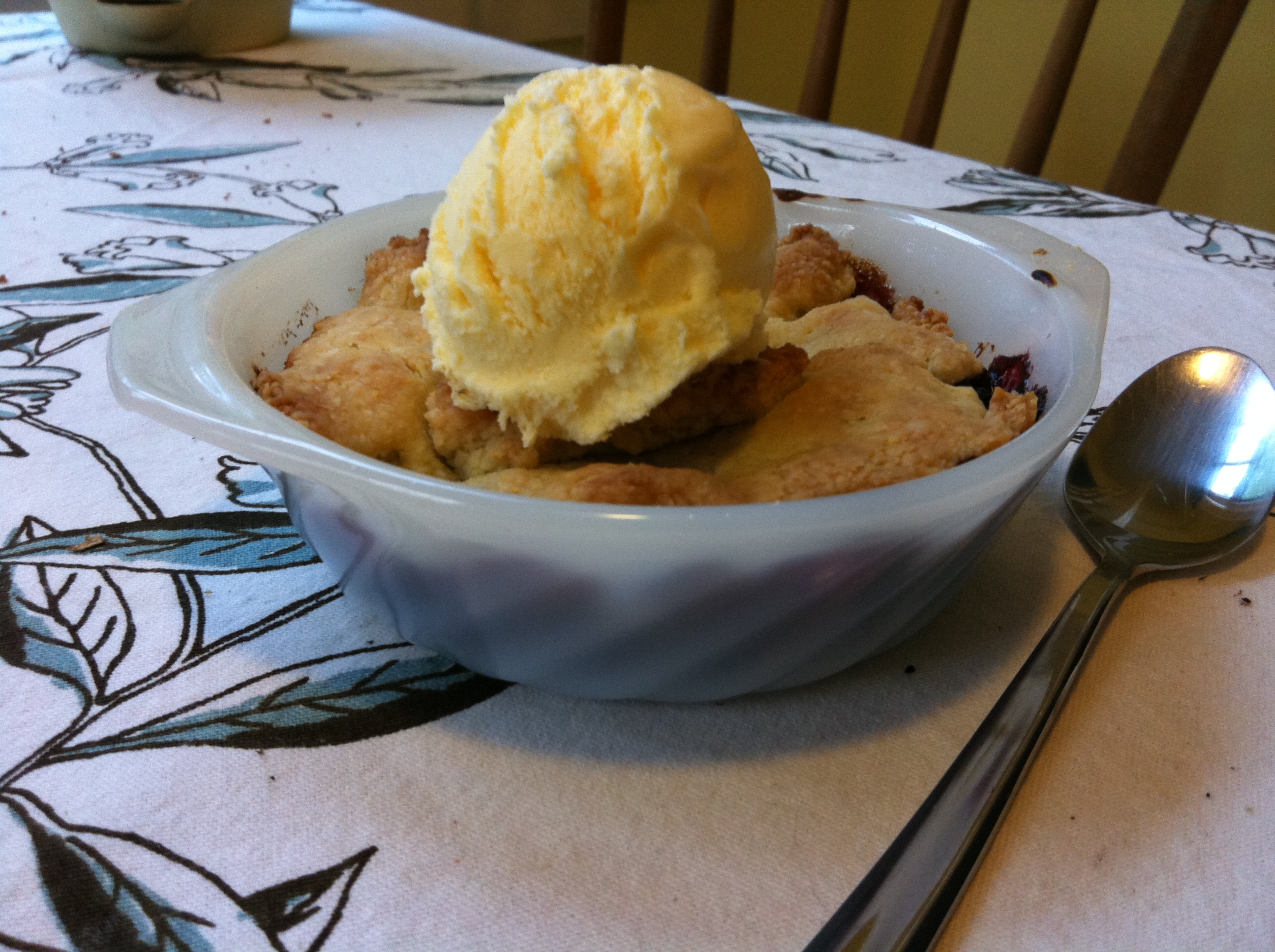
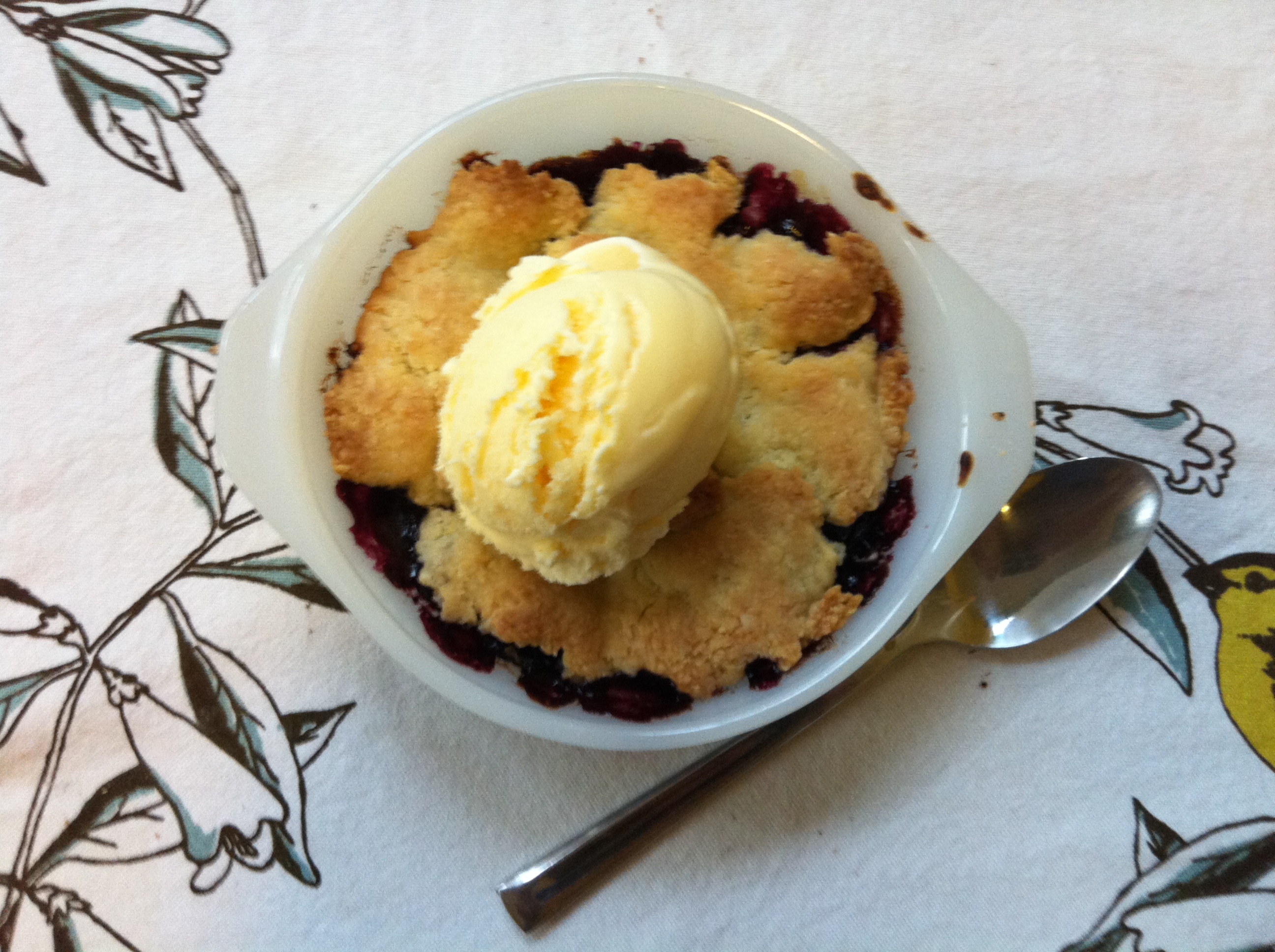
Finally, the blackberries were mixed with honey, lemon zest, and corn starch and topped with a few pats of butter and a cornmeal crust to become personal-pan cobblers:
All in all, a delicious week of largely local food!
So, food blogging. It’s something I have definitely fallen down on, what with being busy with learning about literature and generally falling out of regular blogging in the post-a-day way I used to do. But, I’m still a total foodie, and have been meaning to get back into geeking out about food.
Add to that, I was recently chatting with a friend about our less-meatarian diet, and she was asking me questions about what our meals actually look like. It’s definitely hard, when first transitioning to a less-meat diet, to figure out what to put on a plate that isn’t a meat and two sides. Mark Bittman addresses this in his book (an AMAZING resource) How to Cook Everything Vegetarian:
Even those people who do cook at home reckon that the easiest way to anchor a meal is to throw a steak or a chicken breast on the grill or under the broiler and scatter a few nominal vegetables around it…But a vegetarian meal is more commonly a table with a few dishes on it, all of them of equal importance…The grain is not less valuable than the cooked vegetable, the salad, or the bread: they’re all there to compliment one another. Pickles you made yourself, a nice piece of cheese, or a bowl of nuts–all are valid courses in the vegetarian meal.
Now, Bittman is certainly not a vegan (note the cheese reference), and neither am I. I choose to eat much less meat than the average American for environmental, humanitarian, and health reasons. I try to follow the dictates of Michael Pollan’s famous maxim: Eat food, not too much, mostly plants. I try to eat food, by which he means whole ingredients, rather than food products or processed foods. And I try to eat more plant-based foods. But I still eat fish, eggs, and cheese, and the occasional ethically-raised meat when I can afford it.
Anyway, I figured that a weekly roundup of what we actually eat might help friends looking to transition to a less-meat diet get some ideas about what less-meat meals actually look like. These posts will be characterized by most-likely iPhone photography of our meals, which, I confess, more often than not are eaten on TV trays in our living room while we watch something from our DVR. I’ll share links to recipes when I can, or share which cookbooks the recipes came from. My two most frequently used cookbooks are both by Bittman– the aforementioned How to Cook Everything Vegetarian, and The Food Matters Cookbook.
So, what did our meals this week look like?
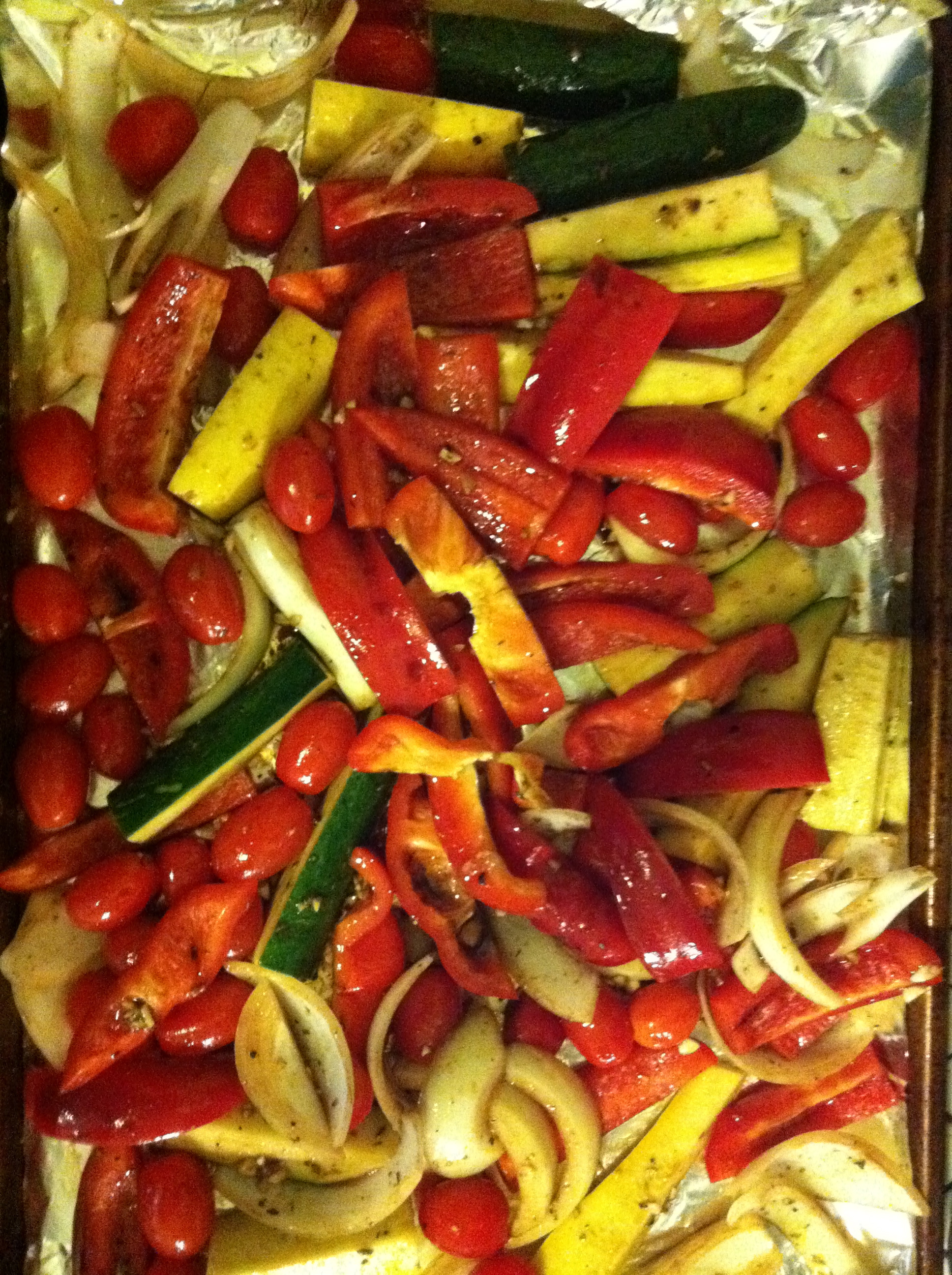
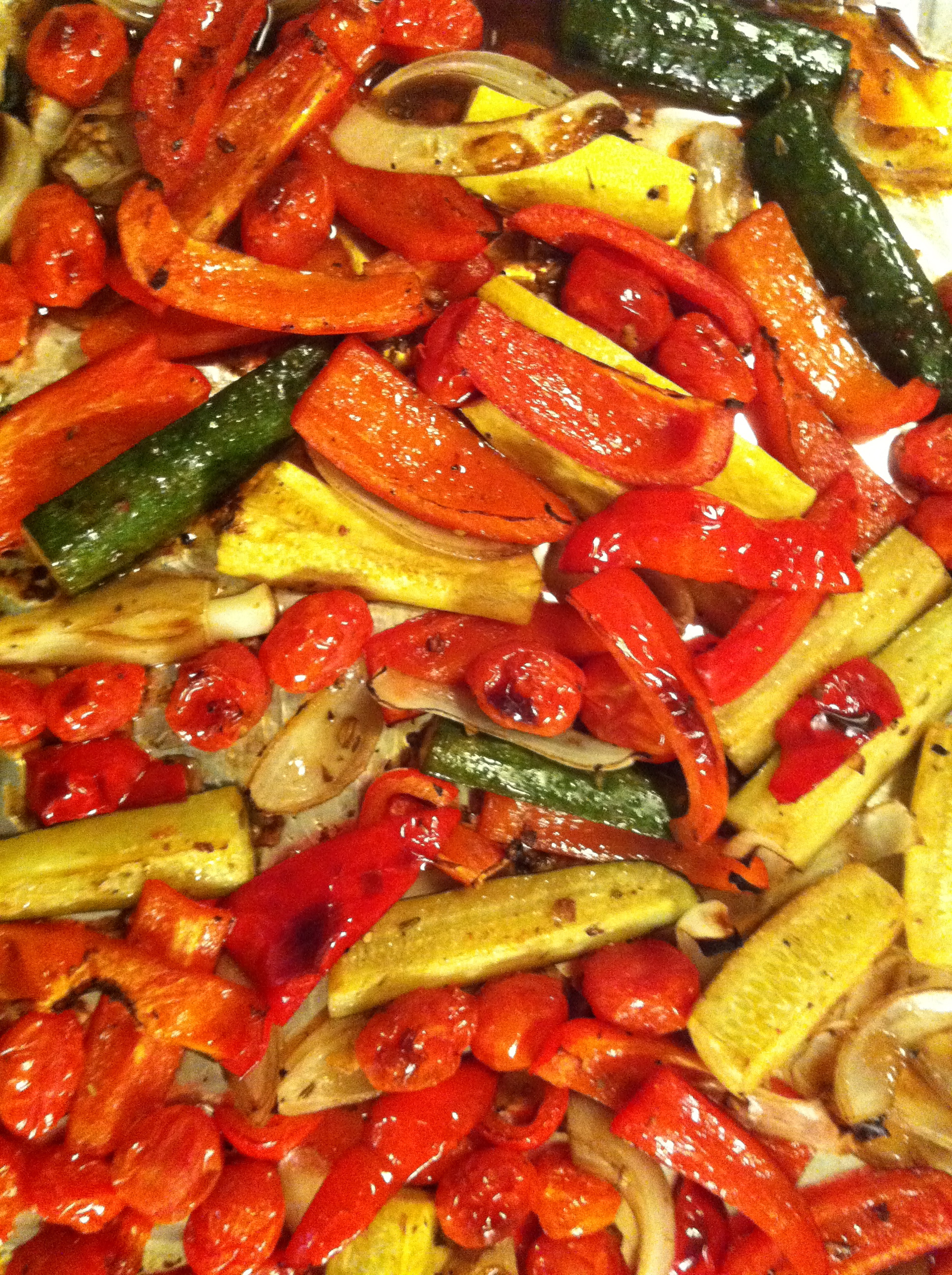
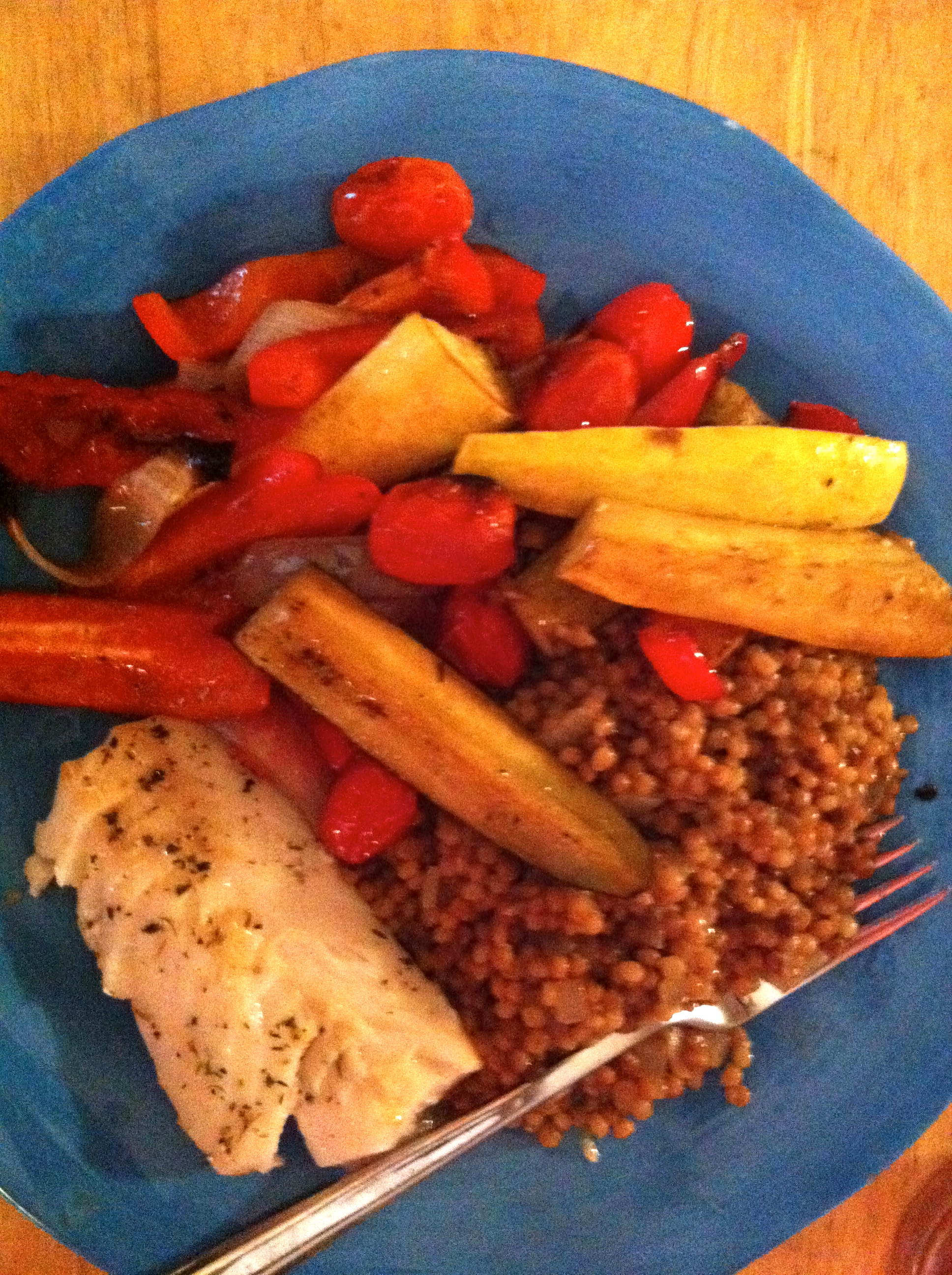
This meal was definitely the most veggie-licious of our week. I tossed a bunch of sliced veggies (red bell pepper, zucchini, squash, onion, grape tomatoes) with balsamic vinegar, olive oil, garlic, and some Herbes de Provence. I broiled them for about 15 minutes while I made some pearl couscous and cooked a couple of pieces of fish in a skillet. Such a tasty and colorful meal. The fish was really not even necessary. Might have poached an egg and served it on top or just tossed in some chickpeas for a fish-free version.
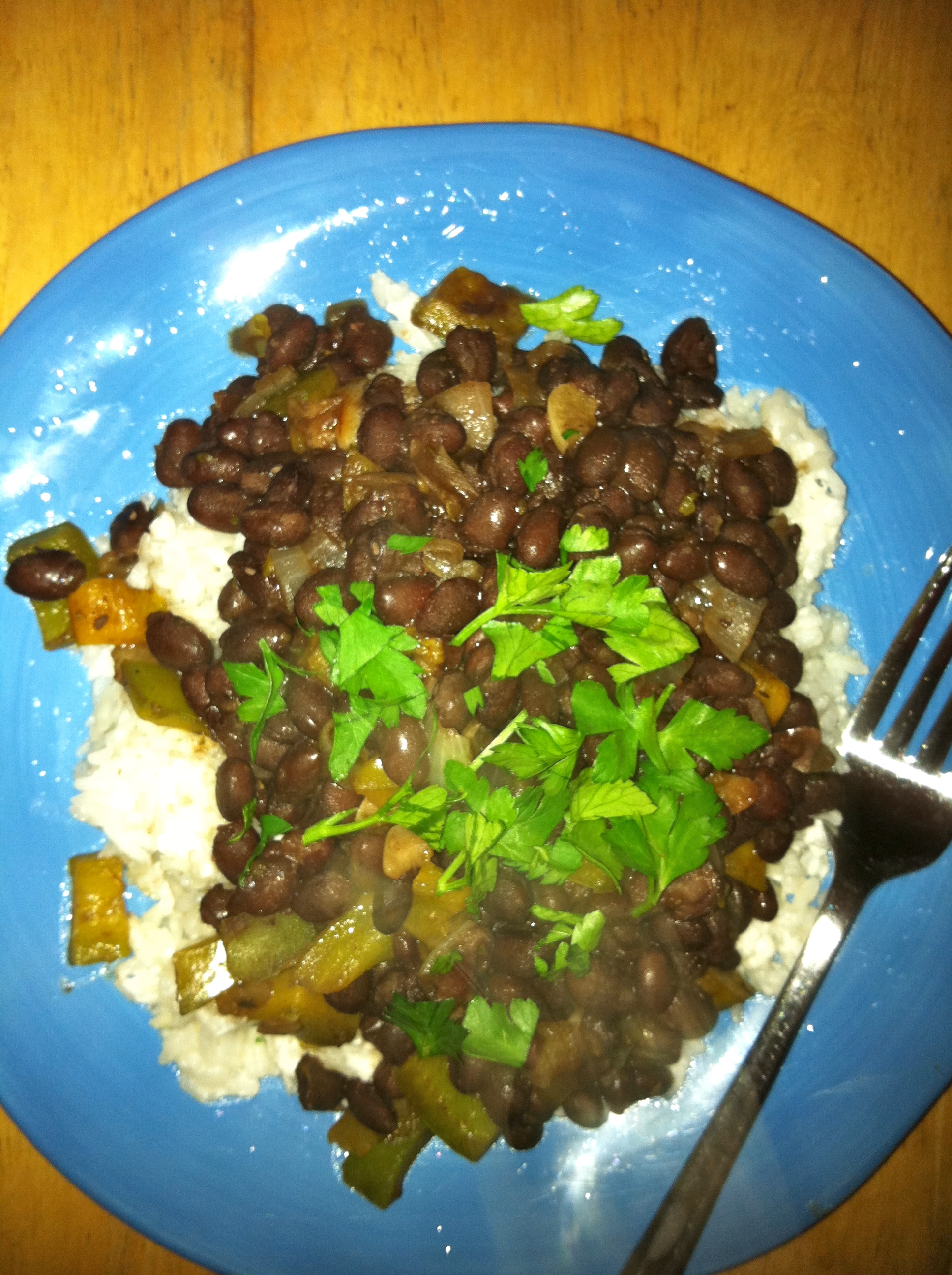
This is a common meal for us. Cuban-style black beans (I skip the radishes) over coconut rice (the idea for the rice came from this recipe). Almost always eaten with a Cuba Libre (rum and Coke with a lime).
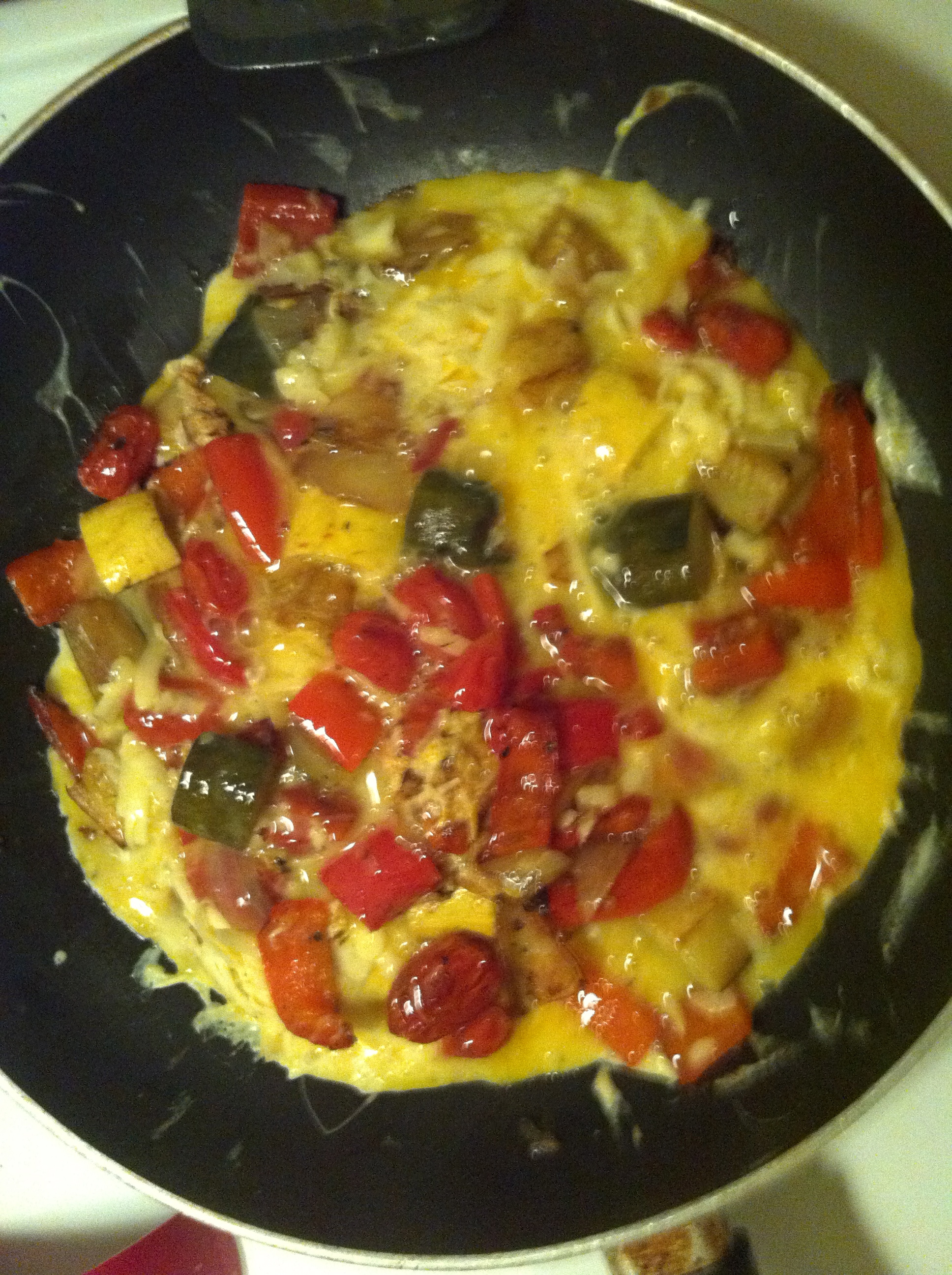
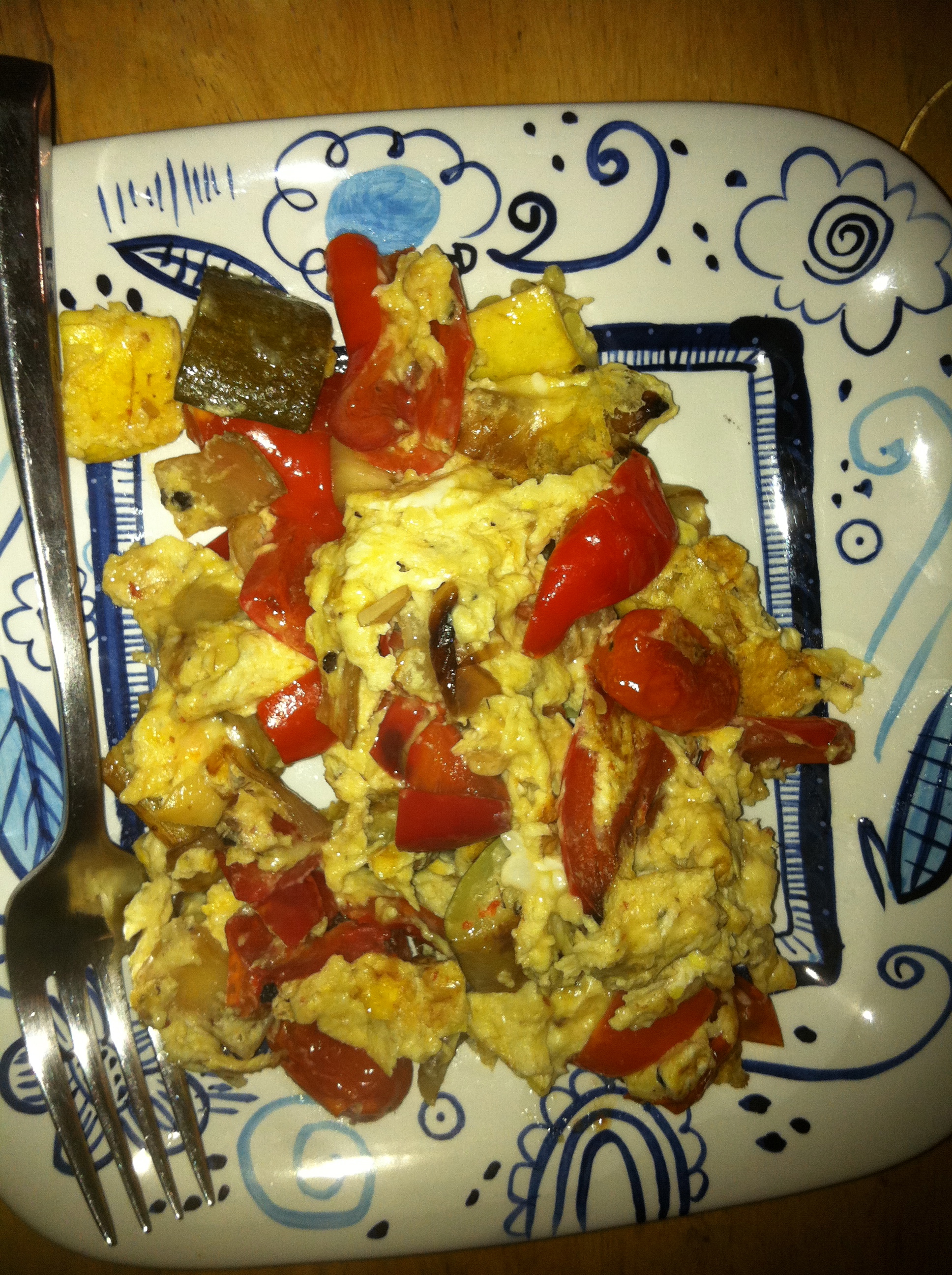
Do those veggies look familiar? They’re leftover from meal #1. I cut them into bite sized pieces, sauteed them til warm, and then added some eggs and gruyere cheese to the mix, for a sort of veggie scramble. I do some variation of this a lot when I have leftover veggies that need to be used up.
Our other meals this week: cheese dip and margaritas and guacamole at a fave Mexican restaurant. Cheese dip and salsa another night too. Chicken and veggie pizza from another fave place. And Mexican night at our church. Might be avoiding anything with a Mexican flavor for this next week!
Anthony Bourdain: the face of immorality in America?
I’m a foodie. To ask B.R. Meyers of The Atlantic, this apparently makes me an immoral hedonist, whose insatiable appetite for food and pleasure and elitism will be the downfall of our civilization (seriously, he references the fall of the Roman empire and manages to blame it on food).
Meyers’ piece reads like a particularly strident sermon against what he sees as gluttony, and he lumps a wide variety of people together in order to make his case against the immorality of people who dare to enjoy their food. What do Anthony Bourdain and Michael Pollan have in common? I like both, and both think people should cook more and enjoy food more, but they have pretty different food philosophies. Bourdain probably does fall closest to Meyers’ hedonist vision of a foodie, being a big fan of pork products of all sorts, and unafraid to eat even the nastiest bits of an animal in his worldwide quest for good food on his Travel Channel show. He’s sort of like the Dr. House of food: abrasive, provocative, selfish–he’s doing it on purpose to get a rise out of people like Meyers. But as a longtime fan of Bourdain’s, I think he’s really a softie. He gets off on the kindness and similarities of people all over the world as much as he does a greasy pile of pork, and he’s so very genuinely warm with even the poorest folks who share meals with him on his travels. Sure, he’s known for his profanity-filled bestsellers about the food industry, but he’s a secret softie.
Pollan, on the other hand, comes at foodie-ism from an environmentalist point of view. His mantra, “eat food, not too much, mostly plants” is about a more sustainable way of eating, not dependent on industrial farming and emissions-causing shipping of food around the world. The “not too much” part flies directly in the face of Meyers’ anti-glutton arguments. Pollan does a lot of advocacy work for things like organic and small farms, and he’s educated a lot of people through his involvement with the movie “Food Inc.,” which personally changed my life and my relationship with food. I’d put him in a category with someone like Mark Bittman, New York Times food writer and author of some of my favorite cookbooks (the Food Matters Cookbook and How to Cook Everything Vegetarian), who advocates a “less meat-arian” diet that is better for our health and for the planet. I wouldn’t put either of them in a category with Anthony Bourdain.
Meyers also seems to think that people who really care about and enjoy their food are simply elitists pursuing physical pleasure rather than people trying to live out deeply held convictions in their daily lives. For one thing, I’m not so sure there’s anything wrong with flat out enjoying food. Being able to taste is a miracle and a gift. That we can take pleasure as we must take sustenance is a wonderful thing. Enjoying the blessings of food is a way of being thankful for it. I’m personally a “foodie” because I care deeply about my impact on the environment, the treatment of animals and workers, the way my eating affects global hunger, and the way my eating affects the health of my community’s economy and my own body. I try to eat less meat, more local organic produce, and to avoid all processed foods. And I love every bite.
Supposedly Meyers is a vegan and has a problem with meat eating in general, and that’s part of his issue with Bourdain. I can respect that. But while I may in fact be drawn toward vegetarianism myself, you aren’t going to win me, or many people, to veganism by suggesting that it’s immoral to really enjoy food. Come to our side! We don’t enjoy our food! Come not enjoy it with us! Why not illustrate that there is pleasure to be had in a deliciously prepared vegetarian dish? What would be wrong with enjoying a perfectly prepared piece of produce?
Are there foodie elitists? Sure. I’m not sure Bourdain is one of them– he’s as likely to eat at a street cart as he is at Le Bernadin. I’m not sure Pollan is either, since one of his major areas of activism is getting people access to fresh, healthy, whole food. And my food hero, Mark Bittman, points out that 90% of Americans own a car and spend an average of 30+ hours a week watching television, so acquiring healthy food and cooking it at home is actually achievable for a large chunk of us.
To me, food is sort of the opposite of elitism, because it’s about sharing. Meals bring people around a table together. They facilitate conversation and understanding and connection. People who are really excited about food want to share those experiences with others–to say “you have GOT to try this,” rather than keeping the experience locked away for only a privileged few. Real foodies have a curiosity about other food cultures, and an interest in reaching out and having new experiences, even if it’s just trying some new and weird looking vegetable that suddenly showed up in a CSA box.
Finally: who is the real elitist? Someone who cares passionately about food (much like others who care passionately about their hobbies and interests), or Meyers himself? Many times in the article, he suggests that people who care a lot about food don’t devote much time to what he believes are higher pursuits, for example:
Needless to say, no one shows much interest in literature or the arts—the real arts. When Marcel Proust’s name pops up, you know you’re just going to hear about that damned madeleine again.
I mean, the guy in the effing Atlantic quoting Roman historians and referencing Proust can hardly be calling OTHERS out on their elitism, for one thing. For another: you don’t have to choose between the stomach and the mind. Mr. Meyers: I’m a budding foodie and a home-cooking hobbyist. I’m also pursuing a graduate degree in English Literature and hope to be a professor one day. I’m just sayin’, one can love both food and the great thinkers and their great thoughts.
Ultimately, Meyers’ piece comes off as a particularly whiny rant about some people he seems to just not like. He seems particularly bothered by some of the foodies’ use of the f-word and likes to quote them using it, I guess in an attempt to point out that these hedonists use appallingly coarse language and further underline their supposed amorality. And yet, Meyers doesn’t offer an alternative. I can see how he might criticize Bourdain’s meat-fest gluttony, but I really don’t get what his issue with Pollan is. How DOES he think Americans should eat? What exactly is the problem with trying to eat in a way that corresponds to one’s values (Meyers seems to have no problem with people who keep kosher, for example) and enjoying it along the way? What’s so immoral about caring about how my chicken was raised, and how the farmer who raised it was compensated, and how the workers who slaughtered and packaged it were treated, and how much gas was used to get it to me?
I’m not a vegan, but I’m very interested in eating less meat and animal products, for ethical, environmental, and humanitarian reasons. As I strive to eat more and more meat free meals each week, I’ve been perusing vegan cooking blogs and have been inspired to try my hand at vegan baking. I’ll probably never end up a vegan, but I can see myself going mostly vegetarian– I’ll never give up eggs or dairy completely, though. (Seriously, there is almost nothing in life that isn’t improved by cheese.)
This weekend, I decided to give the whole vegan baking thing a go, and I started with pumpkin muffins. True fact: there are a few things I hoard like the apocalypse is coming. It’s not anything practical, like toilet paper or something– no, I hoard butter, which I buy every time I go to the store, and canned pumpkin. You may remember a few years ago when there was a canned pumpkin shortage? Anyway, at that time, I wanted to make something pumpkin-y, but there was no pumpkin to be had. When I finally got my hands on a can of pumpkin, I held it to the sky like Scarlett O’Hara with her turnip and swore that as God is my witness, I’d never go without pumpkin again. Look in my pantry and you’ll find probably six cans of the stuff. I like pumpkin, and, though many think of it as just an October/November treat, I enjoy it as long as the weather is cold.
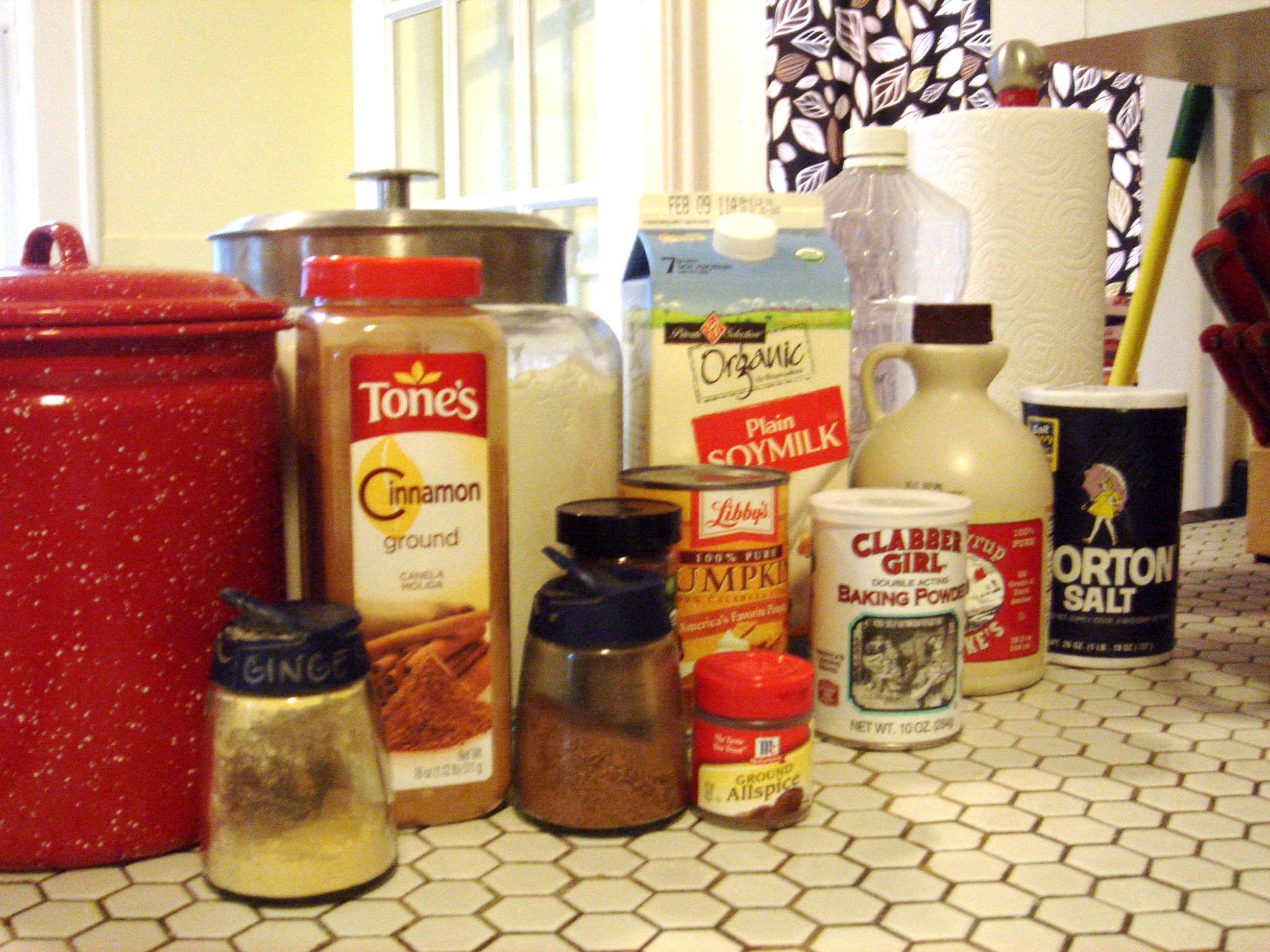
I looked at a few different pumpkin muffin recipes, and this is what I cobbled together.
Vegan Pumpkin Muffins
(This recipe was supposed to make 24 muffins. Mine made more like 28. Magic!)
3 1/2 cups all-purpose flour
2 1/2cups sugar
2 tablespoons baking powder
1/2 teaspoon salt
2 teaspoons ground cinnamon
1 teaspoon ground or freshly grated nutmeg
1 teaspoon ground ginger
1/2 teaspoon ground allspice
1/2 teaspoon ground cloves
1 15 oz. can pureed pumpkin (Make sure it’s not pumpkin pie mix)
1 cup soy milk (almond milk would work too)
1 cup vegetable oil
3 tablespoons maple syrup
+ a few tablespoons sugar and a bit of cinnamon (I used 3 T sugar and 1 tsp cinnamon) for sprinkling on top of the muffins
Feel free to fold 2 cups of chopped nuts into the finished batter if you’d like.
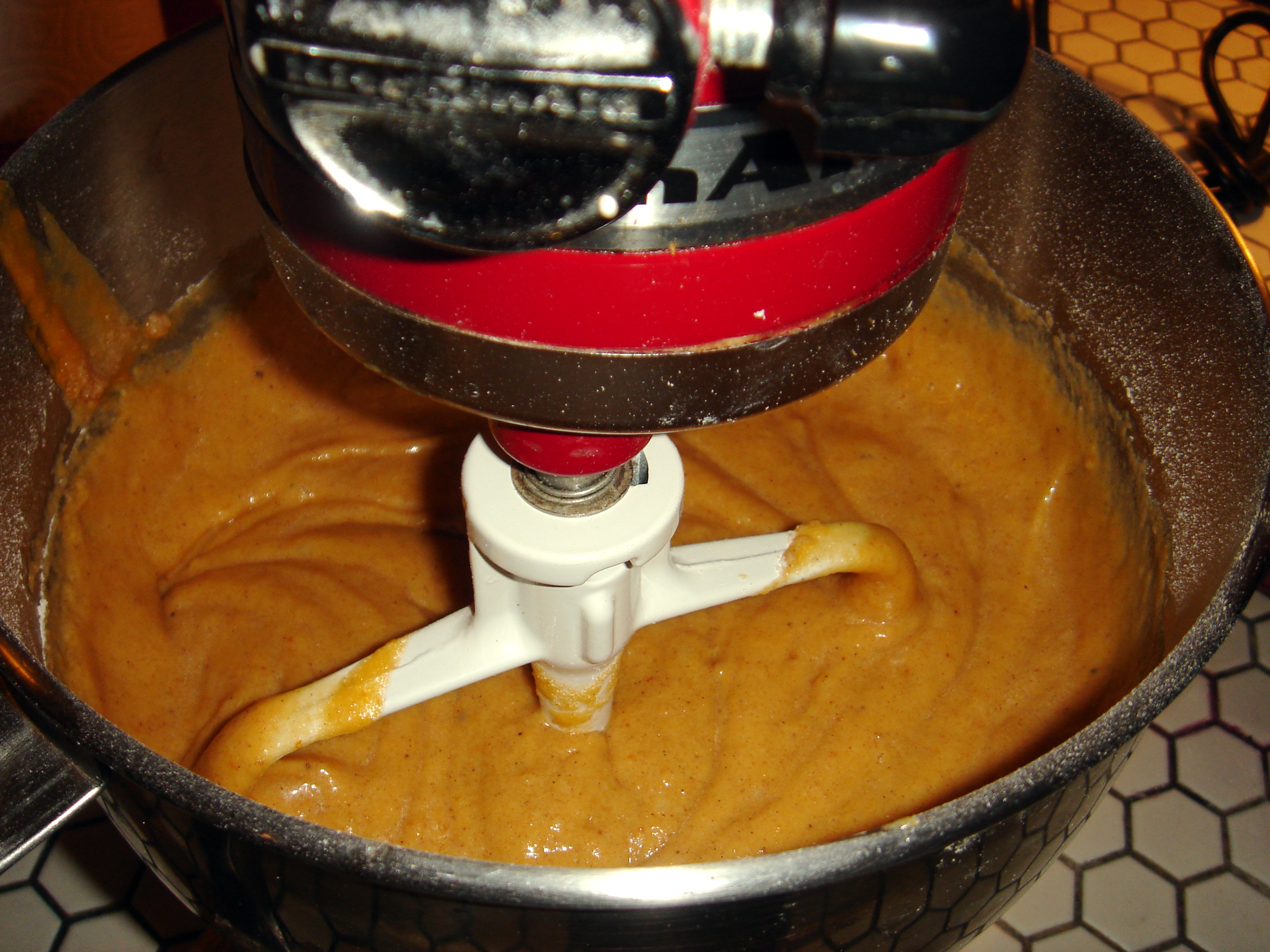
Preheat the oven to 400. Lightly spray muffin tins with cooking spray. Mix the dry ingredients together in a large bowl. Whisk the pumpkin, soy milk, oil, and maple syrup together in a smaller bowl. Mix the wet ingredients into the dry ingredients. Fill the muffin cups 3/4 of the way full with the batter, then sprinkle each with the cinnamon/sugar mixture. Bake at 400 for 18-20 minutes, until a toothpick inserted into the center of a muffin comes out clean.
Verdict: These muffins have great flavor, and I’d totally make them again. I took them to church on Sunday, and everyone loved them. They were a particular hit with the kids, even my friends’ kids who are extremely picky. My only complaint is that they’re a little denser than non-vegan muffins. If I decide to fiddle around with the recipe some more, I might add a little baking soda to see if I can get more fluffiness.
See, when I was in school, I had a crazy person for a mom. She made me re-use the same brown paper bag to carry my lunch every day for a week, because it would be wasteful for me to throw a bag away every single day, when they could be re-used. She probably would have made me carry a lunchbox, but I threw a wailing hissyfit about how UNCOOL lunchboxes were and BUT ALL THE COOL KIDS CARRY THEIR LUNCHES IN BROWN PAPER BAAAAGGGGGGSSSSSS. As if the cool kids gave two shits about what my lunch was carried in, but these things strangely matter in high school. So, I carried my lunch in brown paper bags, which I carefully folded and tucked into my pocket to take home and use again the next day. Because clearly, my mom wanted me to be unpopular.
Beyond the bags, there was what I carried in them. Always, always a turkey sandwich with ranch dressing. But the bread, well… it wasn’t NORMAL. It didn’t come in a nice little sleeve all sliced up from the store. Nope. It was the uncoolest bread ever. It was made by my mom in her breadmaker, and the last slice was always wonky because it had a hole in it from the machine’s little kneading paddle. The slices were always slightly uneven and often too thick, and I was, for some bizarre reason, convinced the other kids would think I was like, poor or something because I didn’t have normal store-bought bread. Yep. I looked gift bread in the mouth and basically acted like a brat over BREAD. What can I say? I went to a “rich kid” high school where even bread and lunchbags could be status symbols.
Fast forward to today and my high school self is rolling her eyes at me as I proof dough and shape loaves. It’s possible that in the new locavore, DIY, Etsy world we live in, homemade bread is now actually more of a status symbol than I thought store-bought bread was in high school. But it’s also possible that homemade bread just tastes better, especially warm from the oven and slathered in butter. I love the way my house smells all yeasty and delicious. I love the satisfaction of making something with my own hands. I love knowing exactly what is in my food. And I love my mom for lovingly baking bread and packing lunches and taking such good care of me, even when I was such an ungrateful brat. I’ll have to bake her a loaf sometime…
*the title of this post comes from what Jon always says about my homemade bread: “It’s the best thing since sliced bread!”

 So. I am a Vegan for Lent failure.





















 erniebufflo's south & west kitchen
