Jesus and Gender Part 4: Women Disciples

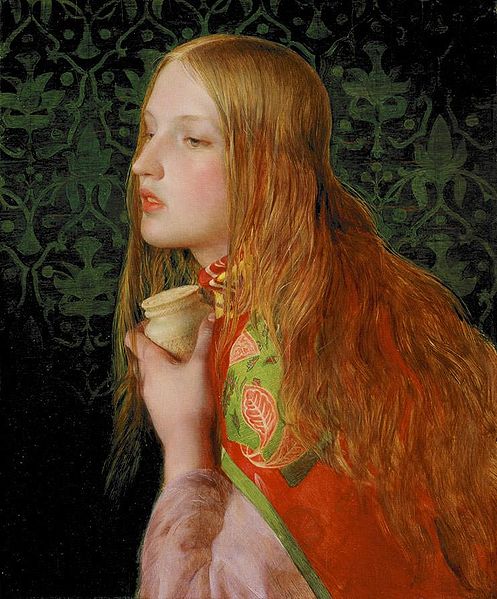
Mary Magdalene, painted by Anthony Frederick Augustus Sandys.

Today is day 4 of my series on Jesus and Gender. Make sure to catch up with Part 1, Part 2, and Part 3 if you missed those posts!  We’ve discussed how Jesus treated women with radical dignity and kindness, we’ve talked about his close female friends, and today we’re going to look at the women who were his disciples.

Although we are most familiar with The Twelve Disciples, all of whom are men, Jesus had more than just 12 disciples, and these disciples included women. (Also, from Woman in the World of Jesus: “The logic from which the male composition of the Twelve would exclude women from high office or role in the church would likewise exclude the writers and most of the readers of this book, for there were no non-Jews among the Twelve. Unless one would argue that “apostolic succession” is for Jews only, it cannot be for men only.” (125))

Jesus had a large group of followers who went with him all over Israel, learning from him and following in his ways.  According to Luke 8:1-3: “After this, Jesus traveled about from one town to another, proclaiming the good news of the kingdom of God. The Twelve were with him, and also some women who had been cured of evil spirits and diseases: Mary (called Magdalene) from whom seven demons had come out; Joanna, the wife of Chuza, the manager of Herod’s household; Susanna; and many others.  These women were helping to support them out of their own means.”

While women at this time were permitted to travel in the company of men, they were required to spend the night only with their relatives—here it is obvious that as they travel from city to city, the women are traveling along with the men, breaking social custom in a very progressive and scandalous way.  Secondly, these women had resources under their own control at a time in which women were generally not permitted to inherit property or control money.  So not only did Jesus have women among his disciples, but they were transgressing social norms and acting as the bankers of the whole operation!

And these women weren’t just hangers on; they were actually ministering with Jesus! According to Frank and Evelyn Stagg in Woman in the World of Jesus: “It is significant that women did have an open and prominent part in the ministry of Jesus. Luke’s word for their ‘ministering’ is widely used in the New Testament, including by Paul in reference to his own ministry. Its noun cognate, diakonos may be rendered ‘minister,’ ‘servant,’ or ‘deacon.’” (123)

One of these women was Mary Magdalene. Nowhere in scripture is she identified as a prostitute or even a great sinner.  Mark says that Jesus drove seven demons out of her—today we might say that he healed her mental illness.  From Elisabeth Moltmann-Wendel’s The Women Around Jesus: “We may imagine that this cure took a similar course to other healings: Jesus touched her, perhaps embraced her, made her get up, like Peter’s feverish mother-in-law or the person possessed by demons.  He spoke to her and she had a tangible feeling of nearness and contact. As he spoke, the spell left her. She again became herself, free to feel and decide, free once again to experience the world around her, free to enjoy herself and to learn to live again. But she did not return to her old ways. She left her rich hometown of Magdala, even though she would always bear its name. For her, being healed of her illness became salvation.” (68)

Another woman mentioned among these disciples is worth considering: Joanna, wife of Chuza, who was an officer in King Herod’s court.  She is described here having been healed by Jesus, after which she began traveling with and supporting Jesus financially, and she is later present at his crucifixion, and, in at least one gospel, at his resurrection. Jesus was seen as a political enemy of the political establishment, a revolutionary threatening to overthrow the government, and here, the wife of a government official is hanging around with and supporting this revolutionary and traitor of the state, helping to support him financially.  It’s possible that Joanna’s husband had died and left her widowed and in control of his estate, but it’s also possible that she had left him, with or without his blessing, to follow Jesus.

These women disciples were with Jesus to the end, present at the crucifixion, in some cases acting with more bravery and loyalty than The Twelve, who fled and feared for their own lives.  From Mark 15:40-41: “Some women were watching from a distance. Among them were Mary Magdalene, Mary the mother of James the younger and of Joseph, and Salome.  In Galilee these women had followed him and cared for his needs.  Many other women who had come up with him to Jerusalem were also there.”  –In Mark’s account, the oldest of the four gospels, the disciples are not present at the crucifixion—they run away after Jesus’ arrest and are not said to have returned. Similarly, in Matthew’s account, the disciples have run away and only the women are present at Jesus’ death. From Luke 23:49: “But all those who knew him, including the women who had followed him from Galilee, stood at a distance, watching these things.”  John 19:25-27: “Near the cross of Jesus stood his mother, his mother’s sister, Mary the wife of Clopas, and Mary Magdalene.  When Jesus saw his mother there, and the disciple he loved standing nearby, he said to her, ‘Woman, here is your son,’ and to the disciple, ‘Here is your mother.’ From that time, this disciple took her into his home.” Even as he suffers pain and death, Jesus is surrounded by the women who followed him, and he is exhibiting concern for their welfare.

And these women weren’t just there at Jesus’ death, but played a very special role in the events of the Resurrection. In Matthew, after his resurrection, Jesus chooses to appear first to two women, Mary Magdalene and “the other Mary (possibly Mary of Bethany)”  Jesus trusts them to go and tell the men that he is risen, even though at this time, women were considered so unreliable that they couldn’t even testify in court.  Still Jesus trusts them with this important news. In Mark’s account and in Luke’s account (which also names Joanna), the disciples do not even believe Mary Magdalene/the women.  In John, Jesus only appears to Mary Magdalene, and she calls him “Rabboni” which suggests her status as one of his students. According to The Women Around Jesus: “Mary Magdalene may be regarded as the first apostle. She was the first to proclaim the gospel of the risen Christ.” She was considered an apostle, someone commissioned by Jesus with a special mission or message, up to the Middle Ages.

So, not only was Jesus radically inclusive of women in even his most passing encounters, not only did he have close personal friendships with women, but he had women among his disciples and even accorded them the honor of being the first people in the Bible to preach what we know as the gospel, the good news of his resurrection.   Tomorrow we’ll look at the women who were apostles, deacons, and prophets–leaders in the early church.


Sources:

The Women Around Jesus by Elisabeth Moltmann-Wendel

Woman in the World of Jesus by Frank and Evelyn Stagg.

Jesus and Gender Part 3: Jesus’ friends

Probably my favorite thing that I learned about Martha is that, according to her saint's legend, she killed a dragon. Yep. She's not just a Martha Stewart type, she's also a badass dragon killer.

Welcome to Part 3 of my series on Jesus and Gender! If you missed the introduction, check out Part I, and if you’d like to read about how radical even Jesus’ most passing interactions with women were for his day, check out Part 2. Part 3 will be devoted to the deep friendships Jesus had with women.

Two of Jesus’ best friends were two women, Mary and Martha. I will mostly refer to this Mary as Mary of Bethany so we don’t get her confused with his mother or Mary Magdalene. We first encounter Mary and Martha in Luke 10:38-42: Jesus is in the home of Mary of Bethany and Martha. Martha is mad because her sister isn’t being a good woman and working to entertain the guests, but instead is at Jesus’ feet, listening to him, and she asks Jesus to make her sister help her. Jesus says, “Martha, Martha…you are worried and upset about many things, but few things are needed—or indeed, only one. Mary has chosen what is better and it will not be taken away from her.”

A great rabbi’s students were always at his feet, learning to become rabbis themselves (In Acts 22:3, Paul describes himself as having been ‘brought up at the feet of Gamaliel,’ his way of saying who his rabbinical teacher was). According to Woman in the World of Jesus*: “Jewish women were not permitted to touch the Scriptures; and they were not taught the Torah itself, although they were instructed in accordance with it for the proper regulation of their lives. A rabbi did not instruct a woman in the Torah…but Jesus related to [Mary] in a teacher-disciple relationship He admitted her into “the study” and commended her for the choice.” (118) Jesus sees Mary as his student, although she is a woman, and when her sister tries to get her to go back to the “woman’s work” in the kitchen, Jesus defends Mary’s place as his student, at his feet.  I love the way Evelyn and Frank Stagg sum this up in Woman in the World of Jesus:

The story vindicates Mary’s rights to be her own person. It vindicates her right to be Mary and not Martha. It vindicated a woman’s right to opt for the study and not be compelled to be in the kitchen. It would go beyond the story’s intention to deny Martha the right to opt for the hostess or homemaker role, even though Jesus accorded a higher value to Mary’s choice of ‘the word’ than Martha’s choice of the meal. Jesus did not make the two exclusive. (118)

I think this is important– so often when you hear this story (and if you are a woman and you’ve ever been in a women’s Bible study, you have surely heard this story presented this way), it’s all about how you don’t need to be a Martha, you need to be a Mary. But I don’t think that’s what Jesus was saying to Martha.  I think he was affirming Mary’s choice and telling her sister, you know, your sister isn’t like you, and that’s OK.  Soon we will see that even though she was often in the kitchen, Martha was still listening to Jesus teachings (ha, maybe like me she liked to listen to podcasts while she cooked?) and had great faith in him, just a different way of showing it.

The next episode featuring Jesus and his friends Mary and Martha is John 11:1-43: Jesus raises Lazarus from the dead. The text says “Now Jesus loved Martha and her sister and Lazarus.” Also, “When Jesus saw [Mary] weeping, and the Jews who had come along with her also weeping, he was deeply moved in spirit and troubled.” Jesus had close, deep relationships with women, and when they hurt, he hurt.

One of the most significant aspects of this text is Jesus’ interaction with Martha.  Despite her being rebuked by Jesus for her criticism of her sister in the Luke story about these sisters, Martha demonstrates in this story that even though she was busy in the kitchen in that instance, she has not been ignoring Jesus’ teaching: “When Martha heard that Jesus was coming, she went out to meet him but Mary stayed at home.” This time it’s Mary who sticks to the world of the domestic and Martha who goes out to meet Jesus.

From The Women Around Jesus by Elisabeth Moltmann-Wendel:

In the packed house of mourning, Martha hears of his coming, takes the initiative, and leaves the house to meet Jesus by herself.  She rushes up to Jesus with a remark containing all the grief, all the anger, and all the disappointment of the last few days…For Martha, this remark is a springboard, the introduction to a passionate conversation about faith.  Martha is not ‘a woman’ who ‘keeps silence’ in the community.  She does not leave theology to the theologians.  She carries on a vigorous debate.  She does not cry, she does not cast herself at Jesus’ feet, she does not give in.  She struggles with God as Job did.  She charges Jesus with failure.  She does not give up, just as Jacob did not give up at the Jabbok when he was wrestling with God. (24)

Then, Martha makes an impressive confession of her faith in Jesus. Again from The Women Around Jesus:

Martha responds with a confession of Christ which stands out as a special climax in the New Testament: ‘You are Christ, the Son of God, who has come into the world.’ At most this can be compared with Peter’s confession of Christ in Matthew 16:16.  Thus John placed the confession of Christ on the lips of a woman, a woman who was known for her openness, her strength, and her practical nature.  This is a confession of Christ which takes similar form only once more in the other Gospels, where it is uttered by Peter.  For the early church, to confess Christ in this way was the mark of an apostle.  The church was built up on Peter’s confession, and to this day, the Popes understand themselves as Peter’s successors. (24)

I think this shows that Martha has learned from her encounter with Jesus, in which he said Mary was the one who chose rightly.  Martha has learned and has now become the sister with the greater faith.

However, in the next chapter, Martha’s sister Mary will demonstrate her faith not with a great confession, but with an act of great love. In John 12:1-8, Mary of Bethany, anoints Jesus’ feet while he dines at Lazarus’ house. Judas objects, but Jesus defends Mary. It should be noted that nowhere in this account does it say that Mary was a prostitute. Also: this is Mary of Bethany, NOT Mary of Magdala, aka Mary Magdalene.  I’m on a mission to disabuse the world of the notion that Mary Magdalene was a prostitute, which is not stated anywhere in the Bible, but that’s a story for tomorrow’s post!

I’m just going to post a ginormously long quote here because it just sums the whole scene up so well: From The Women Around Jesus: “There is a supper. Martha is serving, and now, Mary is the protagonist.  Again, she is not helping, but what she does comes from the very depths of her personality.  She takes a flask of very expensive perfume and pours it over the feet of Jesus, who is reclining beside her on the cushions round the table.  She may not be good at words, but what she does without speaking and yet with great self-confidence has a spontaneous effect: the whole house becomes filled with the fragrance.  The sweetness of her action is evident everywhere.  This time she did not have Martha to urge her on. This time she is completely herself, and in doing so transcends herself.  All the elemental ways in which she was accustomed to express her spontaneous love for Jesus, her respect, her affection, her tenderness – the tears, the concern to be near him and to have his support, the spontaneous silence – are now released with the fragrant oil she has poured on the tired and dusty feet of her friend.  And even that is not enough: with her hair she wipes away the dust and oil from his feet and dries them.  That was the task of the lowliest slave: the master at the table used to wipe his dirty hands on the slave’s hair.  Mary performs this servile task in a way incomprehensible to many women today.  She does what no man would have done – it would have been inconceivable even to Martha…But what she does, she does of her own accord and in the light of her personality.  It is her idea, her way of showing love. It is her ‘revolution’. Perhaps Martha stood there transfixed and dumbfounded at such independence…Mary came out of the shadows to become totally herself: the clumsy, loving, independent, tender, restrained, and yet spontaneous woman.” (55-56)

Mary’s actions are as much a statement of faith as her sister Martha’s earlier words—she is anointing Jesus to prepare him for his burial, and in this is affirming her belief that he is the Messiah, and that he has been sent to die.  To me, these two sisters, with their different ways of loving Jesus and showing their faith demonstrate that Jesus wants us to be who we are and serve and love him in ways that are natural to us, in ways that we are gifted.

Tomorrow I’ll be tackling the topic of Jesus’ women disciples!

Jesus and Gender Part 2: From Invisible to Visible

This is Part 2 of a week-long series about Jesus and gender equality. If you missed Part 1, check it out first.

Before we can understand just how radically inclusive Jesus was for his time, we have to understand just how invisible women were in his culture.  Think about one of the most famous stories of Jesus: “Jesus feeds the five thousand.”  We all know it—Jesus had been teaching a huge crowd, and dinnertime comes, and Jesus miraculously multiples five loaves of bread and two fish and feeds the whole bunch with leftovers beside.  Except that it wasn’t 5,000 people.  It was “about five thousand men, besides women and children” (Matthew 14:21).  At the time of Jesus, women literally did not count.  Even though it would be a much cooler story to say “Jesus feeds the twelve thousand” or whatever, the writer of Matthew only counts the men.

From my research, I’ve decided we can basically imagine Jesus in Saudi Arabia.  Women were veiled and kept segregated from men as much as possible.  They were controlled by their fathers until that control was transferred to their husbands.  It was very rare for them to control property– basically they’d have to have no brothers in order to inherit from their fathers, and then they’d have to be widowed with no male children in order to control the inheritance themselves. Men and women were not supposed to talk to one another in public.  From the Mishnah (the oral law): “Talk not with womankind. The sages going back to Moses said this of a man’s own wife, how much more of his fellow’s wife. Hence the sages have said: He that talks much with womankind brings evil upon himself and neglects the study of the law and at the last will inherit Gehenna.”  (Gehenna is another word for hell.)  It was even debated as to whether or not a man should instruct his daughter in the Law (the Torah), and women were not obligated to follow the laws regarding calendar feasts such as Passover, Pentecost, and Tabernacles—in other words, women were excluded from the heart of religious life, from the most important observances.

And yet, in this context in which women were marginalized, subordinated, and excluded, Jesus seems to notice and reach out to them everywhere he goes.  Often to the consternation of his own disciples, he insists on treating them with dignity and kindness, seeing them as whole persons, first and foremost.  My first major point is: Jesus affirmed women as people.

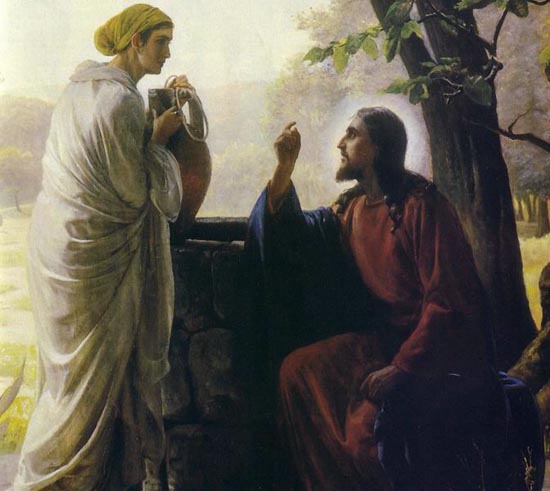
One of the most noteworthy examples of Jesus encountering a woman and affirming her as a person, first and foremost, is his encounter with the Samaritan woman at the well (found in John 4).  She’s doubly an outcast, as a Samaritan and a woman, and it is unusual for Jesus to address her, as men were not supposed to speak to women, especially not about theology, and Jews were not supposed to speak to Samaritans.  Moreover, he could not drink from the vessel of a non-Jew, as it would have made him ritually unclean, but he asks her for a drink. Despite all these prohibitions Jesus honors her by telling her that he is the Messiah, giving her the good news of the gospel.  When Jesus’ disciples return, the text says they were very surprised to find him talking with a woman—it was that shocking and unusual for a man to speak to a woman alone in public.  According to the book Woman in the World of Jesus*: “Here, the key to Jesus’ stance is found in his perceiving persons as persons. In the stranger at the well, he saw a person primarily—not primarily a Samaritan, a woman, or a sinner. She was not required to cease to be a woman or a Samaritan, but she was by the very manner of Jesus challenged to become a person first of all.” (117)

Meanwhile, the woman goes back to her village and tells everyone about her encounter with Jesus.  John 14:39 says “Many of the Samaritans believed in him because of the woman’s testimony, ‘He told me everything I ever did.’”  As I’ll mention again later, at this time, women were considered such unreliable witnesses, they were not even permitted to testify in court, and yet Jesus chooses this woman, a sinner at that, to be the one to share the gospel with her entire town.  He broke cultural boundaries, to the shock of his own disciples, in order to use a woman as his evangelist, the first evangelist mentioned in John’s gospel.

Another example is when Jesus refused to stone the woman caught in adultery (John 7:53-8:11). Legally, a woman caught in adultery could not be stoned without also stoning the man caught with her—this is the sin those wanting to stone her are committing, the one Jesus is referring to when he says “Let he who is without sin cast the first stone”.  It is possible those wanting to stone her were attempting to hold the woman more accountable for the sin than a man, perpetuating a double standard, so to speak, similar to the way in which our culture punishes and shames “sluts” but does not do the same for men who sleep around.  According to Woman in the World of Jesus, “Jesus did not condone adultery. He did not indulge her sin. In directing her to sin no longer, he acknowledged that she had sinned and turned her in a new direction. Her accusers probably could only make her bitter and defiant. The one who did not accuse her provided her with the only real encouragement to own her sin and turn from it. In this story, Jesus rejected the double standard and turned the judgment upon the male accusers. His manner with this sinful woman was such that she found herself challenged to a new self-understanding and a new life.” (113)

Next we’ll look at Mark 14:1-9. An unknown woman comes to Simon the Leper’s house where Jesus is having dinner and begins to anoint his head with very expensive perfume.  While all the other men think Jesus should rebuke her, he welcomes her act of devotion, and calls her a hero of the faith: “Truly I tell you, wherever the gospel is preached throughout the world, what she has done will also be told, in memory of her.” (v. 9)  Why anointing?  Anointing was performed for a number of reasons– a host would anoint guests to refresh them, dead bodies were anointed to prepare them for burial, sick people were anointed as a cure, and kings were anointed as a mark of their kingship.

I think this particular anointing (there are at least 3 anointings of Jesus mentioned in the gospels) can be seen in two ways: one, this woman is anointing Jesus because she knows he will soon be killed (at this point his arrest was imminent), but also that she was anointing him because she was acknowledging him as king.  In this way, this woman is stepping into the role of the priests and prophets, like Samuel who anointed King David.  From The Women Around Jesus: “Thus the unknown woman is at the same time a prophet who anoints the Messiah, consecrates him and equips him for his task.  This is a twofold break with tradition: the king is a candidate for death and Israel is under foreign rule, and an anonymous woman takes on the role of the ‘men of Judah’ (II Sam. 2.4). Here is the proclamation of a new age in which old values will be turned upside down.” (98)

In our last look at Jesus affirming the worth of women as whole persons, we’ll examine Luke 13:10-17: Jesus heals a crippled woman on the Sabbath, to the Pharisees’ dismay. From Woman in the World of Jesus: “[This story] may well serve to dramatize what Jesus more than any other has done for woman. He saw a woman bent over and unable to stand erect. He freed her from her infirmity, enabling her to stand up right. This story has to do with a physical restoration, but it may well point to something far more significant than the immediate reference. In a real sense, Jesus has enabled woman to stand up with a proper sense of dignity, freedom, and worth.  It is striking that Jesus referred to this woman as ‘a daughter of Abraham’ (v. 16). Elsewhere we hear of ‘children of Abraham’, ‘seed of Abraham’, and ‘sons of Abraham’, but here only in the New Testament do we hear of ‘a daughter of Abraham.’ Jesus not only enabled the woman to stand erect, but he spoke of her as though she belonged to the family of Abraham, just as did the ‘sons’ of Abraham.” (106)  Even his language with her is unusually inclusive, adding her, as a woman, to a tradition, an understanding of our relationship to God, that had prior to that point been exclusive of women.

This is, obviously, not an exhaustive account of Jesus’ interactions with women.  I’m leaving out the woman healed of the hemorrhage, to name a major example, but also many passing interactions in which Jesus took notice of women, reached out to them (often against the disciples’ protests), healed them, and sent them on their way as whole persons worthy of dignity and kindness.  In this way, he was a radical for his time, transgressing boundaries that kept women separate and subordinate in order to be inclusive and compassionate.

Come back tomorrow, when I’ll discuss Jesus’ more intimate relationships with the women who were his close and beloved friends.

*Woman in the World of Jesus, by Evelyn & Frank Stagg.

Jesus and Gender Equality: a new series


I tend to talk with my hands and make funny faces, so that's what's going on here. Image via @ryanbyrd.


Long time no blog, I know, but let’s just pretend I haven’t been goofing off with nothing to say and just jump right back in, shall we?

I wrote not too long ago about how we’d finally found a church to call our own here in Little Rock, a strange and awesome group of people called Eikon Church.  You know they’re strange and awesome, because they asked a loud, academic, outspoken, feminist like me to teach about Jesus and gender equality at our weekly gathering last night.  And I, being a diligent little grad student, set out to research and write the best talk ever. I think I ended up with 13 pages, and I even had MLA citations.  I’m a serious dork!  And yet they love me anyway!

I have to say, even though I grew up in a tradition (Presbyterian Church USA) in which women are full participants in every aspect of church life, I was still very ignorant of much of the biblical basis for that theology.  I thought I’d basically have to throw out aspects of the Bible, particularly Paul, in order to make the case for my belief in gender equality. And, though I’m one of those heathens who believes that the Bible was written in a specific time period to a specific group of people with a specific understanding of the world and can, thus, be outdated or trumped by more modern understandings of the world, it turns out I don’t actually have to ignore parts of the Bible in order to support egalitarianism.  In fact, there’s a rich pattern of inclusiveness right there in the Bible, even in Paul.

So, I thought I’d share with you, the Internets, what I learned and shared with my friends at Eikon.  Each day this week, I’ll share a part of the story, from the reason this matters to me, to the historic context Jesus lived and taught in, to even the most passing interactions he had with women, in which he always treated women as persons of worth, first and foremost.  I’ll share how he had close personal friendships with women, and I’ll talk about the women who were his disciples.  I’ll even talk about the women who were leaders in the early church, as acknowledged, named, and lauded by the apostle Paul.  I’m really excited by all I’ve learned and so happy to share it!

So, let’s kick it off.  To start:

Why is gender equality so important to me as a Christian?

We, as followers of Jesus, are proclaimers of freedom. We are all about forgiveness, and freedom from bondage, and renewal and restoration. And yet, for many women, the message of the gospel comes to them with a message of a new kind of bondage.  To many women, the message of faith has also been a message that they are inferior. That they are to keep silent. That they alone are to submit. That they are to obey. That they are to be quiet and gentle and meek.

I can’t tell you how much this has hurt me personally.  This may shock some of you, but I have never been quiet or gentle or meek.  And I have often wondered if I could love and serve a Jesus, who, I was told, wanted me to basically change who I am in order to be accepted and loved and used in furtherance of the kingdom. I felt this most acutely during the three years we lived in Charleston.  We never did find a church to really belong to there, but I did find myself in a Bible Study with a group of women who, like me, were married to medical residents and doctors.  I was desperate to fit in with these women, because moving halfway across the country, where I had no friends and knew no one was a very hard and depressing time for me.  And yet I always got the feeling that these women didn’t actually like me very much.  I felt like they thought I was too loud, too passionate, too independent, too strong.  I always felt like I was on my best behavior around them, and this made me feel even worse—if they didn’t like “me on my best behavior,” they would NEVER like the real me, me on a bad day, or me in a vulnerable moment.  At one point, I confessed to a fellow member of the group, a woman a few years older than I who already had three kids, that I felt like I didn’t fit in.  She invited me over for lunch, and I was so relieved. Finally, someone was going to reach out to me, love, and accept me! And yet when I went over to her house, she basically told me she thought Jesus wanted to give me a lobotomy. That Jesus wanted to make me quiet and gentle and meek, the way she felt a godly woman should be.  I quit the group after that.  I don’t want to be part of a group that wants me to be someone else because they think Jesus wants me to be someone other than who I am.

And the thing is, I don’t think Jesus wants any of us to be anyone other than who we were created to be.  I think Jesus wants each and every one of us to love and serve him and work to make his kingdom a reality here on earth in ways that are appropriate to our personalities, our interests, and our gifts, talents, and skills.  And in order to really believe that, I have to believe that women (and people of other races, ethnicities, sexual orientations, and socioeconomic status) are allowed full participation in every aspect of church life.

So, this is what I’ll be blogging about for the next week.  Tomorrow, look for some historical context on the world in which Jesus lived, preached, died, and rose again, as a way to set up just how radically inclusive his interactions with women truly were.  I’m excited to be sharing this with you!

You can find anything on Etsy, even Memaw’s Treasures

So, yesterday I shared with you some of the beautiful things my Memaw gave me as she downsizes and moves in with my parents.  Last night I hopped on Etsy, wondering in particular if they had more of a certain set of dishes that my mom received and I covet in particular, because there aren’t very many of them in her set, and it might be nice to fluff it up a bit.  Sure enough, I found a set of the “Dixie Dogwood” dishes for sale on Etsy:

So then I started poking around some more, to see if I could find any of the things I received for sale.  Remember the commemorative plate for FDR’s Warm Springs, GA “Little White House”?  I found one of those:

And what about the beautiful set of plates my grandfather sent home to his mother from Europe while he was serving in WWII? It turns out you can find those on Etsy as well:

There’s a set of the same milk glass bakers that I received:

Even the little lime green citrus juicer has a twin on Etsy:

And if you liked my super retro footed teacups, you can find a close match on Etsy too!

While it’s sort of crazy to realize that a bunch of things that are, to me, priceless treasures actually sell for $10 or less on the internet, what I am reminded of is that the value of a thing is not its objective value.  The things my Memaw gave me are treasures to me because they belonged to her, and because they have stories behind them.  I’d never sell them on Etsy! However, I think I might need to set up a shop for all the things we decided to “yard sale,” like some of the mismatched Depression glass that didn’t have mates, or the random pieces of Fire King peach lusterware, because I’m pretty sure Etsy prices are better than we’ll get at a yard sale!

love and like

because i hate posts without pictures, here's a picture of my dog, olive. she likes me. chances are she'd like you too.

I’ve always known that God loves me, but, and this might shock you, it’s a relatively new thing for me to realize that God actually likes me, actually enjoys me, as well.  Maybe this is a revelation for you too?

Though I grew up in a wonderful church family, for the past few years, I have struggled to find a community of faith to call my own.  In our three years in Charleston, we never really did find a church to belong to.  For over a year, we thought we had– we loved the “contemporary” service at an Episcopalian congregation that blended the liturgy I love with the music that touches Jon’s heart.  And the people there were friendly enough.  But we couldn’t find places to “plug in.”  We weren’t interested in leading the youth group, though we’ve both been active in ministry to teens in the past.  We were too old for the college kids, but too young for most of the “young marrieds” activities, and we just didn’t fit in with the people who already had kids.  We were in church programming limbo.  So, after about a year, we realized it was time to try to find a place where we wouldn’t still be treated like “visitors” after a year of attendance.  We church hopped ever after.

I also tried to find a community of faith outside the church.  I joined a bible study for medical wives, but, as I’ve written, I didn’t exactly fit in there as an outspoken, feminist, liberal, doubter.  I always felt like they didn’t really know me, didn’t really like me, and REALLY wouldn’t like me if they knew the real me.  Like: if you can’t handle “Sarah on her best behavior,” you’re really not going to do so well with “Sarah in a vulnerable moment.”

And, though I didn’t really realize it until last night, I think that my time in that group (and another community group which Jon and I both belonged to and ultimately left) left me feeling like yes, God loves me, but maybe God, or at the very least God’s people, doesn’t like me very much.

I wrote about our churchless time in Charleston and said I still hadn’t found what I was looking for.  Now that I’m back in Little Rock, I really feel that I should follow up and say that for now, we have, praise God, found a community of believers where we feel at home, and I found it through Twitter of all places.

Our new church is small, but I’ll take quality over quantity any day.  We meet in a converted house near our neighborhood every Sunday night, and, like the very first Christian churches, share a common meal and enjoy each other’s company.  We try to keep to a flattened style of leadership, so we take turns leading in a conversation about Jesus, trying to get to know Him very well so that we can live like He did. And we have a great time.

Perhaps the biggest revelation for me lately isn’t just that we found a group of people who don’t make us feel like heretics, though that’s a big plus.  It’s that we really LIKE these people.  We want to hang out with them, have cook-outs with them, go on random weekday bike rides with them, share our lives with them.  And with that revelation comes the realization that they like us too!

Last night, during our “talk time,” the leader was talking about Matthew 25 and what we do for the “least of these.”  We had some conversation about dealing with “the least of these,” and the fact that sometimes, the least of these are downright annoying, ungrateful, and unpleasant.  He pointed out that so often, when we deal with “the least of these” we have a super secret agenda, be it that they will leave things that hold them in bondage, or that they will accept Christ, or that they will say “thank you.”  He noted that “the least of these” know we have this agenda, and that this hurts them– it hurts people to feel like we’re only tolerating them because we see them as a project.  He said that perhaps the “least of these” in these situations are really being the better friend, because they’re putting up with us, despite our not-so-secret agendas.  And, even more mind-blowingly, he said that WE are “the least of these” to God.  We’re annoying, and unpleasant, and ungrateful, and yet God doesn’t just love us, God LIKES us.  God wants to spend time with us, delights in us, and, in the form of Jesus, reclines at the table with us, sharing a meal, drinking some wine, and just enjoying a conversation.

Does that maybe blow your mind a little bit? It does mine! After a few years in which I felt like Christians I knew didn’t really like me, and in which I’d begun to get the idea that maybe God didn’t either, this message is downright liberating.  It makes me want to pull a Sally Field and scream “You like me! You really like me!”  And it also reminds me that I have a lot of work to do toward becoming more like Jesus.  In our society, we seem to think that loving someone doesn’t mean we have to like them.  I’m sure you’ve heard someone say, “I love you, but I just don’t like you very much right now.”  I’ve definitely felt that.  But “loving” someone without enjoying them is not the way of Jesus.  And that’s a lesson I need to learn with humility, thankful for God’s grace, and love, and LIKE.

ernie bufflo and the wizarding world of harry potter

In case you doubt my Harry Potter love, this was my Halloween costume a few years ago.

Did you miss me? The blog has been rather neglected for a while because I went on vacation with my family to Walt Disney World.  While we were there, Jon and I took a day to visit The Wizarding World of Harry Potter at Universal Islands of Adventure, something we’ve looked forward to since the day we heard there would BE a Harry Potter theme park.  I figured y’all might like a review of The Wizarding World of Harry Potter.

To preface, I should say that I’m something of a Disney World loyalist.  This trip marked my 14th visit to Walt Disney World, and if you figure that each vacation was 5 days in the parks, I have spent 70 days in Walt Disney World.  I know Disney like the back of my hand. Map? I don’t need no stinkin’ map!  I’ve also visited Universal Islands of Adventure once before this trip.  And I have to say: I wish Disney had done the Harry Potter park.

Why? Well, while Universal undoubtedly has bigger, better rollercoasters and thrill rides, and more of them, Disney does better at creating a cohesive world.  From the minute you pay your parking fee and the attendant says “Have a Magical day!” Disney is themeing every tiny detail of your experience.  Everywhere you look is a piece of a greater theme.  And you never see chipping paint or dusty animatronics because Disney has an entire fleet of maintenance people painting and touching up each and every single day.  Contrast that to the sad, faded, chipping paint in the Dr. Seuss portion of Islands of Adventure: there was scum in the water of the fish on the Cat in the Hat ride, which also featured a very dusty cast of robots!  Disney is also exceedingly efficient.  There are people making sure the right number of people get on the correct seats of the rides so the lines move smoothly.  Meanwhile, on the Dragon Challenge ride at TWWOHP, it was a free-for-all of seat choosing, which led to clogged lines and confusion.

Also: at Disney, you can take your bag or stuffed animal or magic wand on every single ride with you.  Even the ones that go upside down like the Rock’n’rollercoaster.  At Universal, before you ride anything, you have to stash your stuff in a nearby locker, which, though they are free, ads a whole new layer of pushing, shoving, and waiting in line to the experience.  In addition, Disney’s FastPass system is more democratic.  At Disney, you simply show up at an attraction, swipe your ticket, and get a FastPass which tells you to return at a certain time to enter a special line that is invariably much shorter than the main line.  At Universal, you just pay twice as much for your ticket and you can stand in the faster lines all the time, all day, unlimited.  I have to say, though, those who go through the Single Rider or FastPass (whatever Universal calls it) lines at TWWOHP are missing out, as some of the best parts of the park are actually along the main line.  Perhaps my biggest tip: stand in the main line for Harry Potter and the Forbidden Journey, which is the ride inside of Hogwarts, even if it’s an hour long, because otherwise you’ll be missing out on some majorly cool stuff.

Hogwarts was captured perfectly.

This guy looked just like a Weasley, and he was actually British. Instead of sticking him in Three Broomsticks, TWWOHP should have him working in Zonko's, doing magic tricks and actually "being" a Weasley.

Finally, Disney doesn’t call their employees “cast members” for nothing.  Every single person who works there knows he or she is literally playing the role of a citizen of a magical world, and they act the part.  From the deeply creepy folks who are found to work the Haunted Mansion to the 1920s “movie stars” roaming the streets of Hollywood Studios (aka MGM Studios), every single person you encounter is in character.  At TWWOHP, there are a few folks playing actual characters, be they Ollivander, or the conductor of the Hogwarts Express, but I wished the employee had had an answer when I asked him if the Sorting Hat had determined which house colors each TWWOHP employee was wearing, instead of looking at me like he had no idea what “sorting” was.  I also wished there had been some actual witches and wizards roaming around the Three Broomsticks or bumping into us on the streets of Diagon Alley/Hogsmeade.  (On that note: TWWOHP takes things from Diagon Alley and Hogsmeade and smooshes them together into one place they call Hogsmeade, which is not entirely accurate to the books.)

That said: TWWOHP is extremely well done, despite my view that Disney could have done it better.  As we approached the gate of Hogsmeade, Jon and I were jumpy with excitement like two kids on Christmas morning.  And everything just looks right.  I knew it would, I really did.  I mean, they got the movies right, without disappointing the passionate fans of the book series, so they had already proven they could do it.  They did not let us down.

Hogsmeade/Diagon Alley looks like it should and features all the shops you’d expect, including Honeydukes, Zonko’s, Three Broomsticks, The Leaky Cauldron, and Ollivander’s.  There will be a line outside of Ollivander’s.  It’s worth standing in.  What’s it for? It’s to get inside the shop and see a little show where one lucky kid is chosen to have his/her wand selected by Ollivander himself.  Sorry folks, you probably won’t be that lucky kid.  BUT, it’s extremely well done, and the kid who was chosen when we were in the shop was so excited that it was adorable to watch.  Everyone else has to select his or her own wand in a very tiny and crowded store.  Still: I GOT A  WAND! Hermione’s wand, to be exact, because she and I are practically the same person.

Also inside Ollivander’s/The Owl Post, you can purchase postcards and Owl Post stamps, and have them postmarked and “delivered by Owl Post” (which apparently operates in cooperation with the US Postal Service) to your friends, which is pretty fun.

The first attraction when you walk in TWWOHP is the Dragon Challenge.  This ride was actually at Universal before TWWOHP and was called Dueling Dragons, as it’s a two-track coaster which has both tracks running at the same time, so it sometimes looks like you might actually touch the other car on the other track.  They worked it into TWWOHP themeing by making it the Dragon Challenge from the Triwizard Tournament.  Aside from having to stow my stuff in a locker and some confusion that could have been remedied by having employees ask how many were in each party and sorting them into rows, it’s an awesome, intense coaster and a lot of fun.  It does go upside down and through corkscrews. I loved it.

Goblet of Fire

The main attraction, located inside of Hogwarts, is Harry Potter and the Forbidden Journey.  It’s part virtual reality, part animatronics simulation, and if you are prone to getting dizzy, take your Dramamine– you’ll need it.  It’s a really well-done ride, and, as I mentioned before, make sure to go through the whole line or you’ll miss out on some real favorites from the world of Hogwarts.  (We first rode the ride by going through as single riders, and later rode together, going through the main line.  We were astonished at all we’d have missed out on if we hadn’t gone through the main line.)

There’s also a sort of kiddie coaster called The Flight of the Hippogriff, and you get to see Hagrid’s House in line for that attraction.

Another major aspect of Hogsmeade is obviously the Butterbeer.  I was worried it would be disgusting, actually buttery or sickeningly sweet in the hot hot heat of Orlando.  It was better than I imagined. It was delicious– I had the frozen version on a cast member’s recommendation.  They have carts selling it in the streets, but you’d be better off to go have lunch at Three Broomsticks and sip your Butterbeer with your meal inside the air conditioning.  Three Broomsticks also had great food, including a Great Feast which feeds 4 for $50 and is a great deal in theme park food, along with other British classics like shepherd’s pie, cornish pasties, and roast chicken served with rosemary roasted potatoes.  They also have actual Hogs Head beer, in case the teeming masses in the park make you yearn for something with more of a kick than a sugar high from a Butterbeer.

Inside the Three Broomsticks

Ultimately, I had an awesome day at TWWOHP. I got to enter a world I know and love through books and films, and it lived up to my high expectations as a fan and a reader.  Still, as a Disney fan, I have even higher expectations of my theme park experience, and I know it could have been better.  Despite that, I know any of my Harry Potter fan friends will absolutely love the park, and I can’t wait for some of them to go so we can geek out about it together.

scenes from a long weekend

Thursday: A bit of an unfamiliar coolness in the air as we, clad in the nicest clothes we’ve worn in weeks, stroll hand in hand through a trendy neighborhood in the midst of it’s monthly neighborhood street fest.  We pause to listen to a live band soundchecking on a porch, smile at babies in strollers, and laugh at large, fluffy white puppy dogs.  We sit across from each other at a candle-lit table, eating fancy food subsidized with a Groupon, drinking pinot gris, and having the best talk we’ve had in weeks.  We come home, change out of our fancy clothes into our pjs, and sit on the couch, sipping whiskey and continuing our great conversation, until, full on food and booze and life, we fall happily asleep.

Friday: Meet up with an old friend and a new one for a drink and end up on a lovely patio in the cool night air, Christmas lights strung in the trees.  We regale the new friend with old college stories, and I realize that some friendships will always just pick right back up where they left off.  Just a tiny reminder of why I’m glad to be home. The night ends with all of us yelling cuss words and chasing my dog Olive down the street after she escapes past the new friend at the front door. A real bonding experience.

Saturday: Forced to read Lolita for a class, I decide that perhaps the glorious weather and our front porch swing will make the novel less nausea-inducing.  As I read, a gorgeous calico cat comes meow-ing up to me and hops right into my lap.  As I pet her and she purrs and I turn pages in the novel I so desperately wish I could stop reading, we observe the neighbors.  He: bearded and manly attempts to fix the flat tire of the family van. She: stands beside, nervously “helping,” cell phone in hand, seemingly ready to call in a professional.  A small boy brandishing a large stick chases a chicken across two front yards while his tiny sister zooms across the yard, dressed as Batman, cape flying behind her.  Eventually my new kitty friend decides she’d rather go play with Batman and heads across the street, while I take my icky pedophile novel inside.

Sunday: We gather in a backyard with a crowd of all our new favorite people from Eikon Church for a cookout.  Grass fed beef burgers cook alongside vegan black bean patties.  The smoke of some folks’ hand-rolled cigarettes hangs in the air.  Children are everywhere, falling down the stairs, pretending to be the ice cream man, ramping off curbs on tricycles.  We sit in the grass and talk for hours as the night grows cooler and dark.

Monday: We meet up with some Eikon Church friends, our vintage bikes in tow, at the Big Dam Bridge (thank you Little Rock for that lovely name) for the longest bike ride I’ve ever attempted along the River Trail.  We weave from civilization to nature and back again, emerging from thick forests pierced by shafts of golden evening light to see the same beams radiating from the shining gilded top of the state capitol building.  At one point we pause to watch a mother doe and her two fawns tiptoe through the trees.  Later, a cotton-tailed rabbit scampers across our path.  The boys speed away from me, and I pedal on, slow and steady like.  They double back and catch up with me, before zooming off again. I don’t mind. I enjoy the quiet of the trail, so close to the city and yet so remote all at the same time.  I smile at every person I pass.

master list

Remember when everyone you know was posting on Facebook about how many books they’d read from some BBC list? The gist was that they thought that the BBC had said that the average person had only read 6 out of the 100 books, so if you had read more than 6, you could feel smug and superior– I know I did.  The truth is, that list was really just a list culled from people’s votes for the best-loved novel, not some sort of required reading list.

A newly minted English Lit grad student, I am now in possession of a list of things I have to read and master (in addition to everything I read for my actual coursework) in order to get a Master’s Degree.  Much like my pediatrician hubby taking his boards this October, English Lit students have to take a big exam at the end of their schooling called “Comps.”  Basically, you read and study and obsess over a list of literary works, and then they give you a bunch of ID questions (sample: name the work and author this line comes from: “The world is too much with us, late and soon, Getting and spending, we lay waste our powers.”) and you write 3 1.5 hour essays, and then, if you pass, you get a Master’s Degree.  It’s terrifying.

Anyway, I figure a list of works considered necessary for any Master to master is more of a definitive reading list than any ole BBC top 100 popularly-voted list, and thought I’d share my comps list here.  For one, you can check your literacy and see how many you’ve read. For two, you can join me in my shock and awe at the breadth of the list, and possibly even my disappointment that they only managed to come up with ONE twentieth century British woman writer.  For three: Do you happen to own any of these works? Can you help me save some bucks and let me borrow them? Pretty please? I promise not to write in them or abuse them in any way. I just need to read and study them over the next two years or so.  And fourth: I’m going to use this to cross off ones I’ve read, using it as a little checklist as a I go.

So, here you have it, the stuff a bunch of Ph.D’s have decided I must know in order to be a Master of English Lit (some items are not novels but are poems or short stories by the same author):

Medieval:

  1. Beowulf
  2. Wanderer
  3. Battle of Maldon
  4. Bede’s Ecclesiastical History of the English People: “Account of the Poet Caedmon” and “The Conversion of King Edwin.”
  5. The Dream of the Rood
  6. Lyrics: “Western Wind,” “Summer Is Icumen In,” and “Adam Lay Ybounden”
  7. Ballads: “Edward, Edward,” “Sir Patrick Spens,” “Lord Randall”
  8. Langland Piers Plowman (Passus 18)
  9. Sir Gawain and the Green Knight
  10. Chaucer: (to be read in Middle English) General Prologue, The Miller’s Prologue and Tale, The Wife of Bath’s Prologue, Words of the Host to the Physician and Pardoner, Pardoner’s Prologue and Tale (all from The Canterbury Tales); Troilus and Criseyde
  11. Chaucer: Lyrics: “Truth” (“Balade of Bon Conseyl”) and “Complaint to His Purse”
  12. Julian of Norwich: A Book of Showings, from Chapters 3, 4, 5, 6, 27, 58-61, 86 (Norton Anthology selections)
  13. Margery Kempe: The Book of Margery Kempe, from Chapters 1, 2, 11, 18, 28, 52, 76 (Norton Anthology Selections)
  14. The Second Shepherds’ Play
  15. Everyman
  16. Malory: Morte Darthur, Caxton Books XX, XXI

Renaissance and Seventeenth Century

  1. John Skelton: “The Tunning of Elinour Rumming,” “Phillip Sparrow”
  2. Thomas Wyatt: “Whoso list to hunt,” “They flee from me,” “My lute, awake!,” “Mine own John Poins”
  3. Thomas More: Utopia
  4. Sir Philip Sidney: Astrophil and Stella (Sonnets 1, 2, 5, 6, 15, 21, 31, 39, 41, 45, 49, 52, 53, 71, 74, 81)
  5. Edmund Spenser: The Faerie Queene (“Letter to Raleigh” and Book I), Amoretti (Sonnets 1, 34, 37, 67, 68, 75, 79), Epithalamion
  6. Christopher Marlowe: Doctor Faustus
  7. William Shakespeare: Sonnets 3, 18, 20, 29, 30, 55, 60, 71, 73, 94, 116, 129, 130, 138, 144, 146
  8. William Shakespeare: Hamlet, King Lear, A Midsummernight’s Dream, Henry IV, Twelfth Night, The Tempest
  9. Mary Wroth: Pamphilia to Amphilanthus (Sonnets 1, 16, 39, 40, 68, 77, 103)
  10. John Webster: The Duchess of Malfi
  11. Ben Johnson: Volpone, “Song: To Celia,” “To the Memory of Shakespeare,” “Inviting a Friend to Supper,” “To Penshurst,” “To Heaven,” “Ode to Cary and Morison”
  12. John Donne: “The Good Morrow,” “The Sun Rising,” “The Indifferent,” “The Canonization,” “The Flea,” “A Valediction: Forbidding Mourning,” “The Ecstasy,” “Elegy 19,” “Good Friday, 1613, Riding Westward,” Holy Sonnets 5, 7, 10, 14, Meditation 17
  13. Robert Herrick: “Delight in Disorder,” “Corinna’s Going A-Maying,” “To the Virgins,” “Upon Julia’s Clothes”
  14. George Herbert: “Easter Wings,” “Prayer (1),” “Jordan (1),” “The Collar,” “The Pulley,” “Love (3)”
  15. Andrew Marvell: “To His Coy Mistress,” “The Garden,” Upon Appleton House
  16. Francis Bacon: Essays (“Of Truth,” “Of Great Place,” “Of Superstition,” “Of Studies”)
  17. Sir Thomas Browne: Religio Medici
  18. John Milton: Paradise Lost, Samson Agonistes, Areopagiticia, “Lycidas,” “L’Allegro,” “Il Penseroso”

Restoration and 18th Century

  1. John Dryden: Mac Flecknoe, Absalom and Achitophel, An Essay of Dramatic Poetry
  2. William Congreve: The Way of the World
  3. Alexander Pope: Essay on Criticism, The Rape of the Lock, Epistle to Dr. Arbuthnot
  4. Lady Mary Wortley Montagu: “The Lover: A Ballad”
  5. Jonathan Swift: Gulliver’s Travels, “Verses on the Death of Dr. Swift,” “A Modest Proposal”
  6. John Gay: The Beggar’s Opera
  7. Daniel Defoe: Robinson Crusoe
  8. Henry Fielding: Tom Jones
  9. Thomas Gray: “Elegy Written in a Country Churchyard,” “Ode on a Distant Prospect of Eton College”
  10. William Collins: “Ode on the Poetical Character,” “Ode to Evening”
  11. Oliver Goldsmith: The Deserted Village
  12. Samuel Johnson: Rasselas, The Vanity of Human Wishes, “Pope” and “Milton” from Lives of the Poets
  13. James Boswell: Life of Johnson (Hibbert’s Abridged Edition)
  14. Laurence Sterne: Tristram Shandy
  15. Robert Burns: “Address to the Deil,” “Holy Willie’s Prayer,” “Tam O’Shanter”

19th Century

  1. William Blake: Songs of Innocence and Experience, The Marriage of Heaven and Hell
  2. William Wordsworth: “Tintern Abbey,” “Ode: Intimations of Immortality,” “Resolution and Independence,” “Elegiac Stanzas,” Michael, The Prelude I-II, Preface to the Second Edition of Lyrical Ballads
  3. S. T. Coleridge: The Rime of the Ancient Mariner, Christabel, “Kubla Khan,” “Frost at Midnight,” “This Lime-Tree Bower My Prison,” “Dejection: An Ode”
  4. Lord Byron: Childe Harold’s Pilgrimage, III-IV, Manfred, Don Juan I-IV
  5. Sir Walter Scott: Waverley
  6. P. B. Shelley: “Ode to the West Wind,” “The Cloud,” “Hymn to Intellectual Beauty,” “To a Sky-Lark,” Adonais, “Mont Blanc”
  7. John Keates: Odes: “Nightingale,” “Grecian Urn,” “Melancholy,” Sonnets: “Chapman’s Homer,” “Bright Star,” “When I Have Fears,” The Eve of St. Agnes, “To Autumn”
  8. William Hazlitt: “On Gusto,” “My First Acquaintance with Poets”
  9. Charles Lamb: “Old China,” “Dream Children”
  10. Thomas De Quincey: “On the Knocking at the Gate in Macbeth
  11. Mary Shelley: Frankenstein
  12. Jane Austen: Pride and Prejudice
  13. Thomas Carlyle: Sartor Resartus
  14. Lord Tennyson: “The Lady of Shalott,” “The Lotos-Eaters,” “Ulysses,” “Tithonus,” “Locksley Hall,” In Memoriam
  15. Robert Browning: “My Last Duchess,” “Andrea del Sarto,” “Fra Lippo Lippi,” “The Bishop Orders His Tomb,” “Childe Roland to the Dark Tower Came,” “Abt Vogler”
  16. E. B. Browning: Sonnets from the Portuguese (21, 22, 32, 43), Aurora Leigh Books 1, 2, 5
  17. John Ruskin: “The Roots of Honor” from Unto This Last, “The Nature of Gothic” from The Stones of Venice
  18. Matthew Arnold: “Memorial Verses,” “The Scholar Gypsy,” “Dover Beach,” “Stanzas from the Grande Chartreuse,” “The Function of Criticism at the Present Time,” “The Study of Poetry”
  19. A.C. Swinburne: “Hymn to Proserpine,” “The Garden of Proserpine,” “The Triumph of Time”
  20. Christina Rossetti: “Goblin Market”
  21. G.M. Hopkins: “God’s Grandeur,” “The Windhover,” “Pied Beauty,” “Spring and Fall,” “Carrion Comfort,” “No Worst, There Is None,” “I Wake and Feel the Fell of Dark, Not Day,” “Thou Art Indeed Just, Lord”
  22. Lewis Carroll: Alice’s Adventures in Wonderland
  23. Emily Bronte: Wuthering Heights
  24. Charlotte Bronte: Jane Eyre
  25. Charles Dickens: Great Expectations
  26. George Eliot: Middlemarch
  27. Anthony Trollope: Barchester Towers
  28. W.M. Thackeray: Vanity Fair
  29. Oscar Wilde: The Importance of Being Earnest

20th Century

  1. Thomas Hardy: “Hap,” “The Darkling Thrush,” “The Convergence of the Twain,” “Neutral Tones,” “Channel Firing”
  2. W. B. Yeats: “The Stolen Child,” “The Lake Isle of Innisfree,” “Adam’s Curse,” “September Byzantium,” “Leda and the Swan,” “Among School Children,” “Byzantium,” “A Prayer for My Daughter,” “Long-Legged Fly,” “Lapis Lazuli,” “The Circus Animals’ Desertion,” “Under Ben Bulben”
  3. Wilfred Owen: “Dulce et DEcorum Est,” “Strange Meeting,” “Disabled”
  4. D.H. Lawrence: “Piano,” “Snake,” “Bavarian Gentians,” “The Ship of Death,” Women in Love
  5. W. H. Auden: “Musee des Beaux Arts,” “Lullaby,” “In Memory of W.B. Yeats,” “In Praise of Limestone,” “The Shield of Achilles”
  6. Dylan Thomas: “The Force that Through the Green Fuse Drives the Flower,” “Do Not Go Gentle into That Good Night,” “A Refusal to Mourn…,” “Fern Hill”
  7. Philip Larkin: “Church Going,” “High Windows”
  8. Seamus Heaney: “Digging,” “Punishment,” “The Strand at Lough Beg”
  9. G. B. Shaw: Arms and the Man
  10. Samuel Beckett: Waiting for Godot
  11. J.M. Synge: The Playboy of the Western World
  12. James Joyce: “Araby,” “The Dead,” A Portrait of the Artist as a Young Man
  13. Joseph Conrad: Heart of Darkness
  14. Virginia Woolf: To the Lighthouse
  15. E.M. Forster: A Passage to India
  16. Harold Pinter: The Homecoming
  17. Tom Stoppard: Rosencrantz and Guildenstern Are Dead
  18. Derek Walcott: “As John to Patmos,” “A Far Cry from Africa,” “Ruins of a Great House,” “North and South”
  19. Chinua Achebe: Things Fall Apart
  20. Salman Rushdie: Satanic Verses

American Literature Prior to 1860

  1. American Indian Myths and Tales: Pima story of the creation and flood; Winnebago trickster cycle (Norton Anthology selections)
  2. William Bradford: Of Plymouth Plantation
  3. John Winthrop: “A Model of Christian Charity”
  4. Mary Rowlandson: Narrative of the Captivity and Restoration
  5. Anne Bradstreet: “To My Dear and Loving Husband,” “Before the Birth of One of Her Children,” “In Memory of my Dear Grandchild Elizabeth Bradstreet,” “On My Dear Grandchild Simon Bradstreet”
  6. Edward Taylor: selections from the Preparatory Meditations, including “Prologue,” First Series–22, Second Series–26
  7. Jonathan Edwards: “Personal Narrative,” “A Divine and Supernatural Light,” “Sinners in the Hands of an Angry God”
  8. Benjamin Franklin: Autobiography Books I and II
  9. Phillis Wheatley: “On Being Brought from Africa to America,” “To His Excellency General Washington”
  10. St. Jean de Crevecoeur: “What is an American?”
  11. Washington Irving: “Rip Van Winkle”
  12. James Fenimore Cooper: The Pioneers
  13. Ralph Waldo Emerson: Nature, “The American Scholar,” “The Divinity School Address”
  14. Henry David Thoreau: Walden, “Civil Disobedience”
  15. Nathaniel Hawthorne: The Scarlet Letter, “Young Goodman Brown,” “My Kinsman, Major Molineux,” “The Minister’s Black Veil”
  16. Edgar Allan Poe: “The Black Cat,” “The Cask of Amontillado,” “The Fall of the House of Usher,” “The Philosophy of Composition,” “To Helen,” “The Raven,” “Israfel”
  17. Frederick Douglass: Narrative of the Life of Frederick Douglass, an American Slave
  18. Harriet Jacobs: Incidents in the Life of a Slave Girl Chapters 1, 7, 10, 14, 21, 41
  19. Herman Melville: Moby Dick, “Bartleby the Scrivener,” “The House-Top,” “The Maldive Shark,” Billy Budd
  20. Henry Wadsworth Longfellow: “My Lost Youth,” “The Arsenal at Springfield,” “The Fire of Driftwood,” “The Jewish Cemetery at Newport”
  21. Walt Whitman: Song of Myself, “When Lilacs Last in the Dooryard Bloom’d,” “Out of the Cradle Endlessly Rocking,” “Crossing Brooklyn Ferry,” “The Wound Dresser”

American 1860-Present

  1. Mark Twain: The Adventures of Huckleberry Finn
  2. Emily Dickinson: poems numbered 67, 125, 130, 214, 258, 280, 303, 328, 341, 435, 448, 449, 465, 632, 657, 712, 754, 986, 1071, 1129, 1732
  3. Henry James: Portrait of a Lady, “Daisy Miller,” “The Beast in the Jungle”
  4. Sarah Orne Jewett: “A White Heron,” “The Foreigner”
  5. Mary E. Wilkins Freeman: “A New England Nun,” “The Revolt of Mother”
  6. Charlotte Perkins Gilman: “The Yellow Walpaper”
  7. Booker T. Washington: Up from Slavery, Chapters I, XIV
  8. W. E. B. Dubois: The Souls of Black Folk, Chapters I, III
  9. Stephen Crane: The Red Badge of Courage, “The Open Boat,” “The Blue Hotel,” “The Bride comes to Yellow Sky”
  10. Kate Chopin: The Awakening
  11. Edith Wharton: The Age of Innocence
  12. Theodore Dreiser: Sister Carrie
  13. Willa Cather: “Neighbour Rosicky”
  14. Robert Frost: “After Apple-Picking,” “Home Burial,” “Birches,” “Design,” “Desert Places,” “Stopping By Woods on a Snowy Evening”
  15. T. S. Eliot: “The Love Song of J. Alfred Prufrock,” The Waste Land, “Tradition and the Individual Talent”
  16. Ezra Pound: “In a Station of the Metro,” “To Whistler, American,” “A Pact,” “Portrait d’une Femme,” “The River-Merchant’s Wife,” Hugh Selwyn Mauberley
  17. William Carlos Williams: “Spring and All,” “The Red Wheelbarrow,” “This is Just to Say,” “The Widow’s Lament in Springtime,” “The Dance,” “Tract,” “The Yachts,” “To Elsie”
  18. Wallace Stevens: “Peter Quince at the Clavier,” “Sunday Morning,” “Anecdote of the Jar,” “The Snow Man,” “A High-Toned Old Christian Woman,” “The Emperor of Ice Cream,” “The Idea of Order at Key West,” “Of Modern Poetry”
  19. Langston Hughes: “Theme for English B,” “Epilogue (I, too, sing America),” “Harlem”
  20. Hart Crane: The Bridge
  21. F. Scott Fitzgerald: The Great Gatsby
  22. Ernest Hemingway: The Sun Also Rises, “Hills Like White Elephants,” “The Short Happy Life of Francis Macomber”
  23. William Faulkner: The Sound and the Fury, “A Rose for Emily,” “Barn Burning,” “The Old People”
  24. Zora Neale Hurston: Their Eyes were Watching God
  25. Eugene O’Neill: Long Day’s Journey Into Night
  26. Eudora Welty: “A Worn Path,” “Petrified Man”
  27. Tennessee Williams: A Streetcar Named Desire
  28. Flannery O’Connor: “A Good Man is Hard to Find,” “Good Country People,” “Revelation,” “Everything that Rises Must Converge,” “Parker’s Back”
  29. Ralph Ellison: Invisible Man
  30. Robert Lowell: “The Quaker Graveyard at Nantucket,” “Skunk Hour,” “For the Union Dead”
  31. Allen Ginsberg: “Howl”
  32. Arthur Miller: Death of a Salesman
  33. Elizabeth Bishop: “The Fish,” “Questions of Travel,” “The Armadillo,” “In the Waiting Room,” “Crusoe in England”
  34. Richard Wright: Native Son
  35. James Baldwin: “Sonny’s Blues”
  36. Toni Morrison: Beloved
  37. Joyce Carol Oates: “Where are You Going, Where Have You Been”
  38. John Updike: “A & P”
  39. Philip ROth: “The Conversion of the Jews,” “Defender of the Faith”
  40. Sylvia Plath: “Daddy,” “Lady Lazarus”
  41. N. Scott Momaday: The Way to Rainy Mountain
  42. Leslie Marmon Silko: Ceremony
  43. Louise Erdich: “Fleur”
  44. Don DeLillo: White Noise

So. There you have it. Over 160 things I have to read and know well in order to get an MA. This is why I have to quit my book club.

a preacher, a prisoner, and the desires of the heart

Prosperity gospel preacher Joel Osteen.

After last Saturday’s rally (sidenote: go check out my friend Ryan’s take on the rally and see some video), I’ve spent a lot of time this week reading about the West Memphis 3, particularly Damien Echols’s letters.  Damien compares himself to a monk a few times, and in a way I can totally see it– his letters are full of spiritual wisdom and contemplation, and he spends a lot of time in meditation.  Of course, he’s also completely different than a monk, because they freely choose their seclusion from the world, and Damien has been locked away for 17 years on death row for a crime he didn’t commit.  Still, his writing is beautiful and I encourage you to check out his letters if you’re interested in the case.

Something that completely struck me by surprise were the positive mentions of Joel Osteen.  I spent a summer working in the Family Christian Bookstore, and during that time, I familiarized myself with the works of Joel Osteen because I wanted to know what I was talking about with customers.  My basic impression was that Osteen is in the vein of the “prosperity gospel,” and the general gist is that God wants to give you “the desires of your heart,” usually interpreted to be material goods and wealth and power.  This theology hinges upon Psalm 37:4, which says “Delight yourself in the Lord and He will give you the desires of your heart.”

Osteen, in my mind, is in the same camp as Joyce Meyer, who I read quoted in TIME magazine as saying:

“Who would want to get in on something where you’re miserable, poor, broke and ugly and you just have to muddle through until you get to heaven? I believe God wants to give us nice things.”

Really? I seem to recall something about a rich man and a camel, and the eye of a needle…

From the same TIME piece:

[Osteen] and [his wife] Victoria meet with TIME in their pastoral suite, once the Houston Rockets’ locker and shower area but now a zone of overstuffed sofas and imposing oak bookcases. “Does God want us to be rich?” he asks. “When I hear that word rich, I think people say, ‘Well, he’s preaching that everybody’s going to be a millionaire.’ I don’t think that’s it.” Rather, he explains, “I preach that anybody can improve their lives. I think God wants us to be prosperous. I think he wants us to be happy. To me, you need to have money to pay your bills. I think God wants us to send our kids to college. I think he wants us to be a blessing to other people. But I don’t think I’d say God wants us to be rich. It’s all relative, isn’t it?” The room’s warm lamplight reflects softly off his crocodile shoes.

It always seemed to me that folks like Osteen and Meyer get it backwards, saying that what you want, God will give you, if you just have enough faith, no matter what it is that you want.  I fail to see what a call to take up our cross and follow Jesus has to do with being “happy.”  To me, the point of the Psalm is that when you delight yourself in God, you begin to want Godly things as you are transformed into a Godly person, and then God will happily grant your Godly requests.

And yet, here is Damien Echols’s take on Joel Osteen:

I’m a huge fan of a minister named Joel Olsteen. I think he’s a genius–not a genius of the mind, but a genius of the spirit. I listened to a speech he gave about not being critical, about letting God fight your battles instead of striking out at those who try to hurt you. As I listened to it I could feel everything inside me saying he’s right. I’m trying to look at this situation and see it as the Divine sees it instead of the way an angry man sees it. I’m trying really hard to be thankful for what the pain has taught me, instead of being bitter about the pain itself. Sometimes it’s hard, though. Right now I’m working on trust–trust that one day I’ll be thankful even for the vampires in my life. –February 18, 2010

When I got up this morning I wasn’t feeling all that well. It was more emotional than physical, but I felt tired and worn down. Then I turned on the television just in time to catch Joel Osteen’s latest message. I can’t even describe what a huge difference it made in my day. He was talking about what he called the “trial of faith” ~ the time between when you ask for something and when you receive it. It was all about not getting discouraged when it feels like nothing is happening, because the Divine Mind is still at work behind the scenes even if you can’t see it. It felt like he was speaking directly to me, and I was hearing with my heart. I went from a state of feeling beaten down, to a state of joyous excitement. I fully realize that televangelists are a big turn off for many people, but this guy is different. I’m about as far from being a fundamentalist as you can get, yet Osteen has never said anything I’ve been remotely offended by. In fact, I always come away from hearing him with a little more strength than I had before. If you set aside preconceived notions and really listen, you can hear pure magick in his words. Or at least I do. –March 15, 2010

It seems to me that Echols hears Osteen’s message in a completely different way than I read it in his books in the Family Christian Bookstore, and I guess it’s because the desire of his heart is pure, a desire for freedom from the injustice of his imprisonment, rather than the typical American desire for wealth and material things. And you know, I truly believe that God wants to grant Echols the desires of his heart, to give him his freedom.

And I guess this is where I have to admit: my husband was right, and I was wrong.  When we drive past billboards that essentially say “TURN OR BURN!” I tend to go on a rant, wishing those billboards weren’t there, thinking they tend to do more harm than good, and that a relationship with God based on fear of punishment is far less desirable than one based on love and gratitude.  Jon, however, usually tells me that if even one person’s life is changed by that billboard, then it’s worth it.  I guess I have to concede the same point about Osteen.  If, seen through the eyes of someone with a pure, godly desire, his message can be one of hope and freedom to a man like Damien Echols, wrongly in prison, well then, I’m glad he’s out there preaching it.