I feel I have to write this post, in the midst of Spina Bifida awareness month and all, because I don’t want anyone to get the wrong idea.
I see it a lot, parents of kids with SB or other disabilities, angry that at some point in their fetal diagnosis experience, a doctor dared offer them the option of terminating their pregnancy. I agree that a lot of the time, this “option” is presented in what some feel is a hurtful way, a way they believe suggests that their kids’ lives aren’t worth living, a way that seems to later produce parents who are defiant– doctors said my kid shouldn’t live, but NOW LOOK AT HIM! TAKE THAT, DOCTORS! No one ever presented that option to us, just like the fetal surgeries weren’t an option for us, because it would have risked the other twin too much, so I have never felt pressured in any way to terminate a pregnancy.
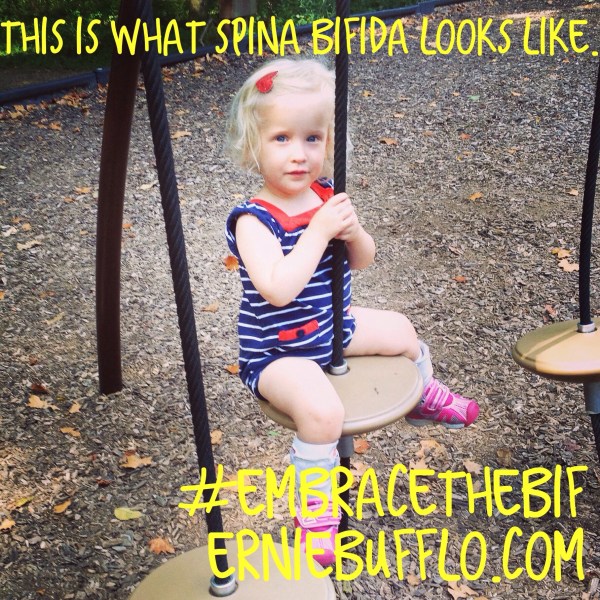
I also admit that I read things like a stat that says 60% of parents who receive a fetal diagnosis of Spina Bifida choose termination, and it makes me sad. Because I look at my beautiful, vibrant Claire, and I do think her life is obviously worth living. I’m madly in love with her. I can’t imagine life without her.
But the thing is, I realize that my life, my choices, and even my daughter aren’t the same as everyone else’s situation. I realize, and have testified to that effect before the Arkansas Senate (and on the local news), that not everyone receives a manageable fetal diagnosis– many receive a devastating one. And in the midst of tough choices and pain, I want every family to have safe, compassionate, OPTIONS.
So there it is. I’m the mom of a kid with a disability, and I’m pro choice. Part of why I write, part of why I participate in things like #embracethebif and want people to see what Spina Bifida looks like is because I do think that 60% stat should be far lower. I do think parents should know that kids like Claire are whole, complete, beautiful, and vibrant, because that might make the choice to carry such a pregnancy a little bit easier. It’s also why I support disability rights, fight stigma, and want access to healthcare, childcare, and developmental services. It’s why I support education and employment access. All things that might make the choice to bring a child with a disability into this world a little easier.
But I’m still pro-choice. Pro-child, pro-family, pro-disability, pro-choice. I hope that even if you disagree, you can respect that. I hope that even if you disagree, we can keep fighting together for all the other stuff we do agree on. I don’t want to fight with anyone. I just had to put this out there because I was uncomfortable with some of the anti-choice ways Spina Bifida Awareness rhetoric can be used, and I don’t want to be lumped in with that.



 erniebufflo's south & west kitchen